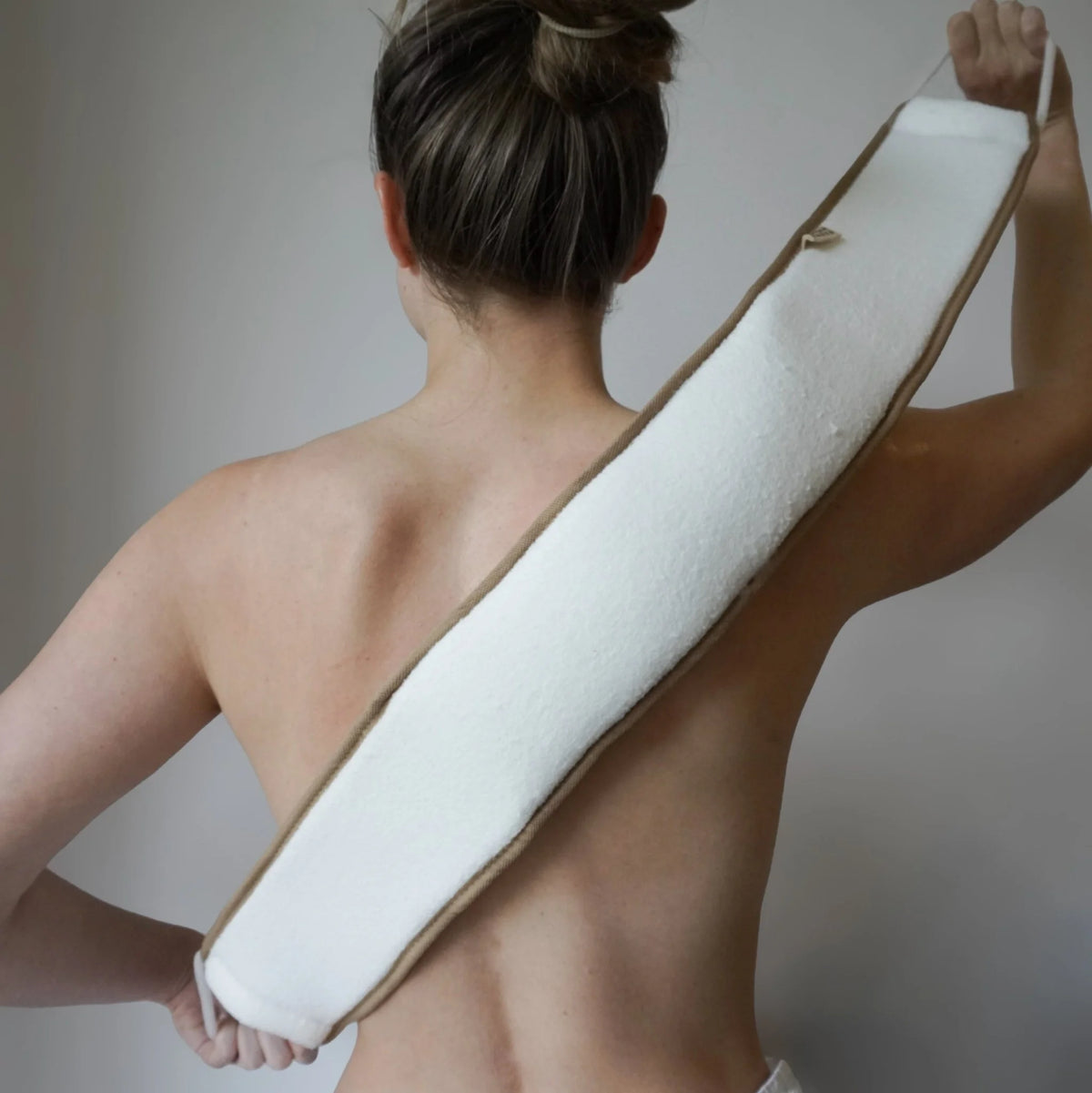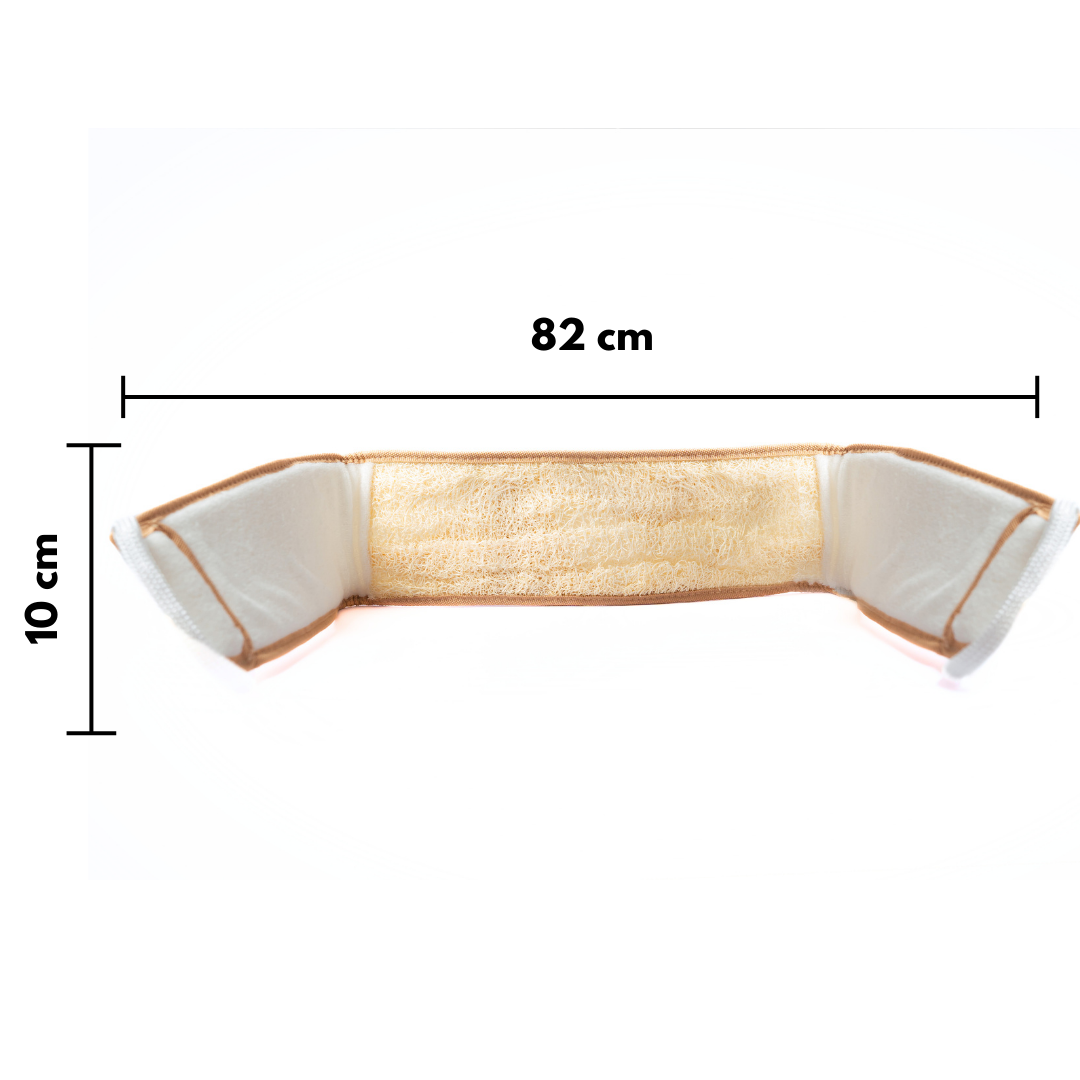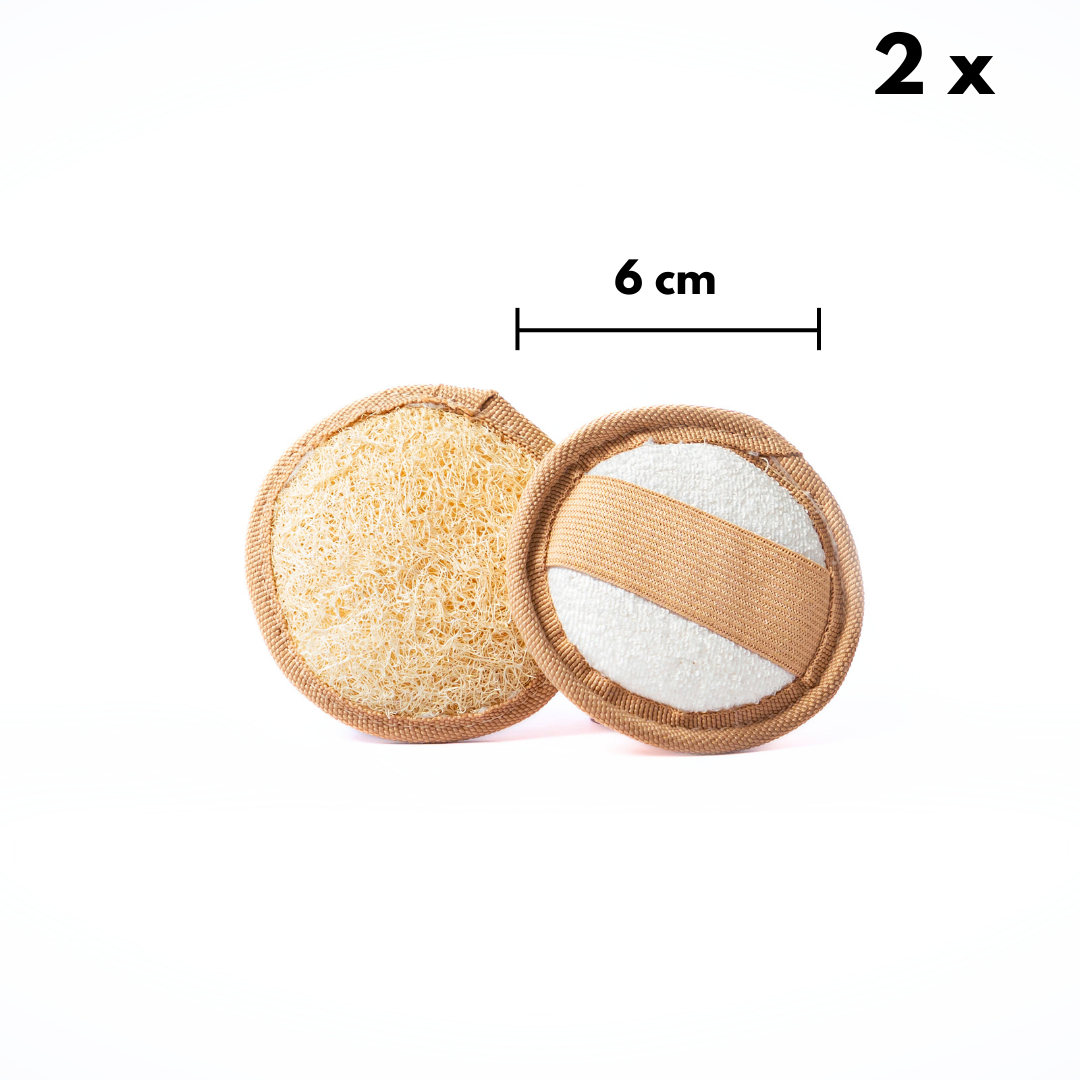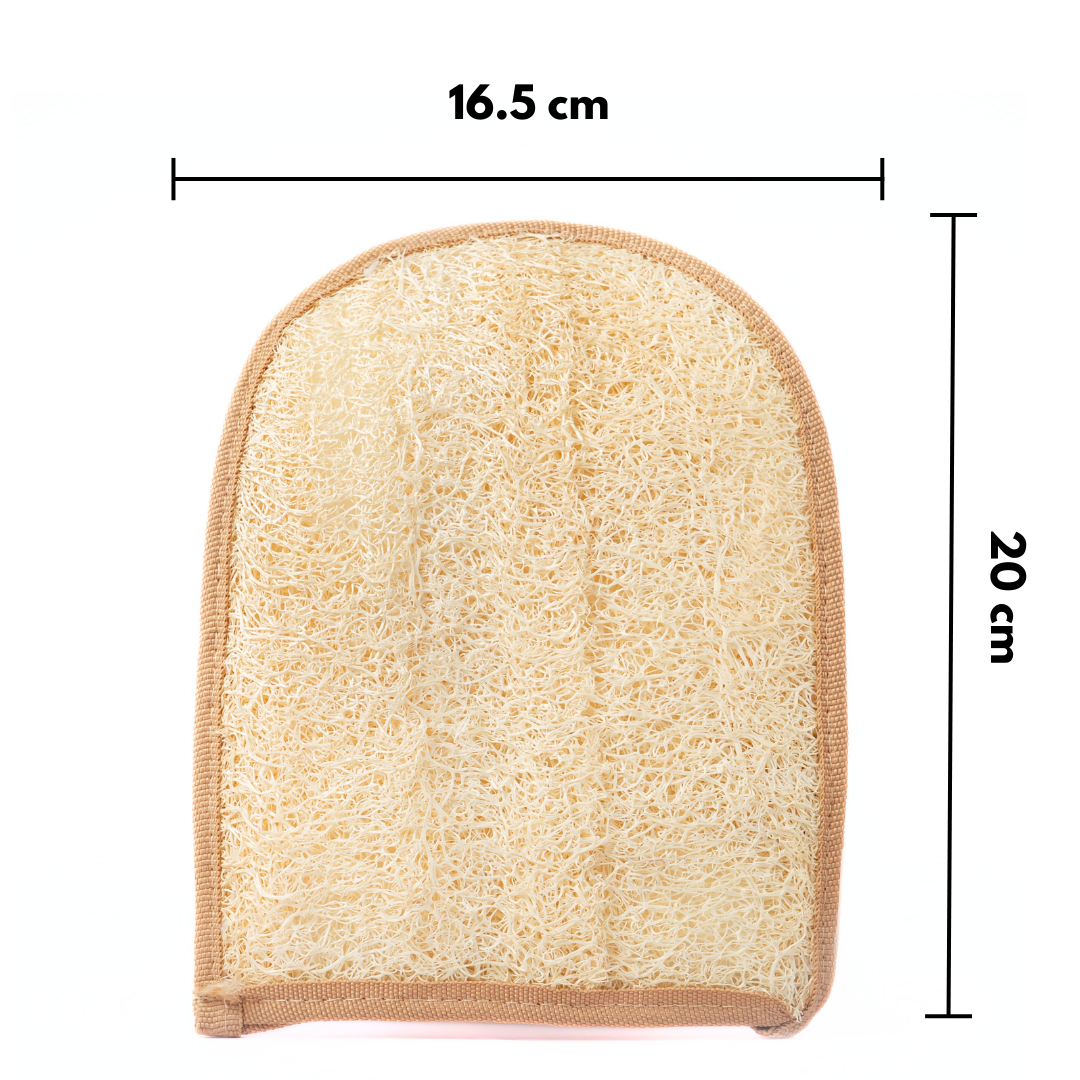

Treating Dry Skin Gently: How a Loofah Sponge Brings Your Skin Back to Life
Share
Dry Skin: A Problem Many People Know
That tight feeling after a shower, flaky patches on shins and elbows, a rough texture that feels like your skin is two sizes too small — dry skin is incredibly common. Air conditioning in summer, central heating in winter, frequent hot showers, or simply genetics: the triggers are many. What a lot of people don't realise is that even the best moisturiser can barely work if dead skin cells are sitting on the surface like a barrier. That's exactly where a loofah comes in.
A loofah sponge combines gentle mechanical exfoliation with a light massage effect. The result: dead skin cells are lifted away, circulation is boosted, and the moisturiser you apply afterwards can sink deep into the skin — instead of sitting ineffectively on top.
What Dry Skin Really Needs — And Why Exfoliation Helps
Dry skin produces less sebum than other skin types. The natural protective barrier, made up of fats and moisture, is weakened. This means water evaporates from the skin more quickly, and dead cells don't shed as smoothly as they do on oilier skin. The result is flakiness, a dull complexion, and in the worst case, itching or small cracks.
A gentle loofah exfoliation addresses exactly this:
- Support cell renewal: The mechanical action lifts hardened cells and makes room for fresher, not-yet-thickened ones.
- Boost your moisturiser: Freshly exfoliated skin absorbs body lotion, oil, or cream up to 40% better — the single most important lever for dry skin.
- Stimulate circulation: Improved microcirculation supports the sebaceous glands and can help stabilise the skin's natural moisture levels over time.
- Smooth the skin's texture: Flaky patches and rough spots visibly diminish, and the skin feels soft and even again.
Important: If your skin is very dry or cracked, wait until it has stabilised before starting to exfoliate. Never scrub open cracks or inflamed areas.
Choosing the Right Loofah for Dry Skin
Not all loofahs are the same. For dry and sensitive skin:
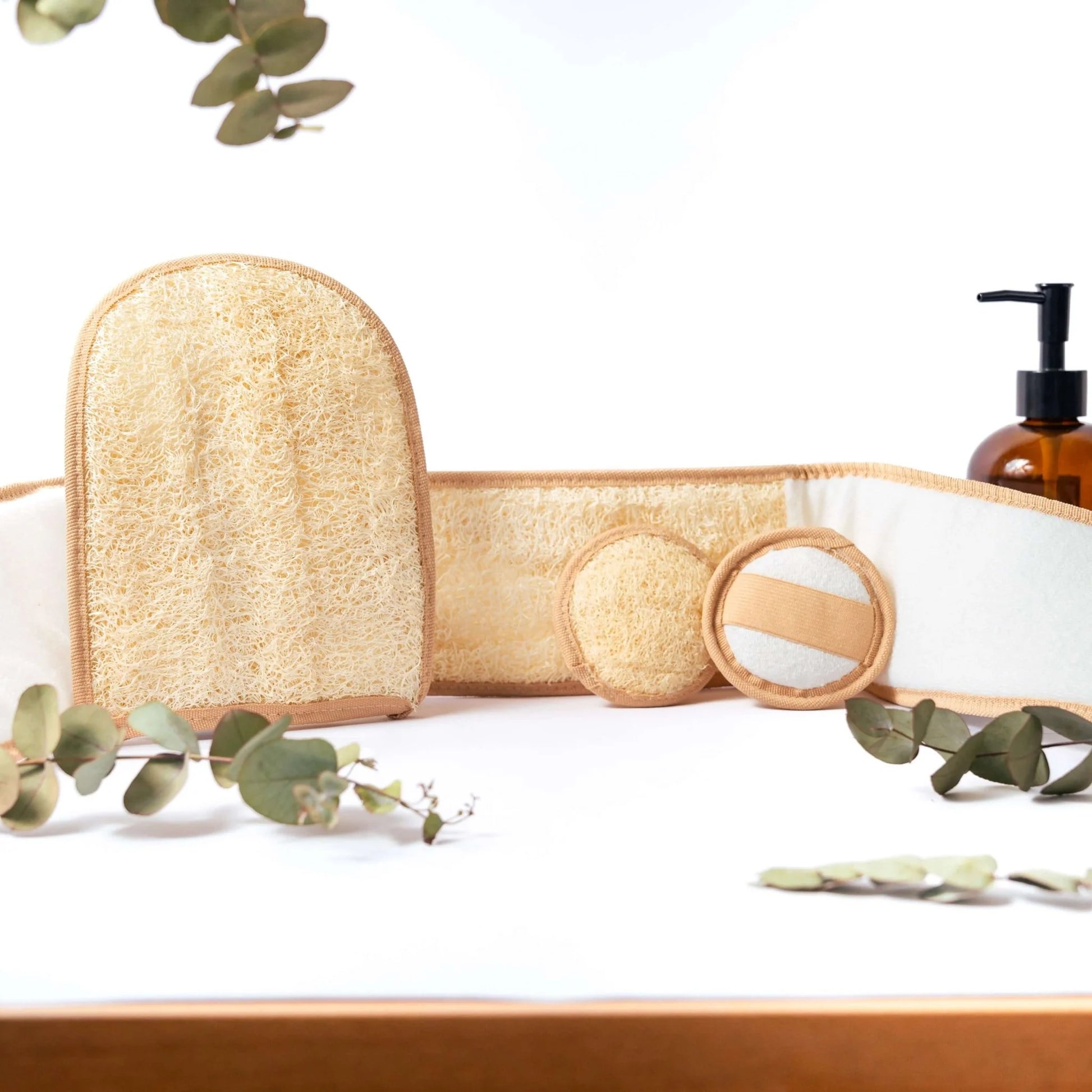
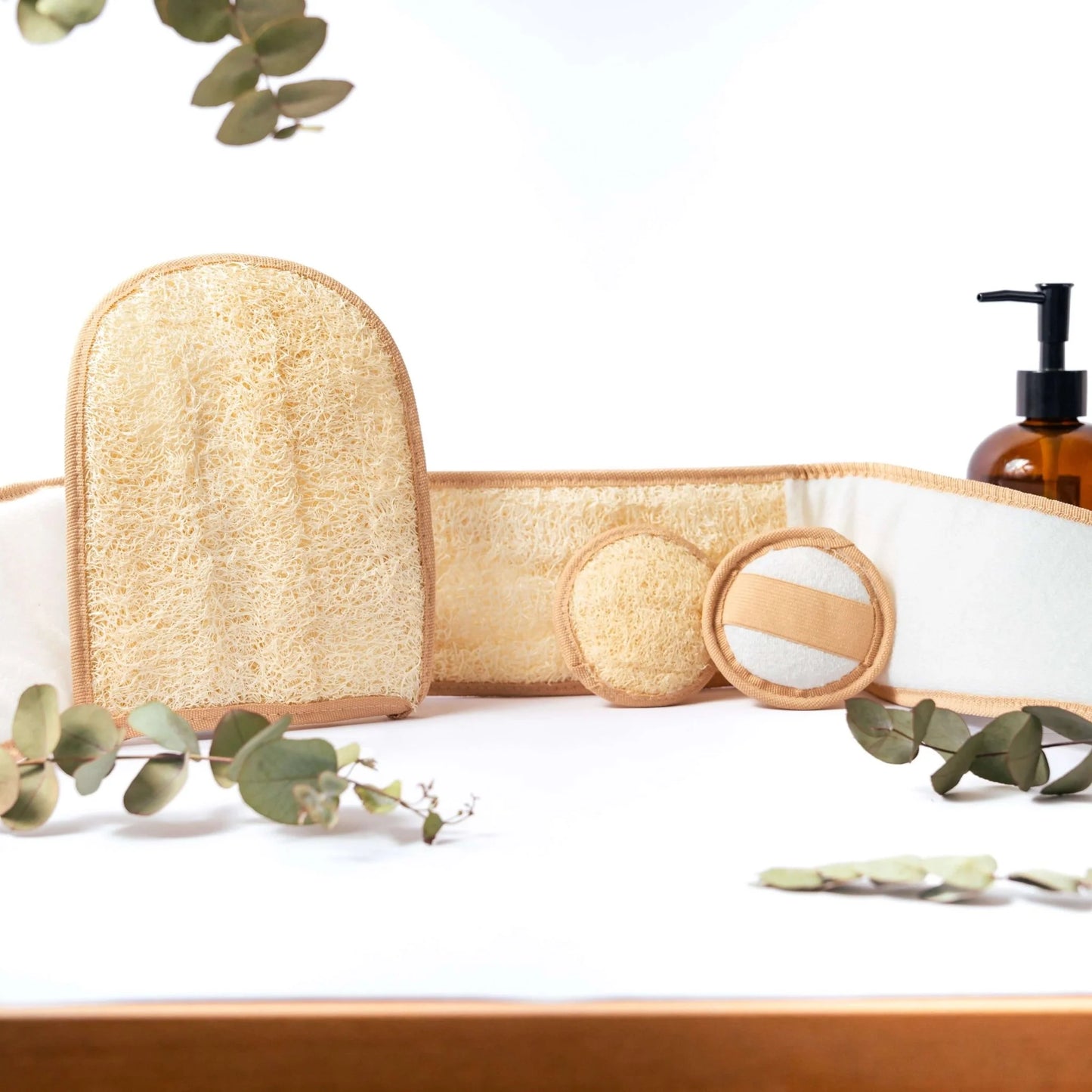
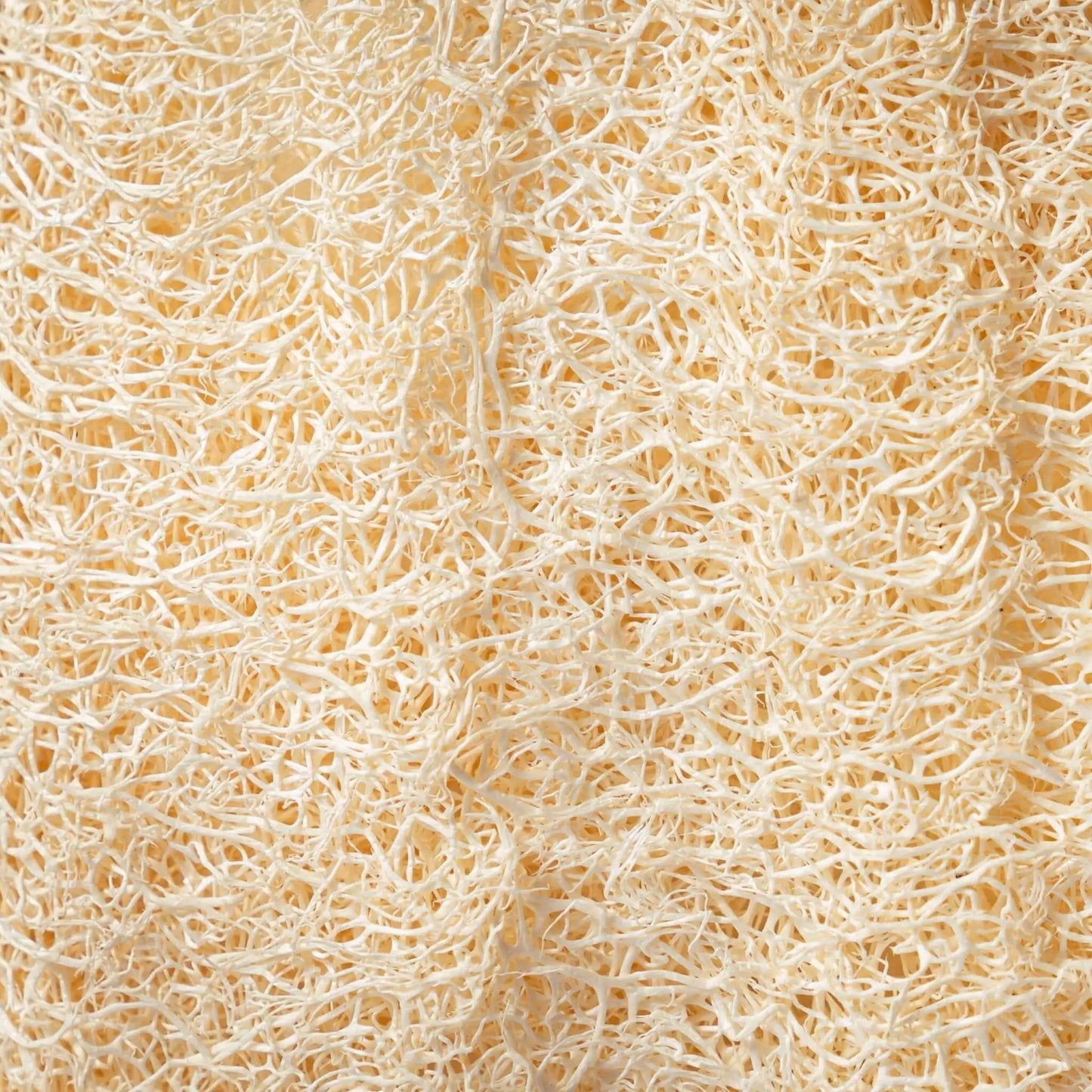
- Natural loofah sponges from the loofah plant (Luffa aegyptiaca or Luffa acutangula) are the gentlest choice — no synthetic fibres, no irritating additives.
- Medium-soft consistency: A loofah that's too firm will unnecessarily irritate dry skin. Once soaked, a loofah should feel soft and flexible.
- No fragrance, no additives: With dry skin especially, fragrances can further weaken the skin barrier.
Tip: Soak the sponge in warm water for 2 to 3 minutes before first use. The longer you soak it, the softer and gentler the exfoliating effect will be.
Step by Step: Gentle Loofah Exfoliation for Dry Skin
A short, targeted routine is all you need. No elaborate products required:
What you need:
- A natural loofah sponge
- A mild, moisturising shower gel or shower oil (sulphate-free)
- Your usual body lotion or a nourishing oil (e.g. almond or jojoba oil)
The routine:
- Soak the sponge: Submerge the loofah in warm water for 2 to 5 minutes until it's completely soft.
- Adjust the water temperature: Choose lukewarm water — hot water dries out skin even more.
- Apply soap or oil: Put a small amount of mild product directly onto the sponge.
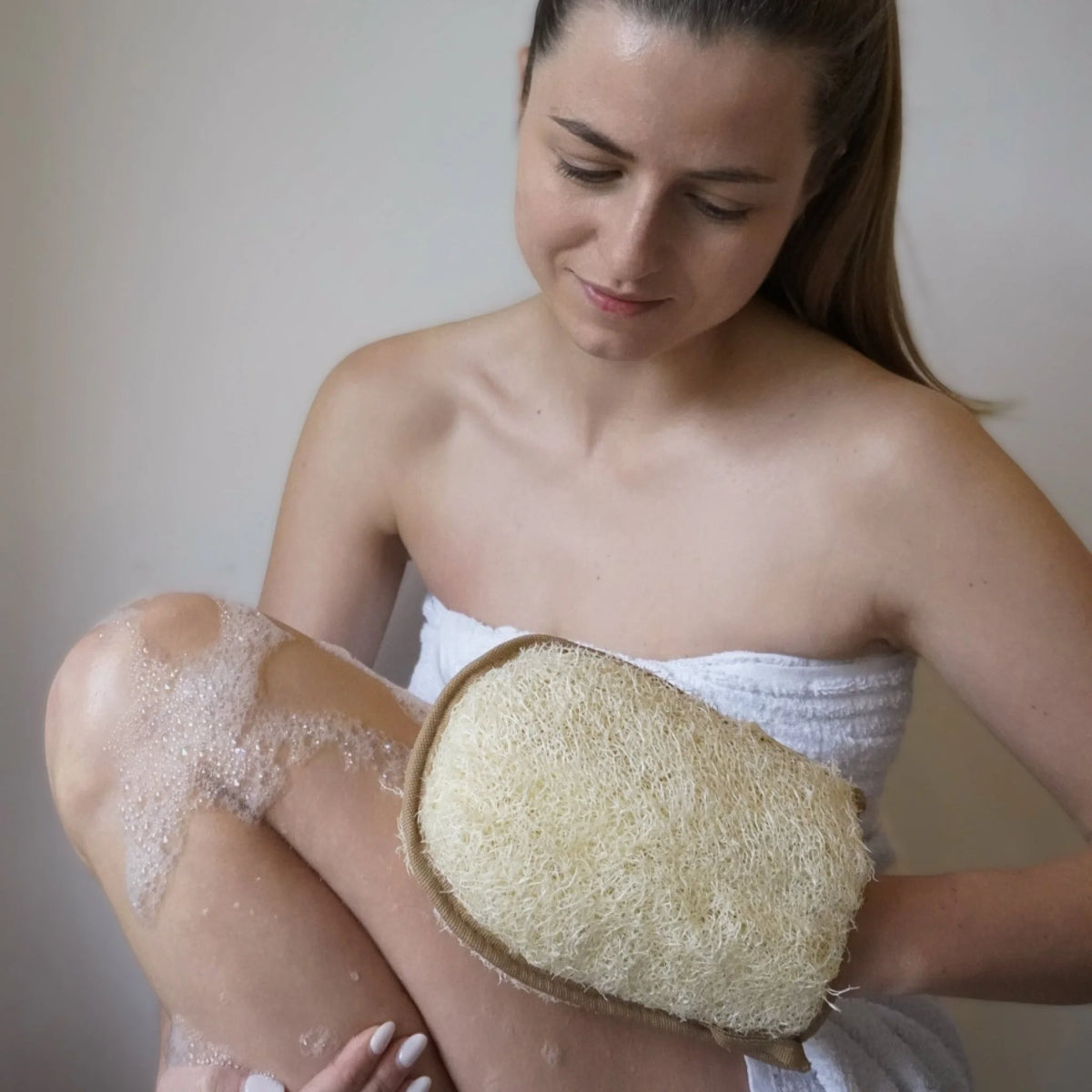
- Massage gently in circles: Start at your legs and work upward. Use circular, even movements — no hard scrubbing. Let the sponge do the work.
- Give extra attention to rougher areas: Elbows, knees, and heels can get a little more focus, but without excessive pressure.
- Rinse thoroughly: Remove all soap residue.
- Pat dry gently: Don't rub — skin is sensitive after exfoliation.
- Moisturise immediately: This is the key step. Apply your moisturiser within 2 to 3 minutes of getting out of the shower — your pores are still open and will absorb everything perfectly.
How often? For dry skin: a maximum of 2 times per week. More often does more harm than good — your skin needs time to regenerate and retain moisture.
Which Body Areas Benefit Most
Dry skin is rarely evenly distributed. These problem zones respond particularly well to gentle loofah exfoliation:
- Shins and lower legs: A classic dry zone, prone to quick flakiness.
- Elbows: Often thickened and rough — 1 to 2 minutes of circular loofah massage makes a quickly visible difference here.
- Knees: Similar to elbows, often darker and rougher than the surrounding skin.
- Heels: For heels, a slightly firmer sponge or a foot file is recommended — the hard skin here is thicker.
- Décolleté and shoulders: Especially in summer after sunburn or salt water, these areas are often dry and peeling.
Exfoliation and Moisturising: The Duo That Really Works
A common mistake: moisturising only, without prior exfoliation. Or exfoliating only, without applying moisture afterwards. Both alone are far less effective than the combination.
The logic is simple: exfoliation prepares the skin — like priming a wall before painting. Everything absorbs better afterwards. For dry skin, the following ingredients in post-exfoliation products are especially helpful:
- Urea: Draws moisture into the skin and works keratolytically — ideal for very dry or cracked areas.
- Hyaluronic acid: Stores water in the skin, delivers instant suppleness.
- Glycerin: Affordable, effective, absorbs well — the classic for dry skin.
- Plant oils: Almond, jojoba, argan, or avocado oil form a light protective layer and nourish the skin.
Common Mistakes When Exfoliating Dry Skin — And How to Avoid Them
| Mistake | Why it's a problem | Better approach | |---|---|---| | Water that's too hot | Strips the skin of lipids, worsens dryness | Lukewarm water, max. 38 °C / 100 °F | | Too much pressure | Irritates the weakened skin barrier | Gentle circular movements, let the sponge do the work | | Exfoliating too often | Skin can't regenerate | Max. 2× per week | | Not moisturising afterwards | The exfoliation effect is wasted | Moisturise within 3 minutes | | Synthetic sponges | Can irritate, cause drying | Prefer a natural loofah sponge |
Loofah Care: Keeping Your Sponge Hygienic
With dry, sensitive skin especially, a clean sponge is particularly important. Bacteria on a damp loofah can trigger irritation.
- After every use: Rinse thoroughly, squeeze out, and hang up to dry — don't leave it lying in the shower.
- Weekly: Soak in a bowl of hot water with a splash of white vinegar (15 minutes), then rinse and dry.
- Replacement interval: Replace your loofah sponge every 6 to 8 weeks at the latest.
A fresh loofah works more effectively and is hygienically safe — your skin will thank you for it.
Summary: Gentle Exfoliation as the Foundation of Healthy Skin
Dry skin is not your destiny. With the right care routine — gentle loofah exfoliation followed by good moisturising — you can visibly improve your skin's appearance. The key is consistency: not daily, not aggressively, but a steady twice a week. Your natural loofah sponge is the simplest and most sustainable tool you can have.
👉 Discover our natural loofah sponges now and start your routine for soft, well-nourished skin today.
FAQ: Loofah Exfoliation for Dry Skin
Is loofah exfoliation good for dry skin? Yes — when done correctly. Gentle exfoliation with a well-soaked loofah sponge removes dead skin cells and allows the moisturiser you apply afterwards to penetrate deeper. The key is: not too often (max. 2× per week) and always moisturise afterwards.
How soft should a loofah be for dry skin? Very soft. Soak the sponge in warm water for at least 3 to 5 minutes until it's completely pliable. The drier and more sensitive your skin, the longer you should soak it.
Can exfoliation make dry skin worse? Yes — if done too often or too aggressively. Daily scrubbing or heavy pressure damages the skin barrier and worsens dryness. Stick to 2× per week and gentle movements.
What moisturiser should I use after loofah exfoliation? A rich body lotion containing urea, glycerin, or hyaluronic acid — or a natural oil such as almond oil. Apply it within 2 to 3 minutes of showering, while the skin is still slightly damp.
How often should I replace my loofah sponge? Every 6 to 8 weeks. For dry or sensitive skin, err on the earlier side, as a worn-out sponge becomes rougher and can cause unnecessary irritation.