
Strawberry Skin After Shaving: What Really Helps — and Why a Loofah Scrub Is the Game Changer
Share
What Is Strawberry Skin — and Why Does It Appear After Shaving?
Strawberry skin describes the tiny dark dots that become visible after shaving on your legs, bikini area, or underarms. The name is apt: the skin looks like the surface of a strawberry — tiny dots at regular intervals, sometimes slightly red, sometimes brownish-dark. Unlike cellulite, strawberry skin isn't a tissue issue — it's a matter of the skin's surface and the hair follicles.
What you're seeing usually has one of three possible causes — often in combination:
- Clogged hair follicles: Sebum, dead skin cells, and small hair stumps collect in the follicle and become visible.
- Ingrown hairs: Especially with curly or thick hair, freshly shaved strands continue growing under the skin, causing small bumps.
- Visible hair roots: With dark hair and fair skin, roots show through the skin's surface — even without any inflammation.
The good news: strawberry skin is harmless and in the vast majority of cases can be significantly reduced with the right care routine. And that's exactly where the loofah sponge comes in.
Why a Loofah Scrub Works So Well Against Strawberry Skin
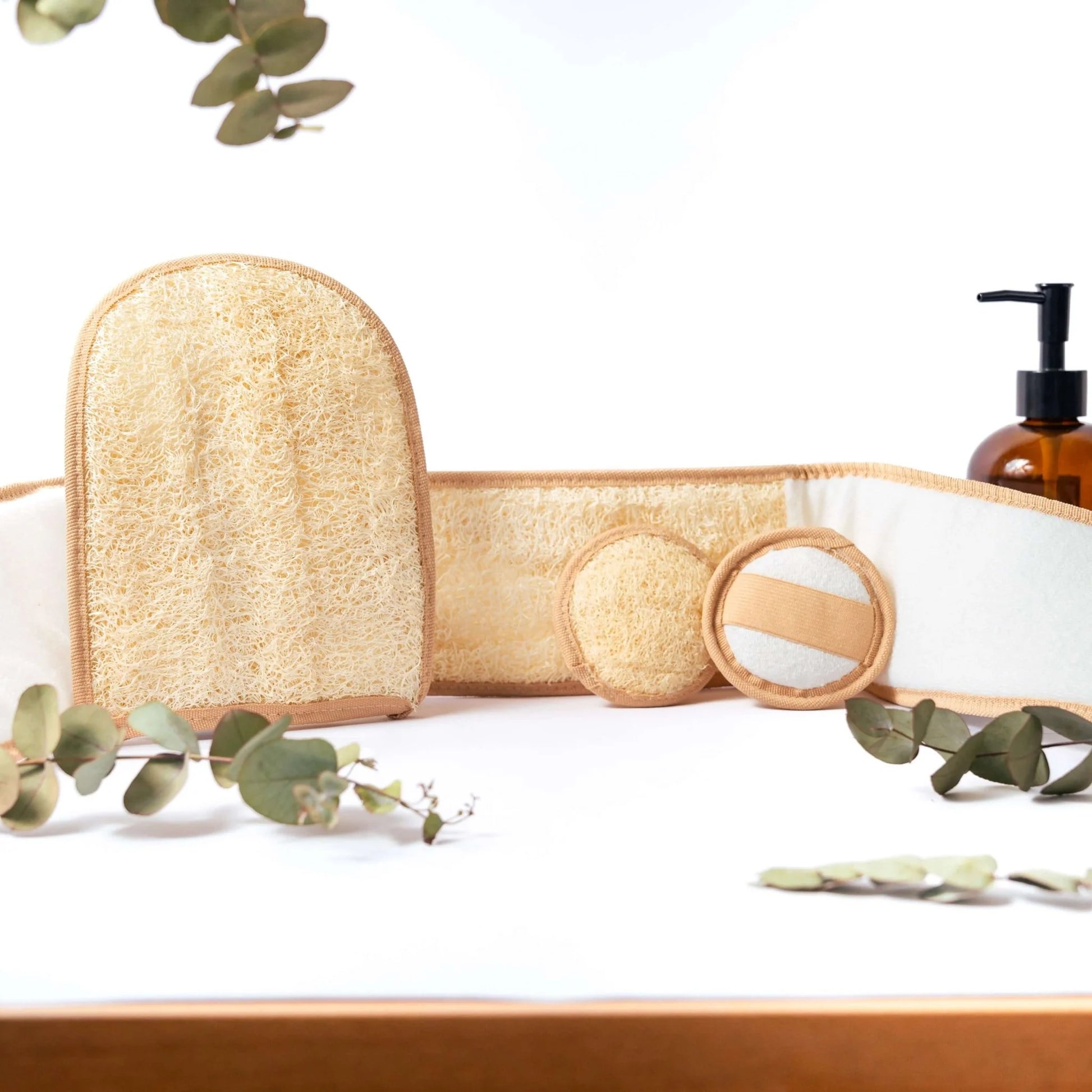
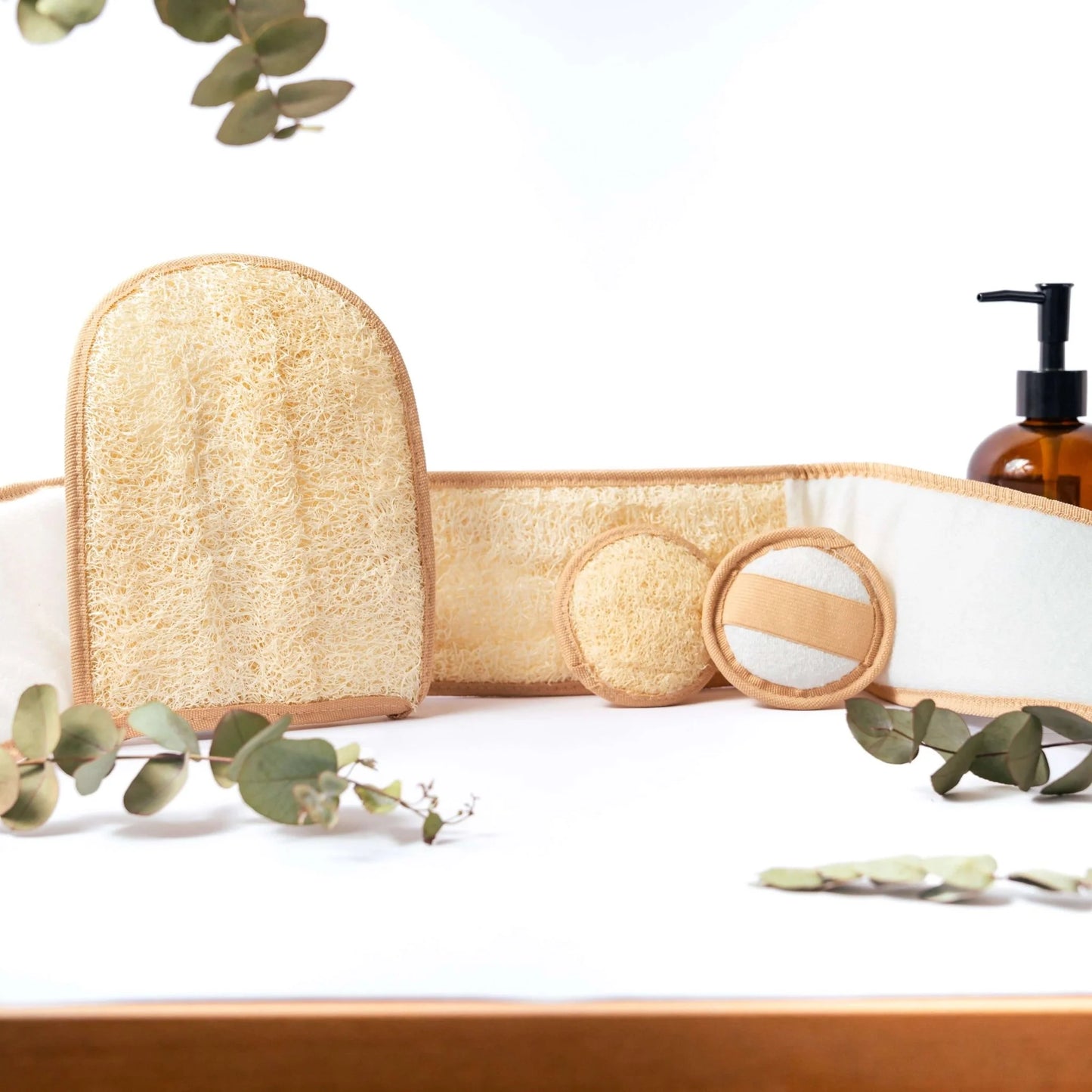
A loofah sponge works mechanically — and that's exactly what the skin needs when it comes to strawberry skin. Creams and serums absorb into the skin but cannot dislodge the dead skin cells clogging a follicle. Loofah fibres can.
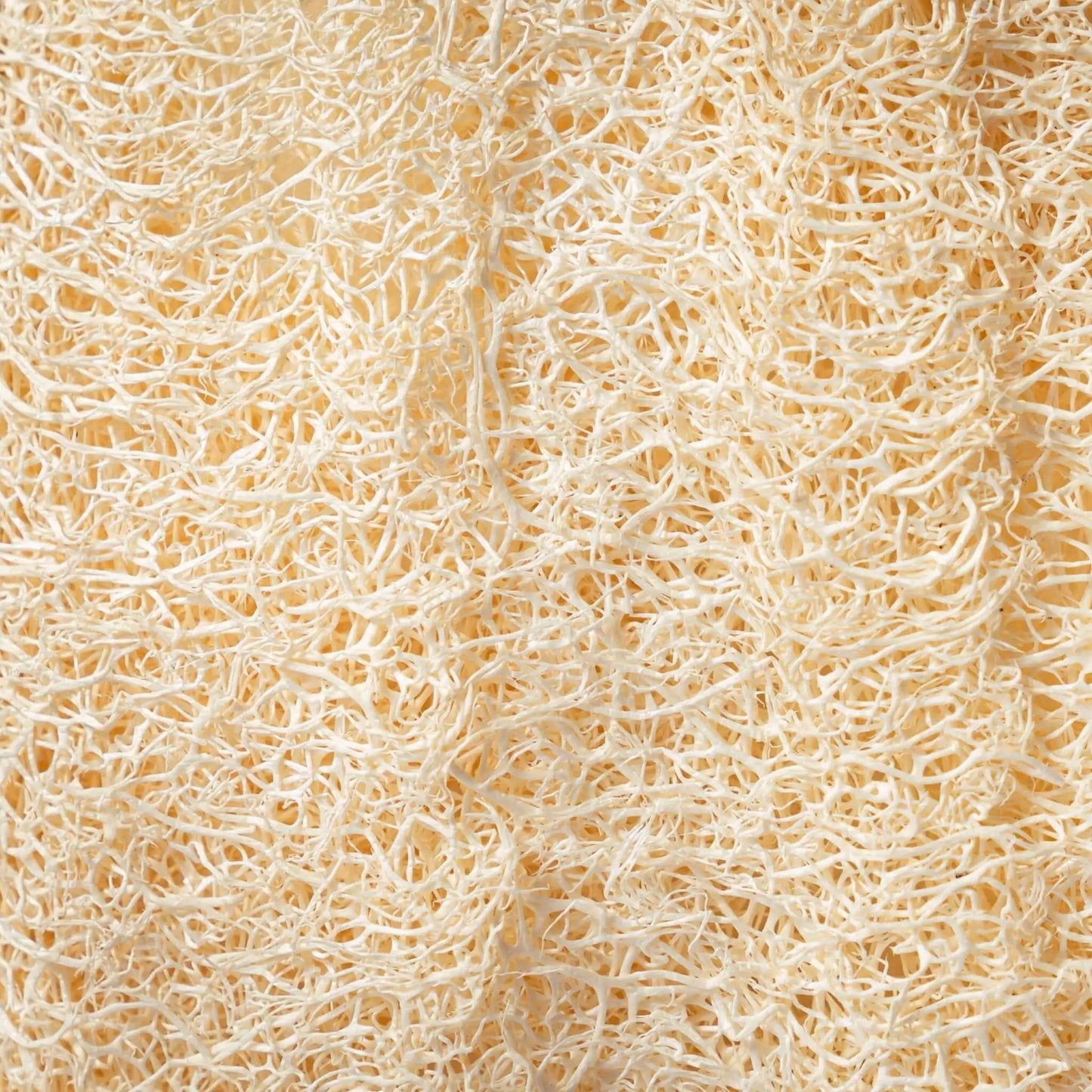
The natural fibre structure of the loofah plant makes the sponge a precise tool:
- Removing the stratum corneum: The fibres gently lift the topmost dead skin cells. Clogged follicles are freed.
- Releasing ingrown hairs: Gentle circular motions help small hairs find their way to the surface instead of continuing to grow under the skin.
- Stimulating circulation: The massage activates microcirculation. The skin looks more even and rosier.
- Better shave preparation: A smooth, exfoliated skin surface lets the razor glide more evenly — and the results last longer.
The result after 2 to 4 weeks of regular use: noticeably softer skin, fewer visible dots, fewer ingrown hairs after shaving.
The Optimal Routine: Scrubbing Before and After Shaving
To prevent strawberry skin from appearing in the first place, it pays to build your shave into a small routine. Here's how:
1 to 2 days before shaving — pre-scrub:
- Thoroughly wet your legs in a warm shower — give the skin 3 to 5 minutes of water exposure.
- Soak the loofah sponge until it's soft.
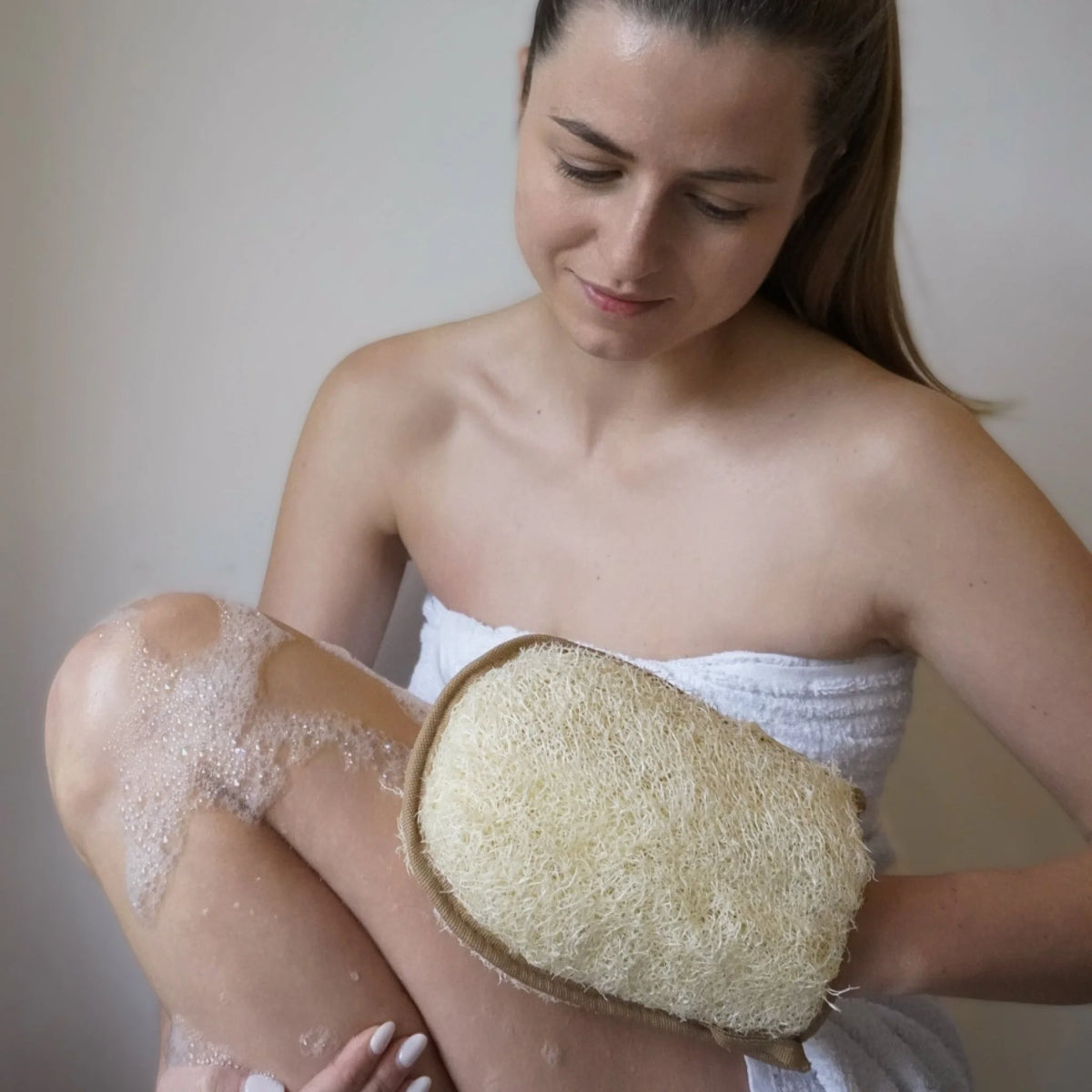
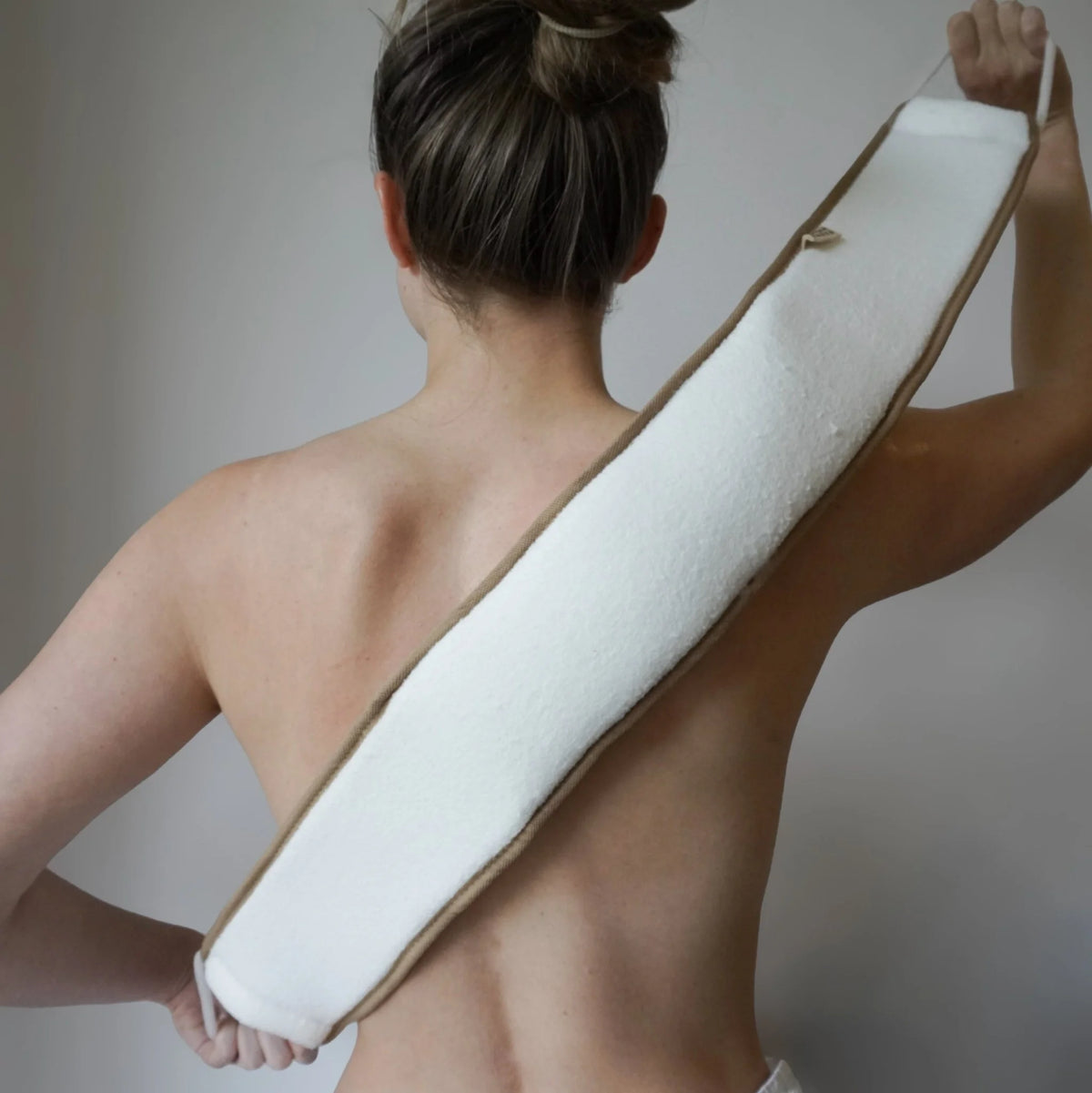
- With a drop of shower oil, work in circular motions from bottom to top over the areas to be shaved.
- 1 to 2 minutes per leg is plenty — firm but not aggressive.
- Rinse off and follow up with a moisturising lotion.
On shaving day:
- Before shaving, simply warm-wet the skin — no additional scrub today, that would be too much irritation.
- Use a sharp blade with shaving gel or oil — dull blades are one of the most common causes of strawberry skin.
- Shave in the direction of hair growth, not against it. Results may be slightly less close short-term — but your skin will thank you in the long run.
- Rinse with cold water after shaving and apply a soothing, alcohol-free lotion.
2 to 3 days after shaving — post-scrub:
- Another gentle loofah scrub so that growing hairs don't become ingrown.
Recommended overall frequency: scrub 2 to 3 times per week, never immediately after shaving, never on irritated skin.
What Else You Can Do Against Strawberry Skin
A loofah sponge is the most important building block, but not the only one. These complementary measures significantly boost the effect:
- Change your blade regularly: After no more than 5 to 7 uses. A dull blade tears hairs rather than cutting them cleanly — a leading cause of ingrown hairs.
- Never shave dry: Always use gel, foam, or oil. Water alone isn't enough.
- Loose clothing after shaving: Tight jeans immediately after shaving rub freshly opened follicles raw.
- Hydration from within: 1.5 to 2 litres of water a day keeps skin elastic and follicles less prone to congestion.
- Consider alternative methods: Anyone wanting long-term low-strawberry-skin results often fares better with epilation or permanent laser/IPL methods than with a blade. That's a bigger decision, however — and loofah scrubbing supports every method.
Strawberry Skin: Realistic Expectations After 2, 4, and 8 Weeks
- After 1–2 weeks: The skin feels noticeably smoother. The dots are still there but less dark and less pronounced.
- After 3–4 weeks: Ingrown hairs become less frequent. The overall skin appearance looks more even, the bikini area less irritated.
- After 6–8 weeks: With a consistent routine, small dark dots are significantly reduced. Legs look smoother even without makeup — that classic "summer legs" feeling.
Important: making strawberry skin disappear completely is not realistic for some skin types — especially when dark hair roots show through fair skin. That's anatomy, not a care problem. But the appearance can almost always be noticeably improved.
When You Should Be Careful
Please hold off on loofah scrubbing for now, or consult a dermatologist, if:
- there are active inflammations, spots, or open areas
- skin reacts strongly after shaving with pseudofolliculitis (inflamed follicles)
- you have very sensitive skin, eczema, or a known impaired skin barrier
- there is fresh sunburn or fresh tattoos in the area
In these cases, calm the skin first, then start gently with the scrub — not the other way around.
FAQ — Frequently Asked Questions About Loofah Scrubbing and Strawberry Skin
Does a loofah really help with strawberry skin? Yes — for the most common causes (clogged follicles, ingrown hairs, stratum corneum build-up). Where visible hair roots show through the skin, it improves smoothness but cannot remove the pigmentation itself.
How often should I scrub if I'm prone to strawberry skin? 2 to 3 times per week is plenty. More than that irritates the skin and can actually make the problem worse.
Can I scrub immediately after shaving? No, please don't. Skin is sensitive right after shaving and follicles are open. Wait at least 24 to 48 hours.
How do I keep my loofah sponge hygienic? Rinse well after each use, wring it out, and let it air dry — not in the damp shower. Give it a hot rinse every 1 to 2 weeks, and replace it every 6 to 8 weeks.
Does this work in the bikini area too? Yes, but with significantly less pressure. The skin there is thinner and more sensitive. Gentle circular motions, no vigorous scrubbing.
Loofah or dry brush — which is better for strawberry skin? For strawberry skin, the loofah has a slight edge because it works wet and doesn't additionally dry out the skin. Dry brushing has a strong stimulating effect but is often too much for thin or irritated skin.
Conclusion: Smooth Legs Aren't a Matter of Luck — They're a Routine
Strawberry skin after shaving isn't inevitable. With the right preparation, a sharp blade, and a loofah scrub 2 to 3 times a week, you can reliably get your skin back on track. The loofah sponge is the underrated star of the show: affordable, plastic-free, compostable — and mechanically exactly what ingrown hairs and clogged follicles need. Anyone who sticks to a consistent shaving routine will see the difference within a few weeks. Smooth summer legs without chemicals or dubious miracle products — simply with a piece of loofah plant.
👉 Discover our loofah sponges and make strawberry skin a thing of the past.