
Preventing Stretch Marks: How Loofah Exfoliation Strengthens Skin from Within
Share
Stretch Marks: What's Behind Them?
Stretch marks — also known as striae gravidarum — are a common part of pregnancy for many women. They form when the skin is stretched rapidly by the growing belly, breasts, or hips, causing the elastic fibres in the connective tissue to tear. The result is streak-like scars that initially appear reddish or purple and gradually fade to a silvery-white colour over time.
One thing is clear: genetics play a major role — those who have inherited weaker connective tissue are more susceptible. That said, there are meaningful steps you can take to strengthen and support your skin early on. One of them is regular exfoliation with a loofah sponge — combined with intensive moisturising care.
Important note: no method can guarantee that stretch marks will be prevented entirely. But exfoliation and skincare can improve the appearance of the skin, support its elasticity, and help counteract new stretch marks from forming.
Why Loofah Exfoliation Helps with Stretch Marks
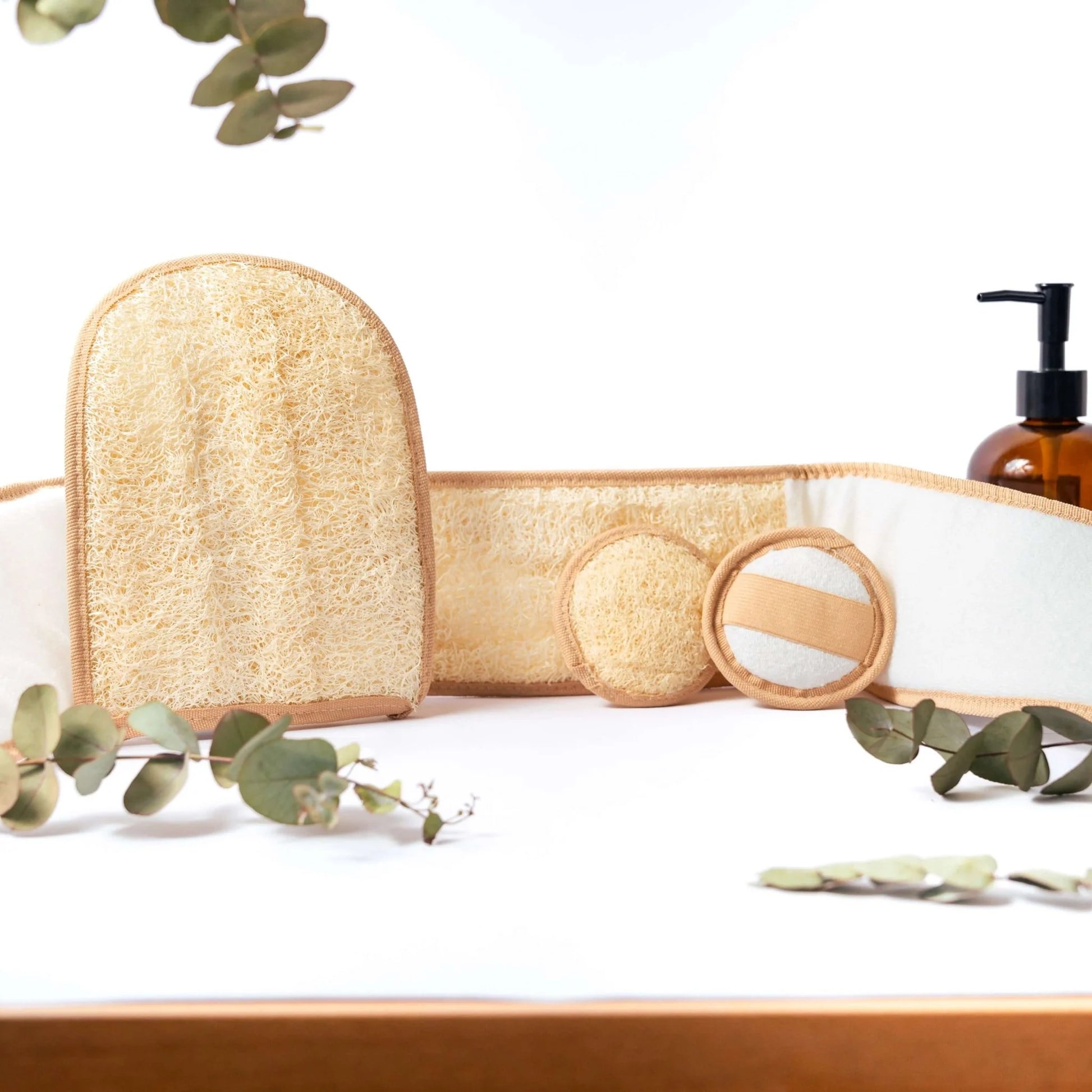
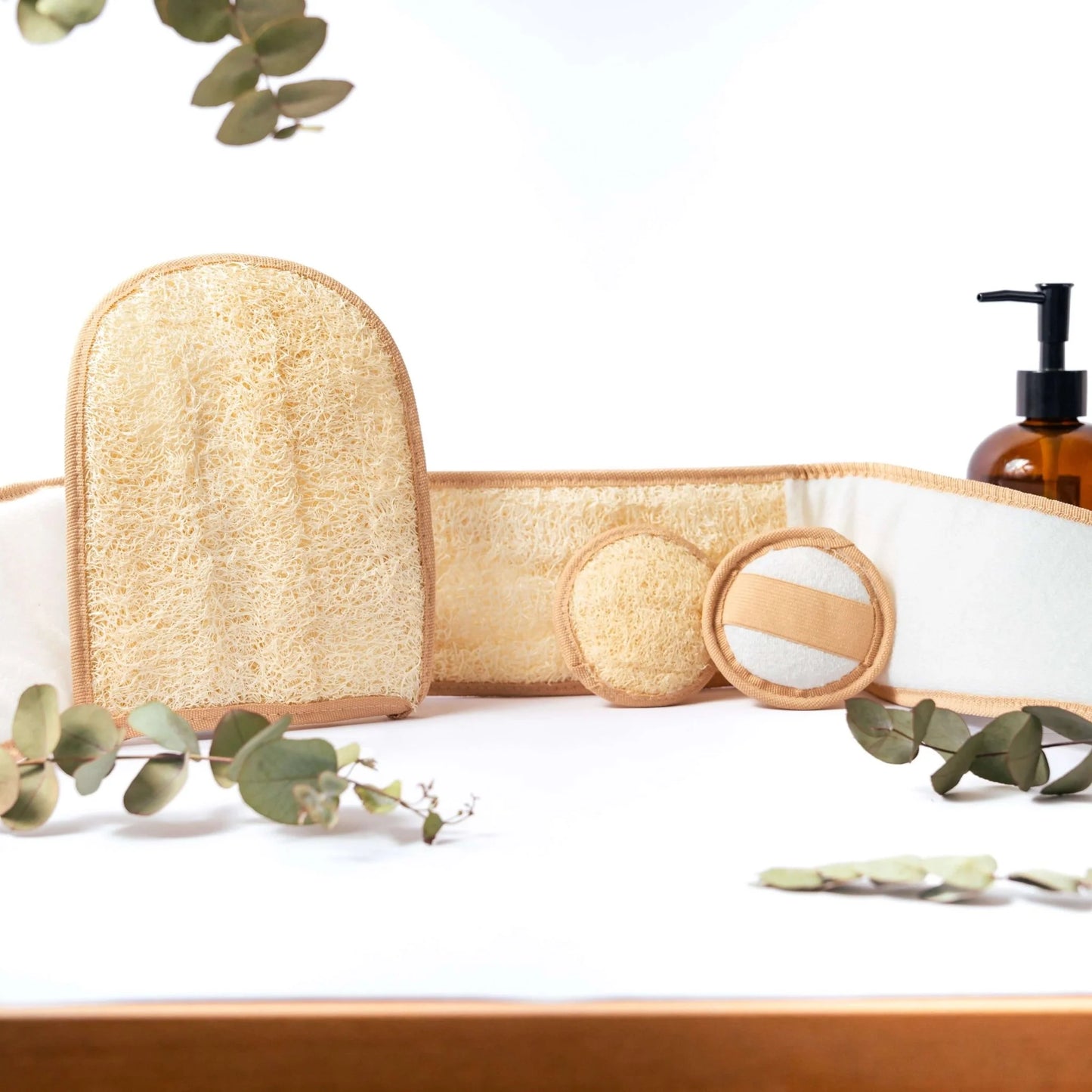
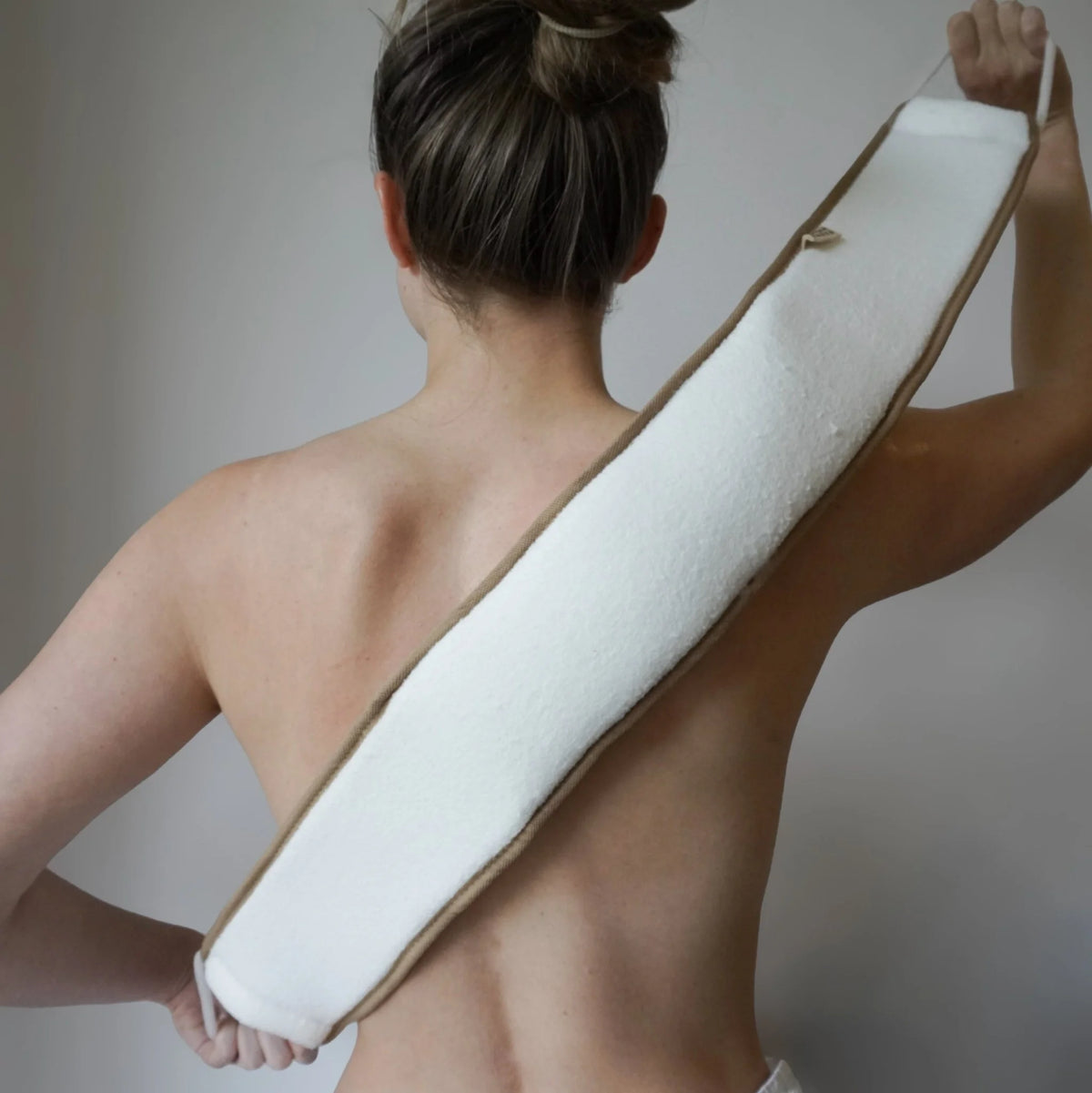
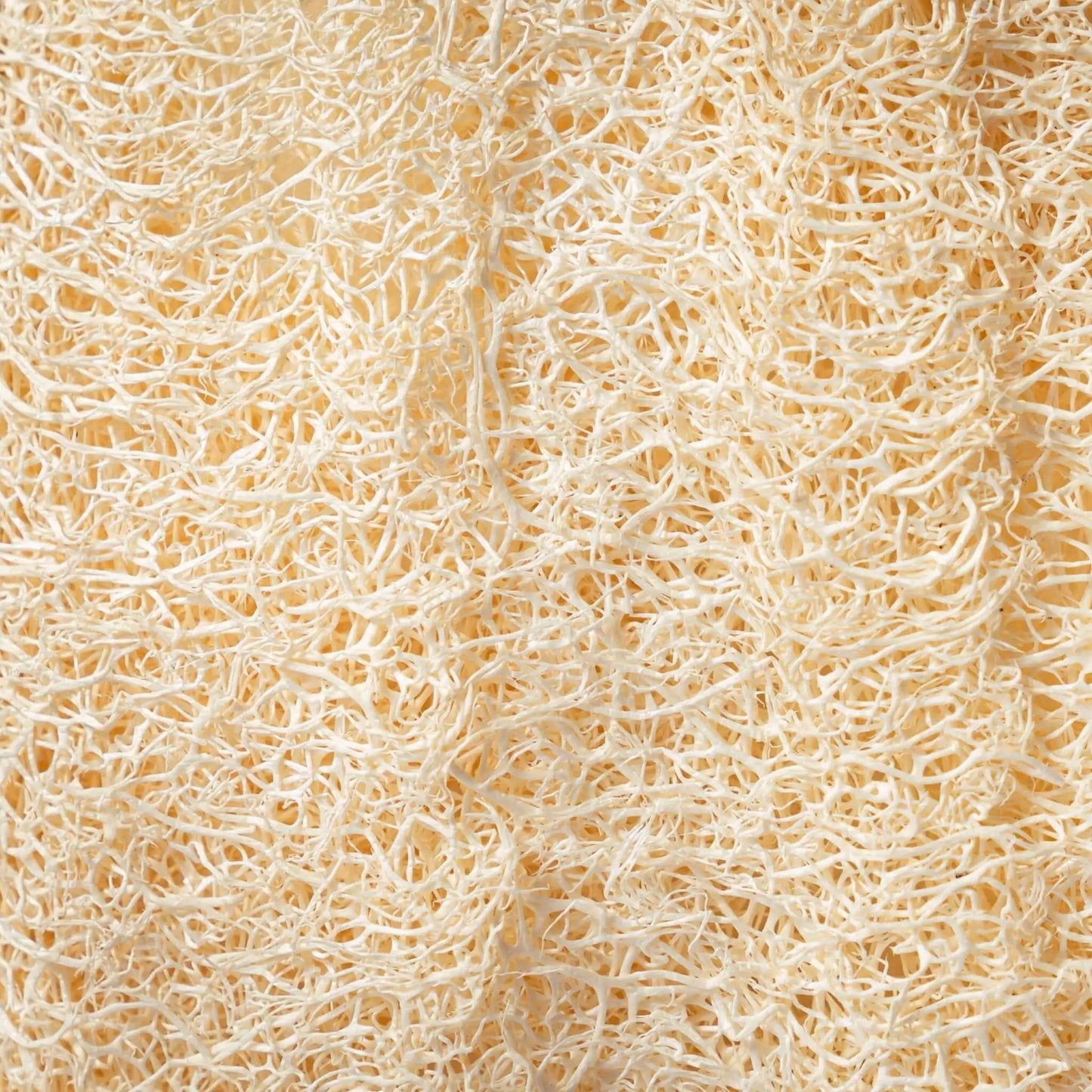
A loofah sponge is made from the dried, natural fibres of the luffa plant — a species in the gourd family with a uniquely sponge-like structure. These fibres are ideal for gentle mechanical exfoliation: they remove dead skin cells, stimulate circulation, and prepare the skin optimally for absorbing skincare products.
Specifically, a loofah sponge offers the following benefits for stretch marks:
- Exfoliating the outer layer: Dead skin cells are removed, leaving the skin looking smoother and more even. Skincare products can penetrate significantly deeper.
- Boosting circulation: Massage stimulates microcirculation in the tissue — promoting the supply of oxygen and nutrients that build connective tissue.
- Lymphatic drainage effect: Circular massage movements help reduce fluid retention — a common issue during pregnancy.
- Optimised effectiveness of oils and creams: Immediately after exfoliation, the skin is more receptive to moisturising care, almond oil, rosehip oil, or argan oil.
Safety During Pregnancy: What You Need to Know
Before using a loofah sponge during pregnancy, keep this in mind: safety comes first. Here are the key points to consider:
- Gentle pressure: Your belly is stretching rapidly — apply only light to moderate pressure. No aggressive scrubbing.
- No exfoliation on irritated skin or open areas. Itching on the belly (common during pregnancy) is a sign the skin is being stretched — in these areas, skip the exfoliation and simply moisturise instead.
- Water temperature: Avoid very hot showers — lukewarm water is gentler on your circulation and skin.
- Consult your doctor: For high-risk pregnancies, sensitivities, or any doubts, always check with your midwife or gynaecologist.
After pregnancy — the postpartum period — exfoliation can be performed more intensively and helps reduce the appearance of existing stretch marks.
Step by Step: The Right Loofah Exfoliation Routine
During Pregnancy (Gentle Version)
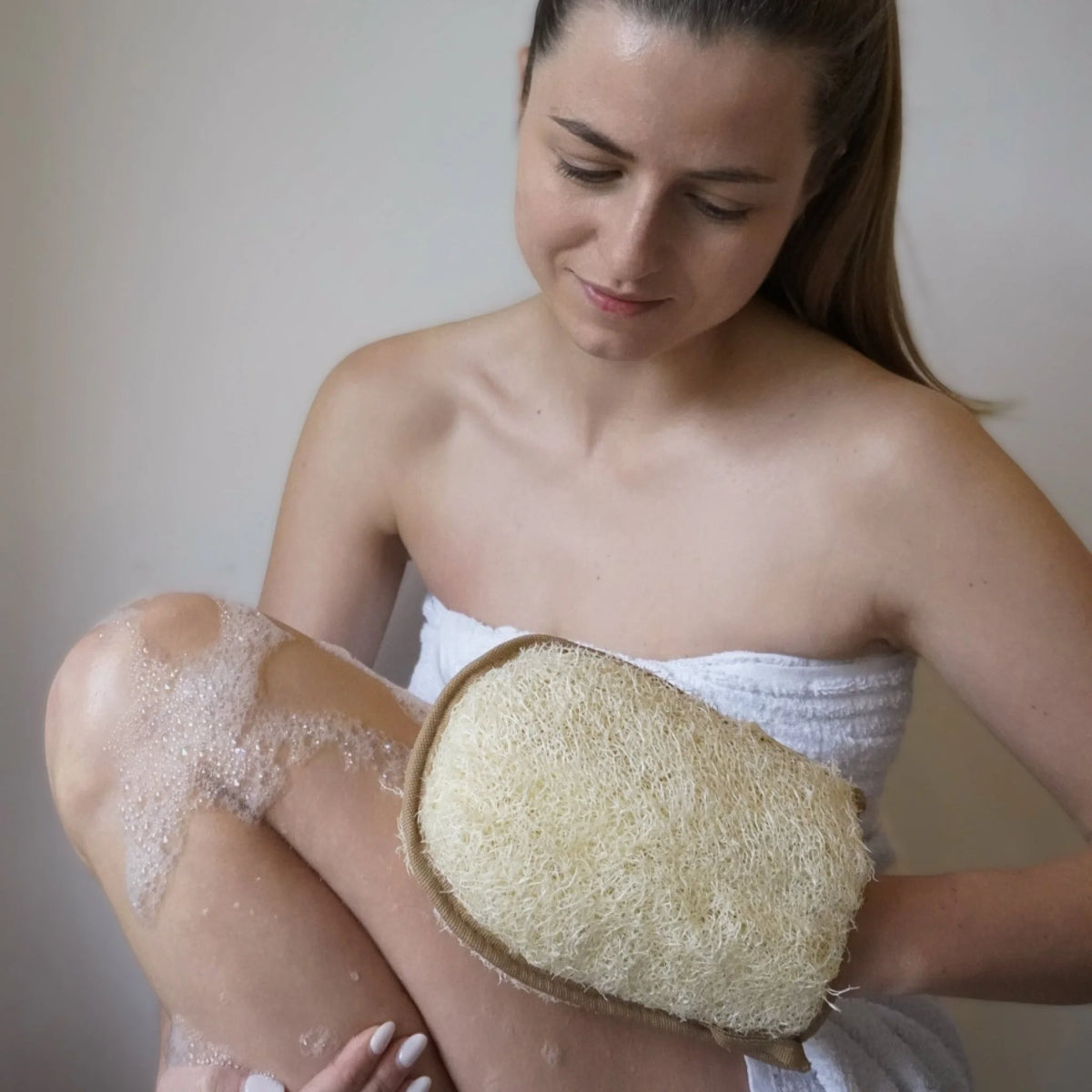
- Soak the loofah in warm water until the fibres are soft.
- Optional: Apply a little nourishing soap or shower oil to the loofah — choose fragrance-free, skin-friendly products.
- Gently circular movements on the belly, hips, breasts, and thighs — massage towards the heart.
- Light pressure, no strong rubbing — skin is often more sensitive during pregnancy than usual.
- Rinse off, dry thoroughly.
- Moisturise immediately: Apply a high-quality body oil (e.g. almond, rosehip, or jojoba oil) or a firming lotion and massage in while the skin is still slightly damp.
Frequency: 2 to 3 times per week — not daily, to avoid overloading sensitive skin.
After Pregnancy (More Intensive Version)
- Soak the loofah as described above.
- Firmer circular massages on the belly, thighs, bottom, and hips — the areas where stretch marks most commonly appear.
- For fresh, reddish marks: use gentler pressure, as the tissue is still sensitive.
- For silvery, older marks: firmer pressure is fine — this more effectively stimulates the upper layers of skin.
- Apply oil or regenerating cream and massage in well.
Frequency: 3 to 4 times per week for best results.
The Best Skincare Products to Combine with Loofah Exfoliation
Exfoliation alone doesn't make the full difference — the care you apply afterwards is just as important. These ingredients have proven effective:
- Rosehip oil: Rich in vitamins A and C, supports cell renewal and works on scar tissue.
- Almond or jojoba oil: Lightweight, well-tolerated, deeply moisturising — suitable even for sensitive skin during pregnancy.
- Shea butter: Deep moisture, strengthens the skin barrier.
- Hyaluronic acid (in creams or serums): Binds moisture in the tissue and counteracts dryness.
- Vitamin E: A classic for stretch marks — supports skin elasticity.
Tip: Choose products free from fragrances and parabens — especially during pregnancy, skin is often more sensitive to additives.
What You Can Realistically Expect
Let's be honest: no exfoliation or oil in the world can guarantee you won't get stretch marks — that would be an unrealistic claim. What you can realistically expect:
- Better skin elasticity through regular care and improved circulation
- Smoother skin texture thanks to exfoliation and hydration
- Less itching from well-nourished, hydrated skin
- Faster recovery postpartum — fresh marks fade more quickly when circulation and cell renewal are supported
- Visible improvement of existing lighter stretch marks after 8 to 12 weeks of consistent care
Caring for Your Loofah Sponge
Hygiene is especially important during pregnancy. Make sure to:
- Rinse the loofah thoroughly after every use and wring it out well
- Let it dry upright in a well-ventilated spot — don't leave it lying in a damp shower area
- Give it a hot rinse or briefly disinfect with vinegar water every 1 to 2 weeks
- Replace it after 6 to 8 weeks at the latest
A fresh, clean loofah is not only more hygienic, but also more effective — old fibres lose their structure and exfoliate less efficiently.
Conclusion: Exfoliation as Part of a Holistic Routine
Preventing stretch marks is no guarantee, but it is absolutely a matter of the right skincare. Regular, gentle exfoliation with a loofah sponge, combined with high-quality moisturising care, strengthens the skin, boosts circulation, and supports the elasticity of connective tissue — both during and after pregnancy.
A loofah sponge is not only sustainable and natural, but also one of the most effective tools for gentle mechanical exfoliation. Treat your skin to this simple, powerful routine — it will thank you for it.
👉 Discover our loofah sponges for your daily skincare routine
FAQ — Frequently Asked Questions about Loofah Exfoliation & Stretch Marks
Can I start using loofah exfoliation during pregnancy? Yes — but gently. Use a soft loofah sponge with light pressure and avoid areas with itching or skin irritation. From the second trimester onwards, when the belly is growing noticeably, gentle exfoliation 2 to 3 times per week is a great idea.
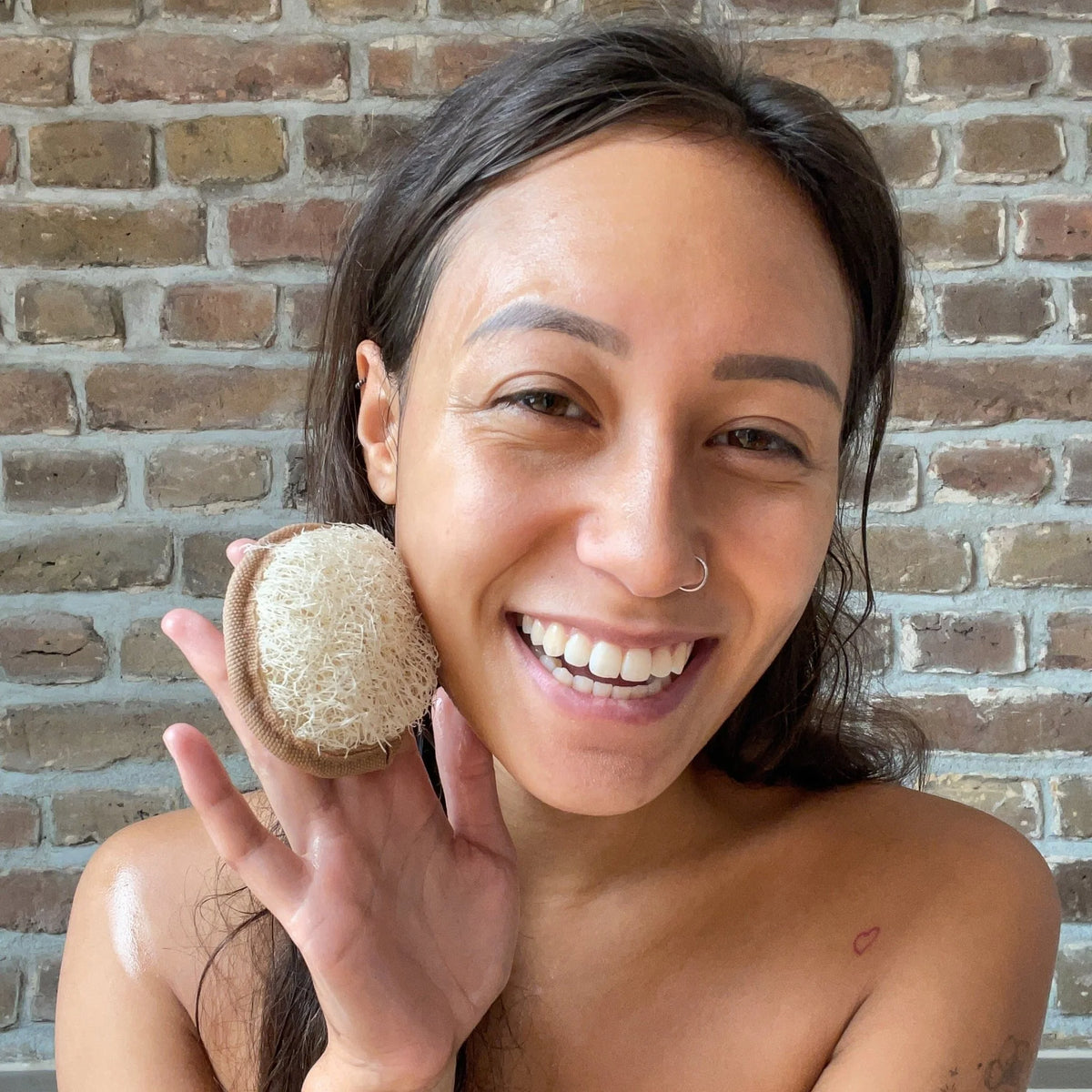
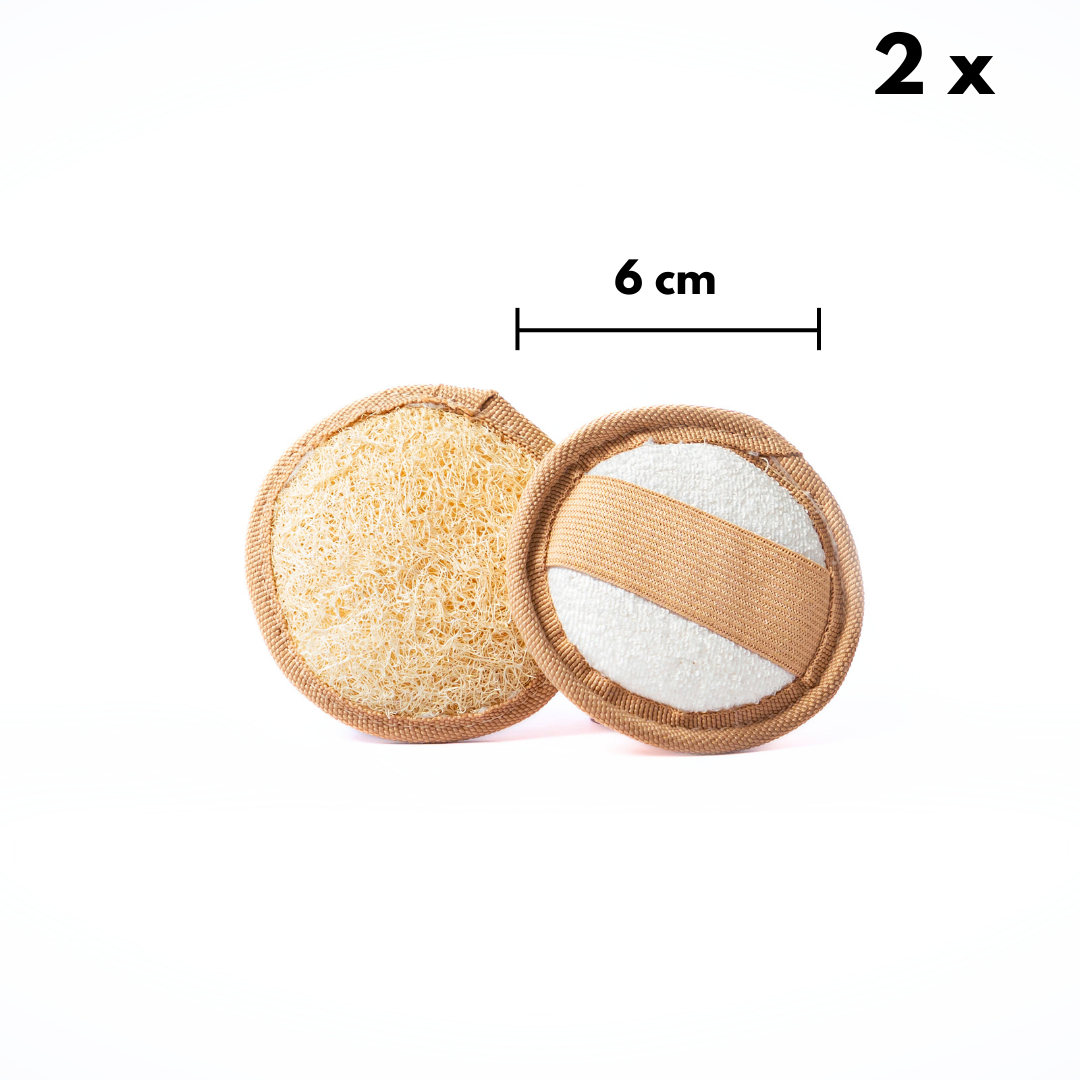
Which loofah sponge is best for sensitive pregnancy skin? Go for a finer-pored, softer loofah. Soak it well before use — when wet, it's significantly gentler than when dry. A loofah pad is particularly suitable for smaller, more sensitive areas.
Does loofah exfoliation also help with existing stretch marks? For fresh, reddish marks, gentle exfoliation can boost circulation and support regeneration. For older, silvery marks, more intensive exfoliation helps smooth the surface and improve the absorption of skincare products. Complete reversal is not to be expected, however.
How long does it take to see results? First improvements in skin texture are often noticeable after just 2 to 3 weeks. Visible changes to stretch marks will depend on skin type and severity, but typically show after 8 to 12 weeks of a consistent routine.
Can I apply exfoliating oils directly to the loofah sponge? Yes — add a few drops of body oil to the damp loofah, or apply directly to the skin and then massage. Oils make the sponge glide more smoothly and nourish the skin at the same time during exfoliation.