
How to Clean, Care for & Replace Your Loofah: Keep It Hygienic and Long-Lasting
Share
Why caring for your loofah matters
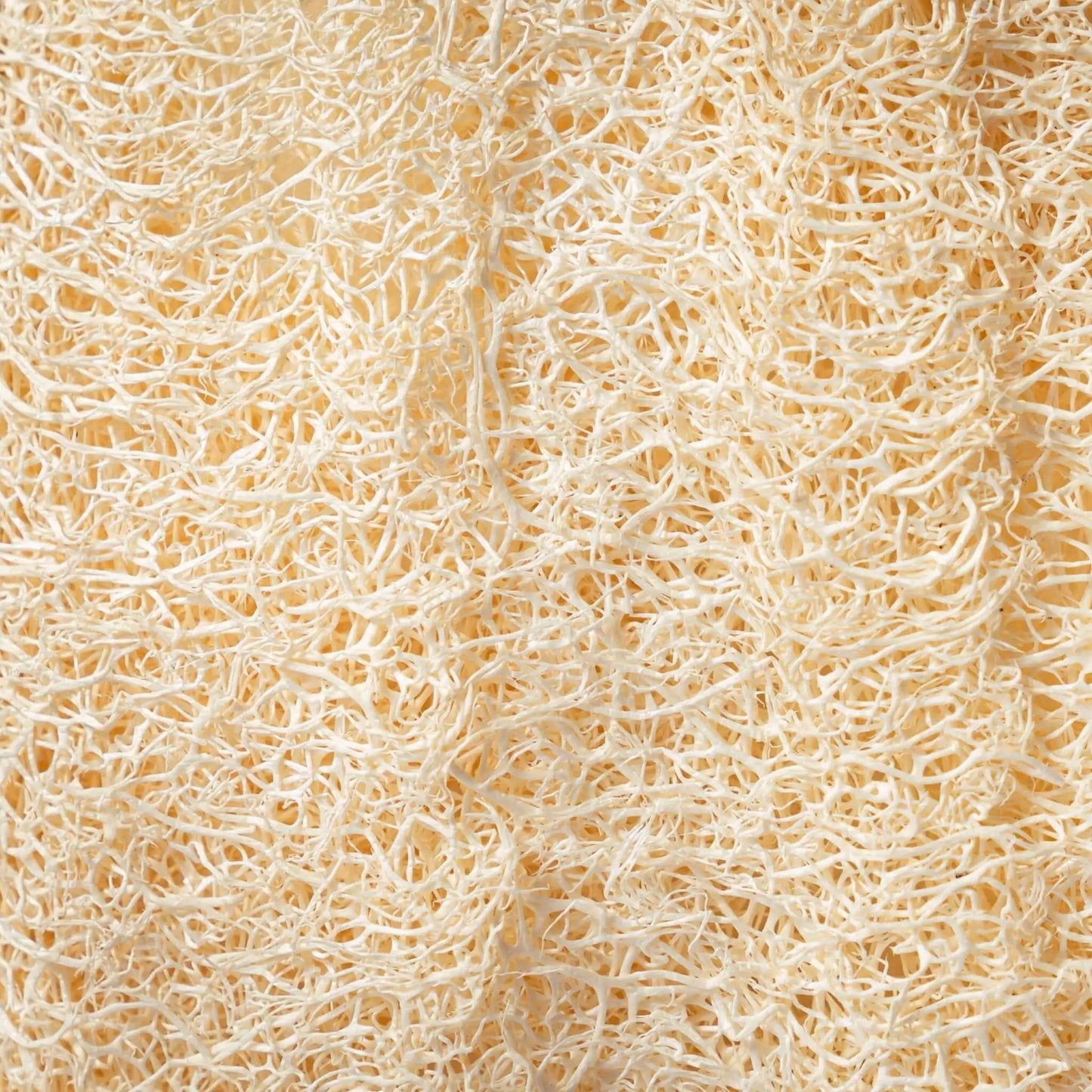
A loofah — whether a full-body loofah sponge for the shower or a loofah pad for your face — is a natural product made from the dried fibres of the luffa plant. That open, fibrous structure that makes it so effective for exfoliating is also exactly why care and hygiene are so important: water, soap residue, and dead skin cells can collect in those tiny channels — creating an ideal environment for bacteria and mould if you don't look after your loofah properly.
The good news: with a few simple steps your loofah stays fresh, hygienic, and keeps its full exfoliating power for many weeks.
After every use: the 3 ground rules
The most important part of loofah care happens right after the shower — and takes less than 30 seconds:
- Rinse thoroughly: Hold the loofah under warm running water and squeeze it several times until no more soap comes out. Soap left inside the sponge encourages bacterial growth.
- Squeeze gently, don't wring: Press the water out softly instead of twisting or wringing the loofah — this protects the fibre structure and extends its lifespan.
- Hang to air dry, don't leave it lying around: After your shower, hang your loofah in a dry, well-ventilated spot — for example outside the shower or on a hook near a window. Leaving it in the damp shower cubicle or on the edge of the bath traps moisture and encourages mould.
These three steps take less than a minute a day and make the biggest difference.
Deep cleaning: how to disinfect your loofah
Once a week — or at least every two weeks — your loofah needs a more thorough clean. You have several options:
Option 1: Hot water
Soak the loofah in very hot water (around 60 °C / 140 °F) for 5 to 10 minutes. This reliably kills most germs. Then squeeze out well and leave to dry.
Option 2: Vinegar water
Mix one part white distilled vinegar with two parts water and soak the loofah for 5 minutes. Vinegar is antibacterial and eliminates unpleasant odours. Rinse thoroughly with clean water afterwards.
Option 3: Baking soda paste
Mix baking soda with a little water to form a paste, gently work it into the fibres, leave it for a moment, then rinse thoroughly. Especially effective against stubborn odours.
Option 4: Microwave (natural loofahs only — no metal loops)
Dampen the loofah, place it in the microwave, and heat for 1 minute at 600–800 watts. Important: only use this method with pure natural-fibre loofahs that have no plastic or metal parts.
Tip: Avoid harsh disinfectants or bleach — they damage the delicate loofah fibres and can leave residues that end up on your skin the next time you exfoliate.
Drying your loofah: the underrated step
Drying correctly is just as important as cleaning. Even after careful washing, mould can develop if the loofah doesn't dry out completely. Here's how to do it right:
- Direct sunlight is ideal: UV light has a natural antibacterial effect and speeds up drying.
- Good airflow prevents the damp fibres from staying wet for hours.
- Don't store in closed containers while the loofah still has any residual moisture.
- In winter or bad weather, a hook near a radiator works well — but don't rest it directly on the radiator, as excessive heat can make the fibres brittle.
When should you replace your loofah?
Even with the best care, every natural sponge has a limited lifespan. Typical guidelines:
| Usage | Recommended replacement | |---|---| | Daily shower | every 4–6 weeks | | 3–4× per week | every 6–8 weeks | | 1–2× per week | every 8–10 weeks |
Regardless of the schedule, replace your loofah immediately if it …
- smells unpleasant, even after cleaning
- shows discolouration or mould spots
- frays or falls apart and no longer exfoliates evenly
- feels slimy
Important: Replacing it early is not wasteful — a germ-laden loofah can cause skin irritation, spots, or infections. Your skin will thank you for it.
Disposing of your loofah: compostable & plastic-free
One of the great advantages of a loofah over synthetic alternatives: it is fully compostable. When your old loofah has run its course, simply put it on the compost heap or in the food/garden waste bin. It breaks down completely within a few weeks — no microplastics, no special disposal issues.
If the loofah isn't completely done but is no longer ideal for the bathroom, you can repurpose it as a kitchen sponge before it finally heads to the compost.
Care by loofah product type
Not all loofah products are the same. Slightly adjusted tips apply depending on the form:
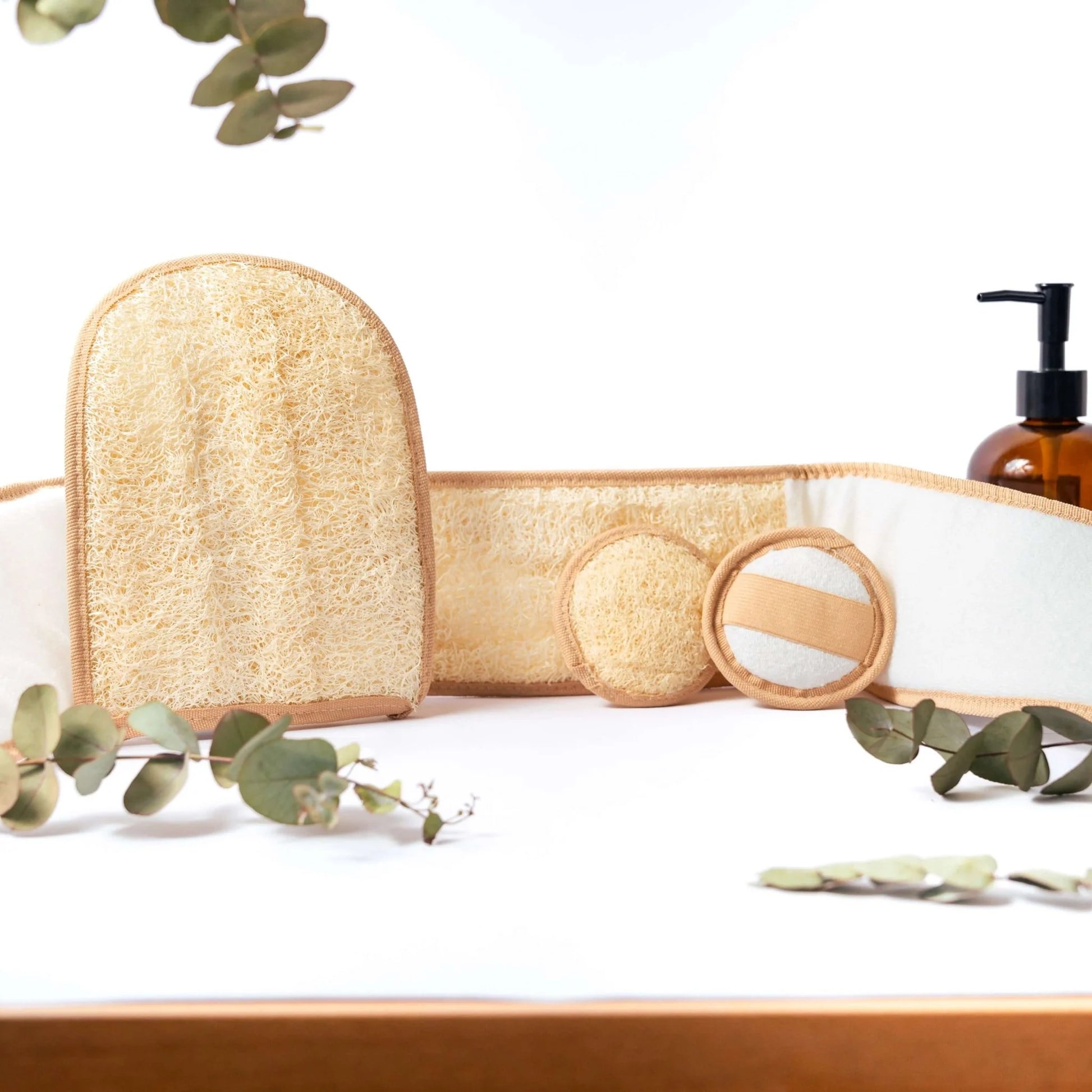
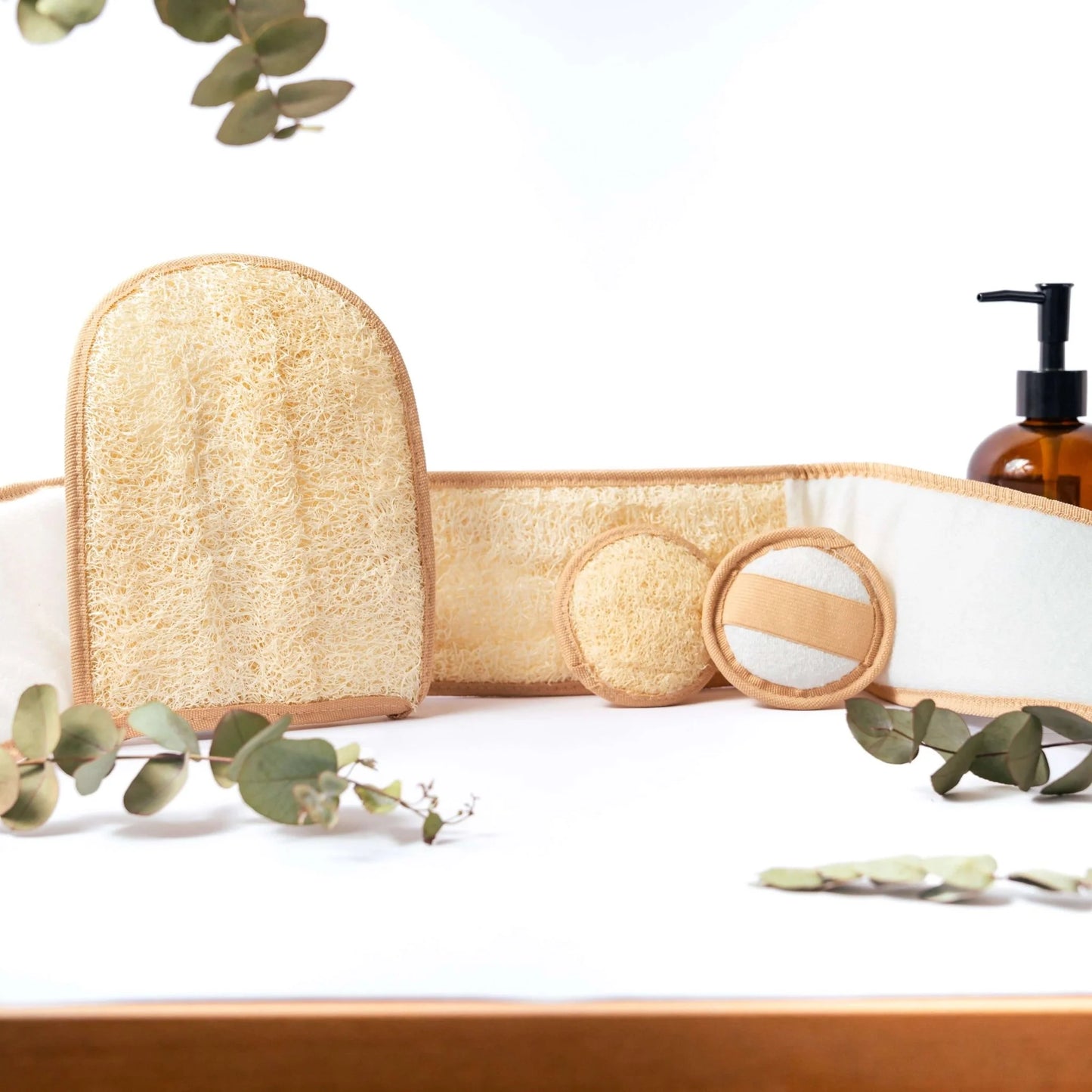
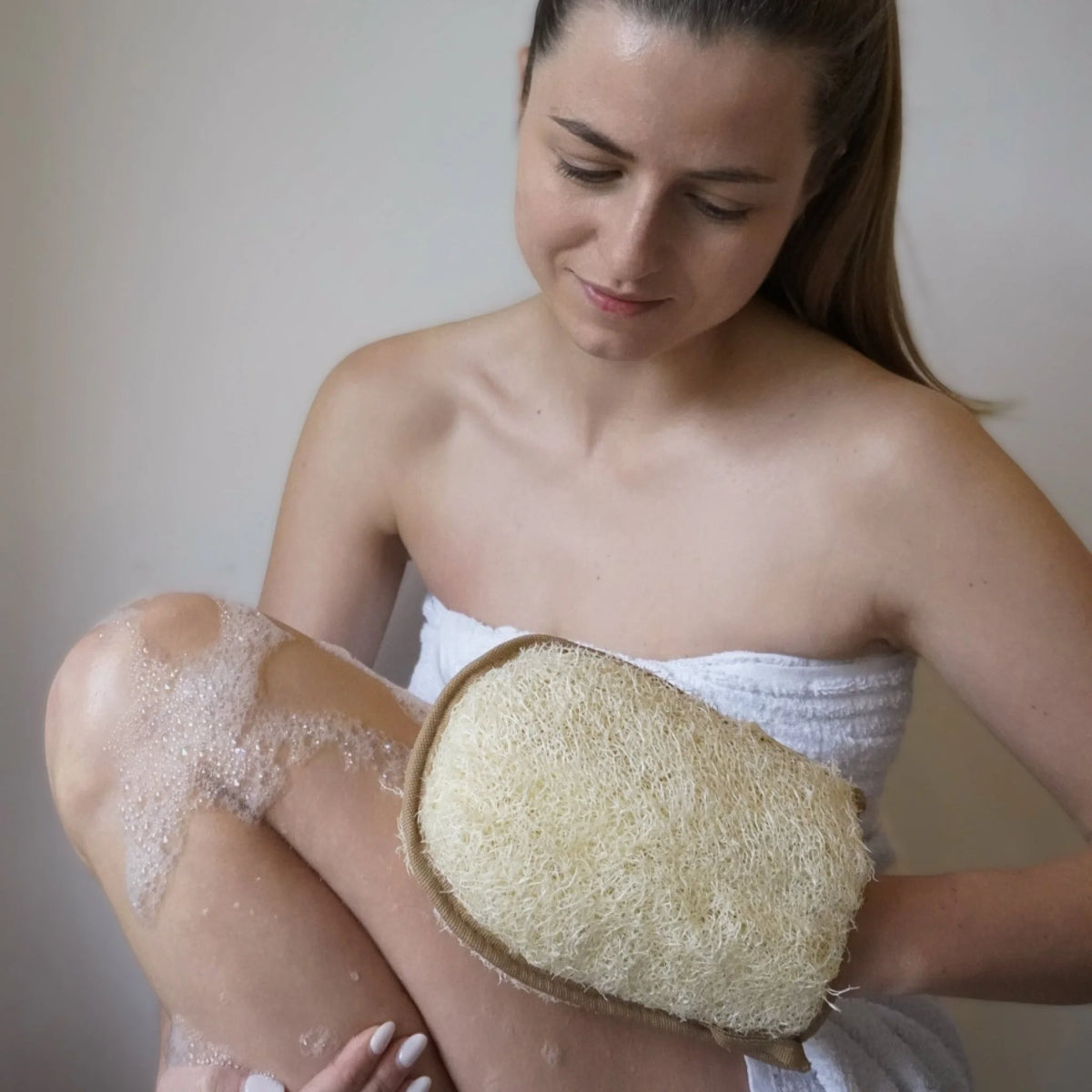
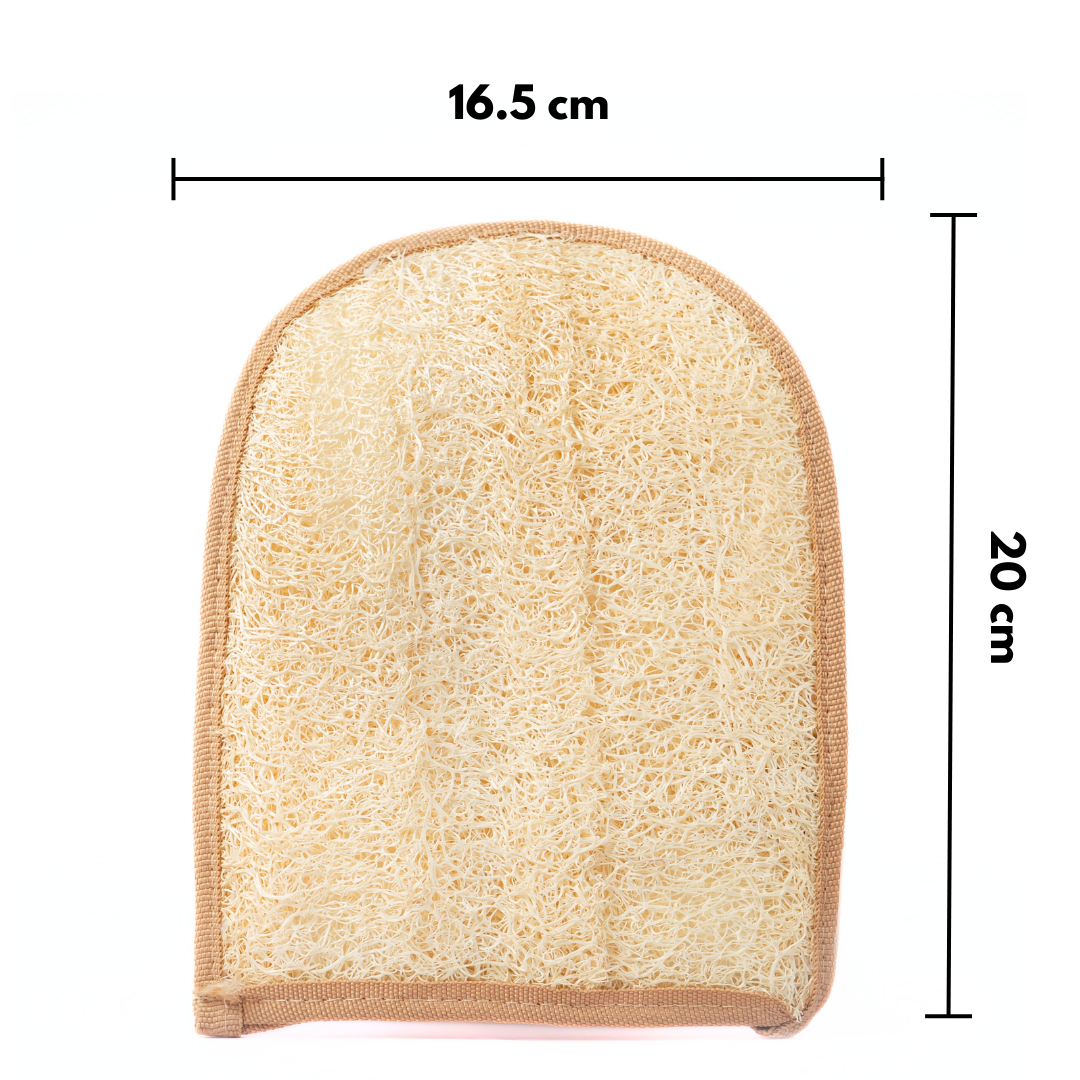
- Large loofah body sponge: As described above — rinse daily, disinfect weekly, dry in an airy spot.
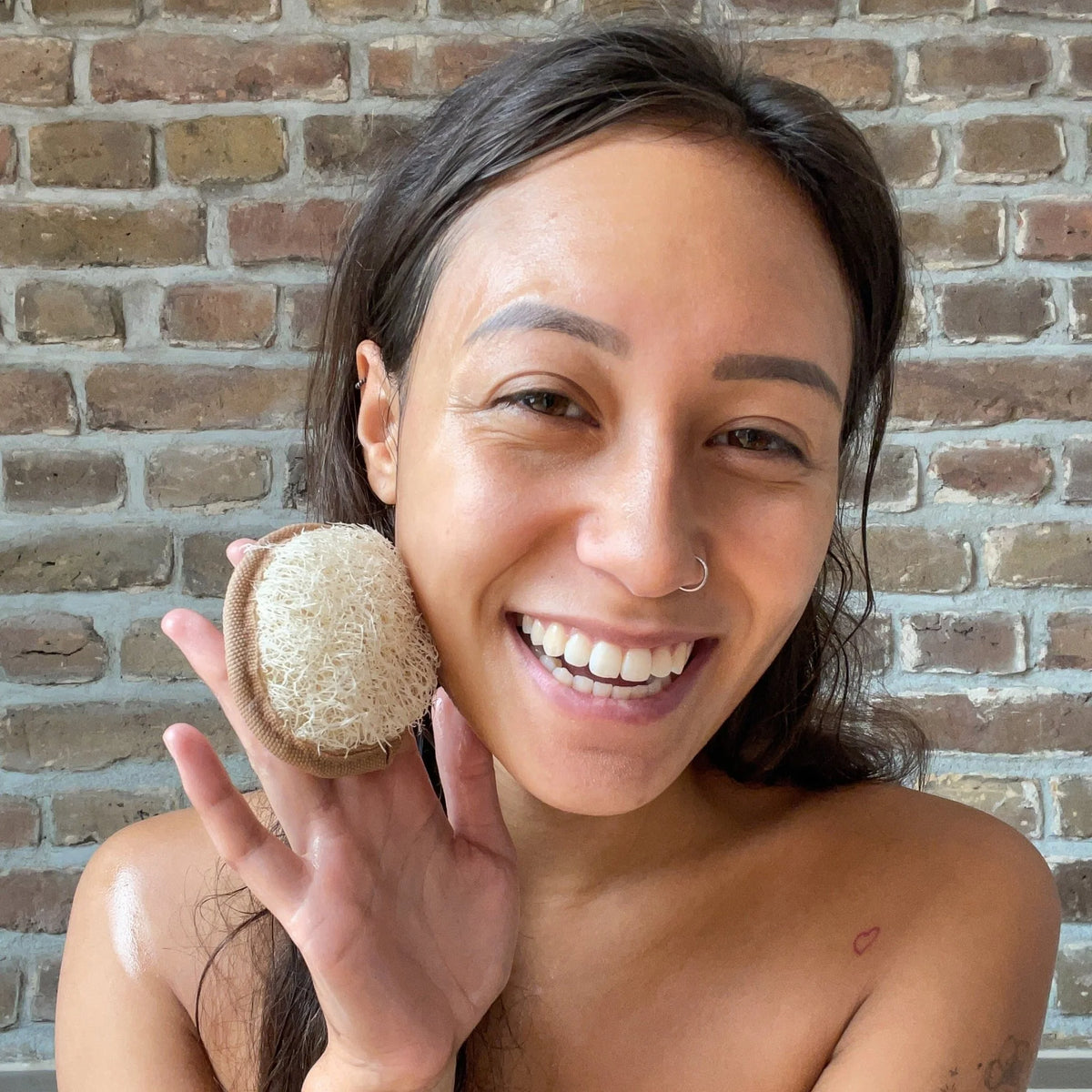
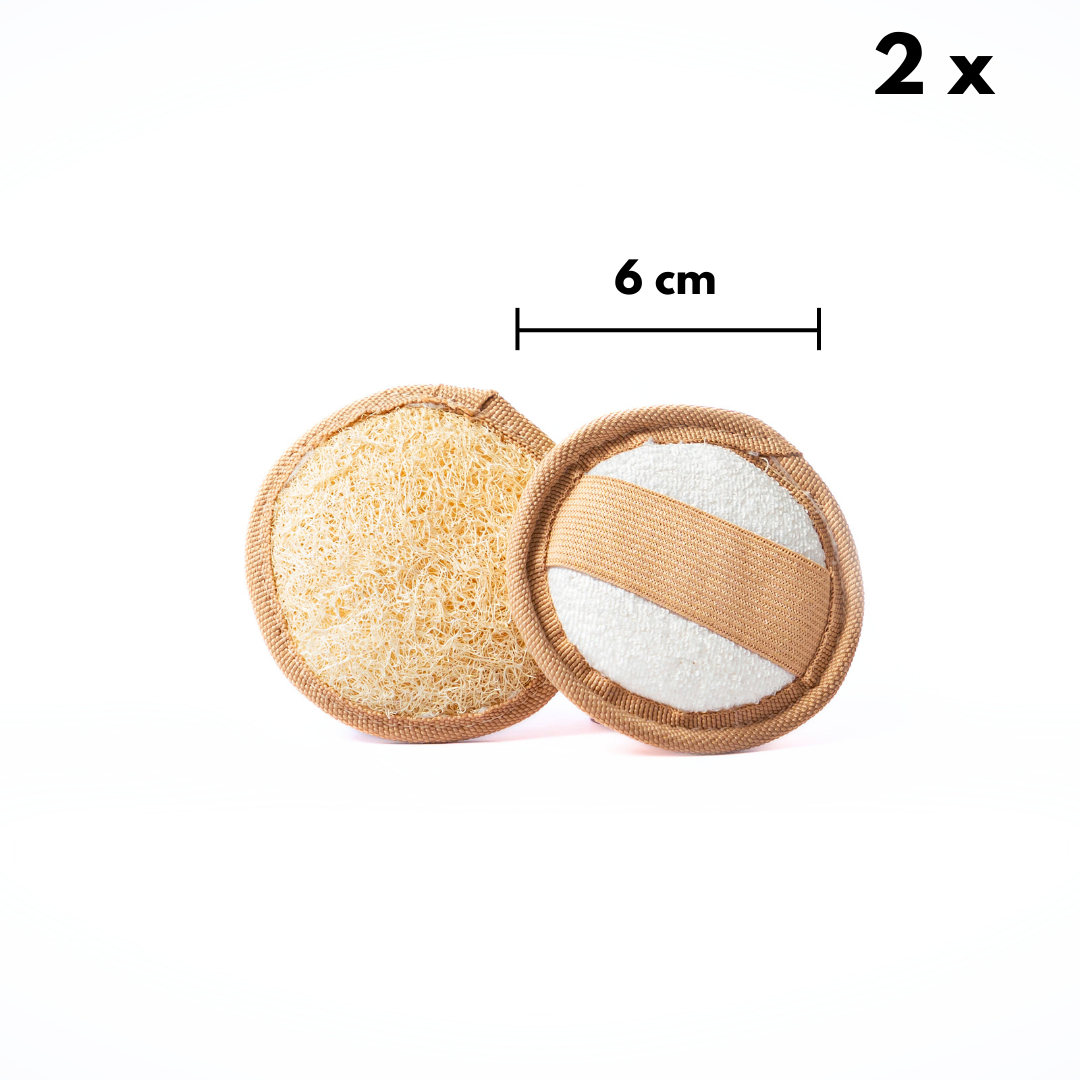
- Loofah face pad: Since facial skin is more sensitive than body skin, clean even more frequently (every 5–7 days) and replace after 4 weeks at the latest.
- Loofah soap combo: Soap residue builds up faster in the fibre structure — rinse especially thoroughly after every use.
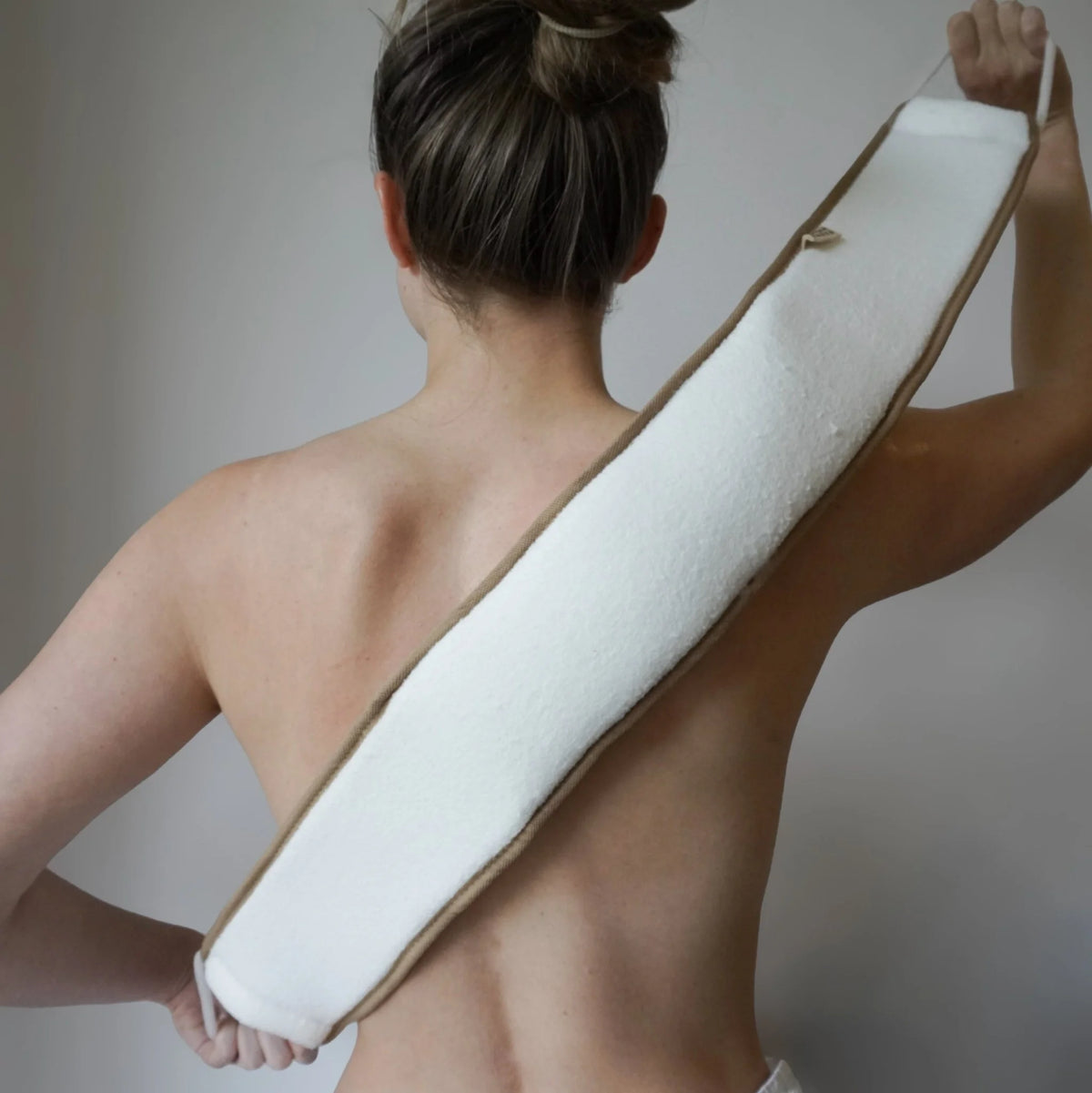
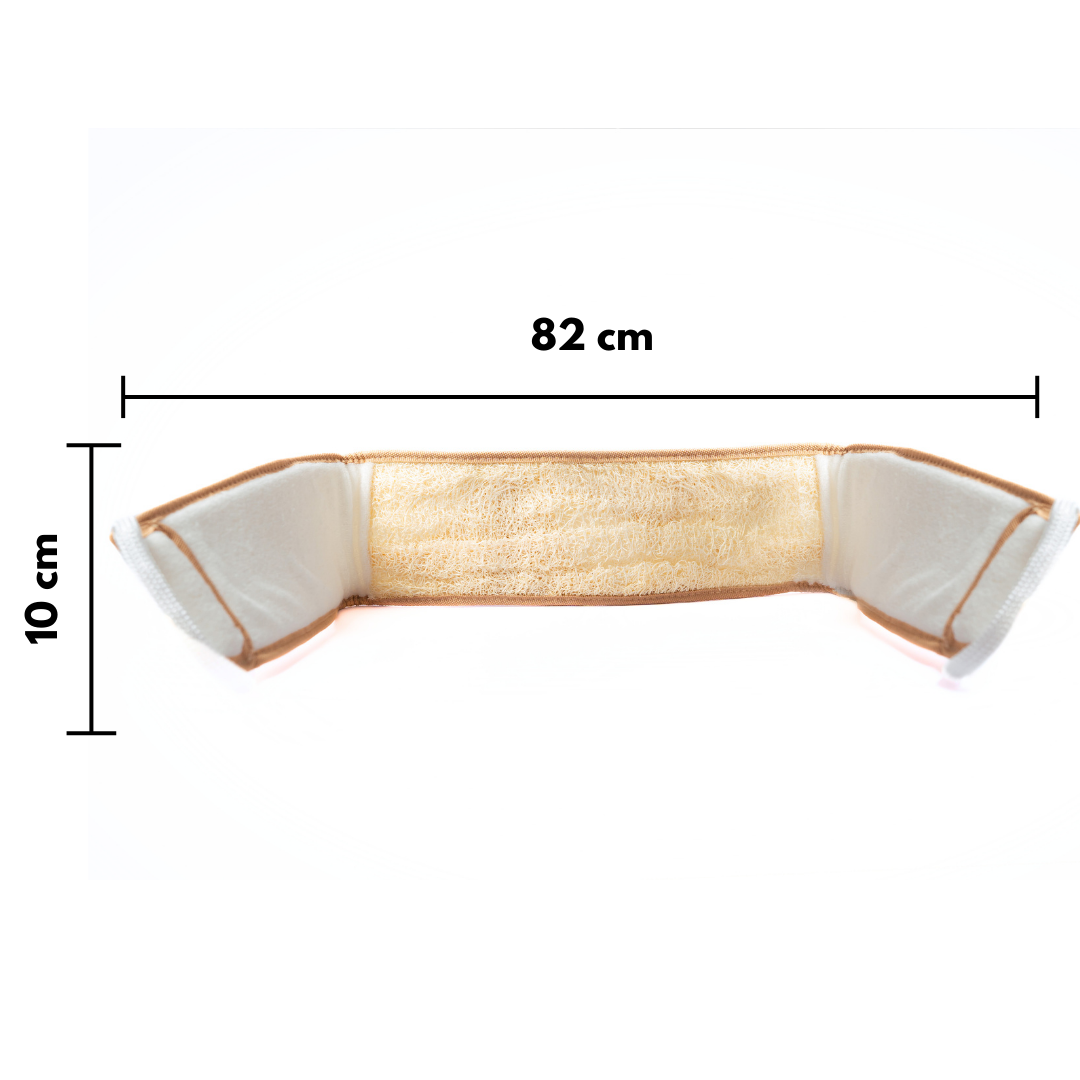
- Loofah back strap or loofah massage sponge: The longer strap sections also need to dry fully — so don't roll them up and leave them in the bathroom.
Conclusion: small routines, big results
A loofah is a natural, sustainable skincare tool — and it deserves the same attention you give your skin. With daily rinsing, weekly deep cleaning, and a timely replacement every 4 to 8 weeks, you'll get the most out of your loofah: effective exfoliation, optimal hygiene, and skin that feels the difference.
👉 Discover fresh loofahs at Loofah Crafts — hand-picked, plastic-free packaging, ready for your skincare routine.
FAQ: Cleaning & replacing your loofah
How often should I clean my loofah? Rinse and squeeze it after every use. A thorough deep clean (hot water or vinegar water) is recommended once a week.
Can I wash my loofah in the washing machine? It's not ideal — the mechanical stress can damage the loofah's fibre structure. Hot water or vinegar water are perfectly sufficient for reliable disinfection.
How long does a loofah last? With daily use and good care, around 4 to 6 weeks. With less frequent use and consistent drying, up to 8–10 weeks.
How do I know it's time to replace my loofah? An unpleasant smell even after cleaning, discolouration, mould spots, or an increasingly frayed appearance are clear signs — time for a new loofah.
Is a loofah more hygienic than a synthetic sponge? A natural fibre loofah has no added antibacterial agents — but it is fully compostable and, with proper care, just as hygienic as quality alternatives. The decisive factor is always how well you care for it and whether you replace it on time.