
Loofah vs. Konjac vs. Dry Brush: Which Exfoliation Method Suits Your Skin?
Share
Exfoliation jungle: Loofah, konjac, or dry brush?
Anyone exploring natural skincare quickly comes across three names: the loofah, the konjac sponge, and the dry brush. All three promise smoother, softer skin — but they work very differently, suit different skin types, and each has its own strengths and weaknesses.
This article honestly compares all three methods and helps you make the right choice for your individual routine. Whether you're looking for gentle cleansing, intensive exfoliation, or lymph stimulation — you'll find a clear answer here.
Loofah — the natural all-rounder made from plant fibres
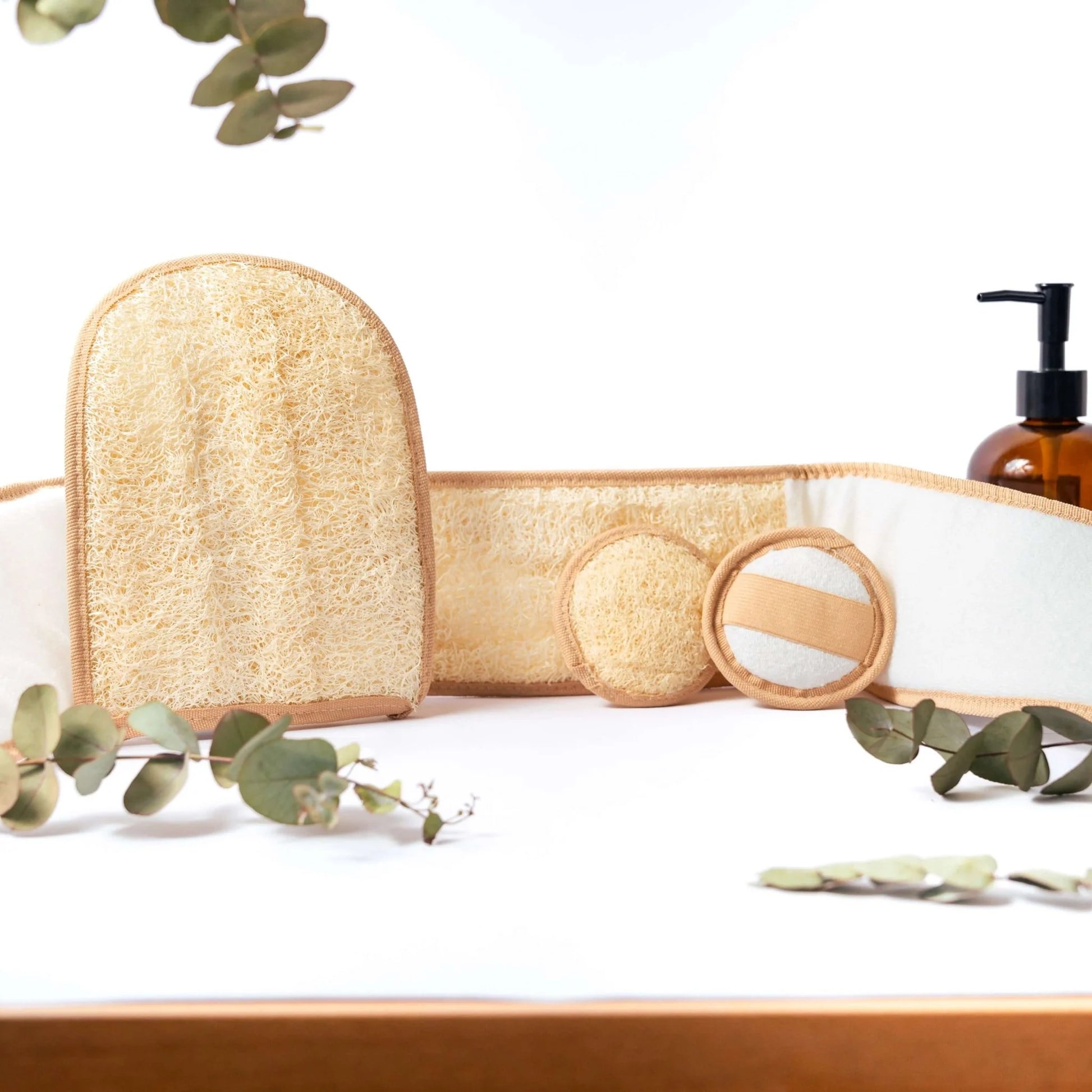
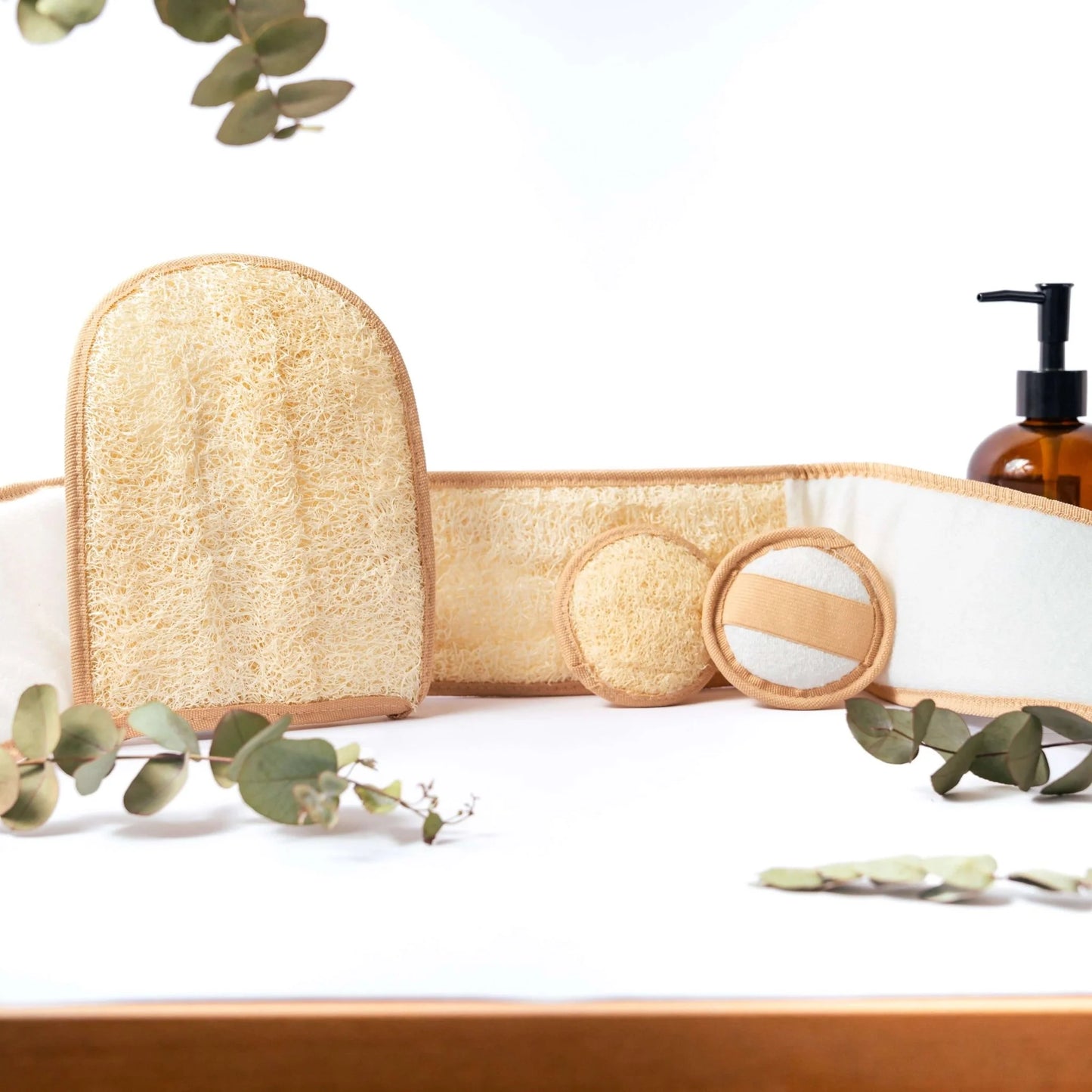
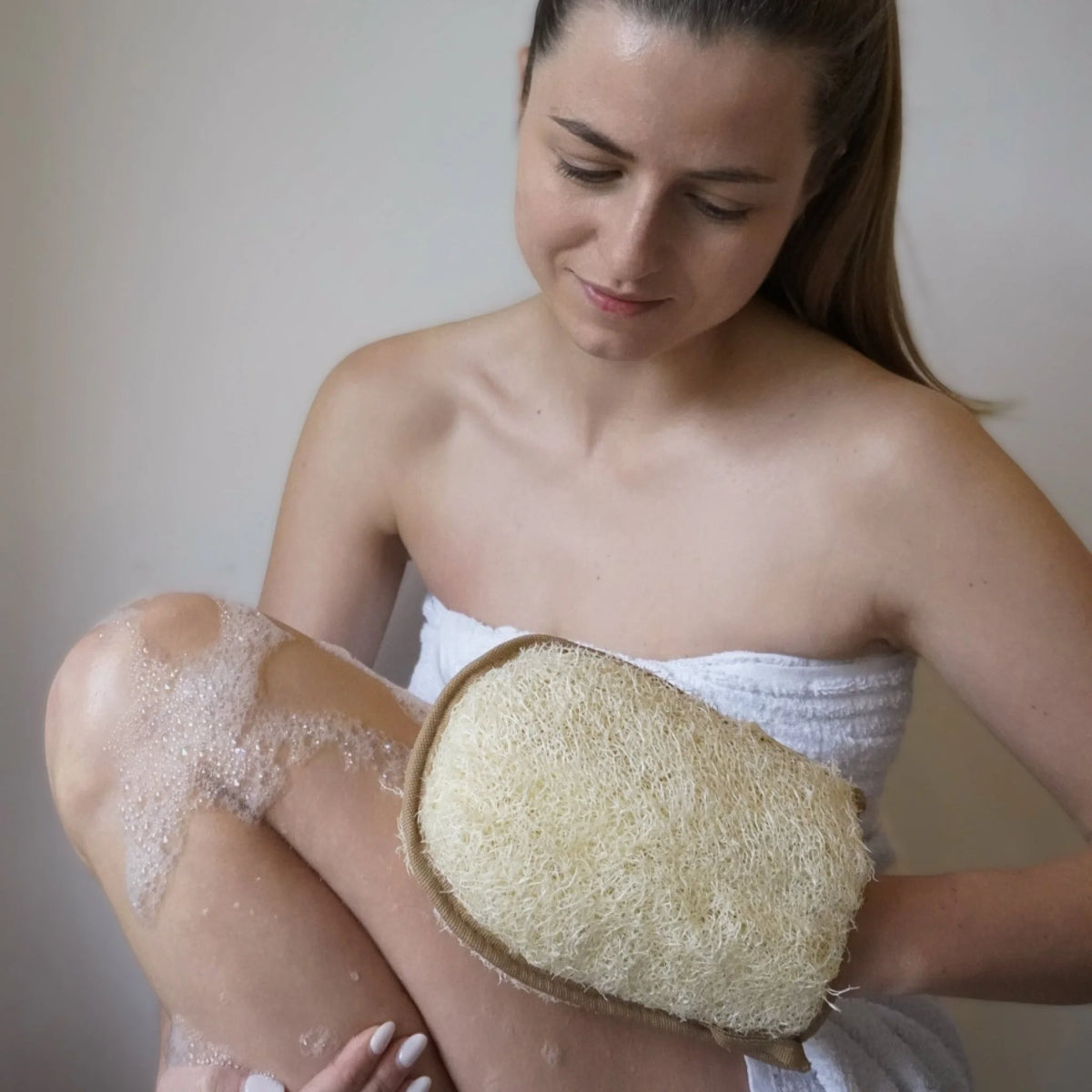
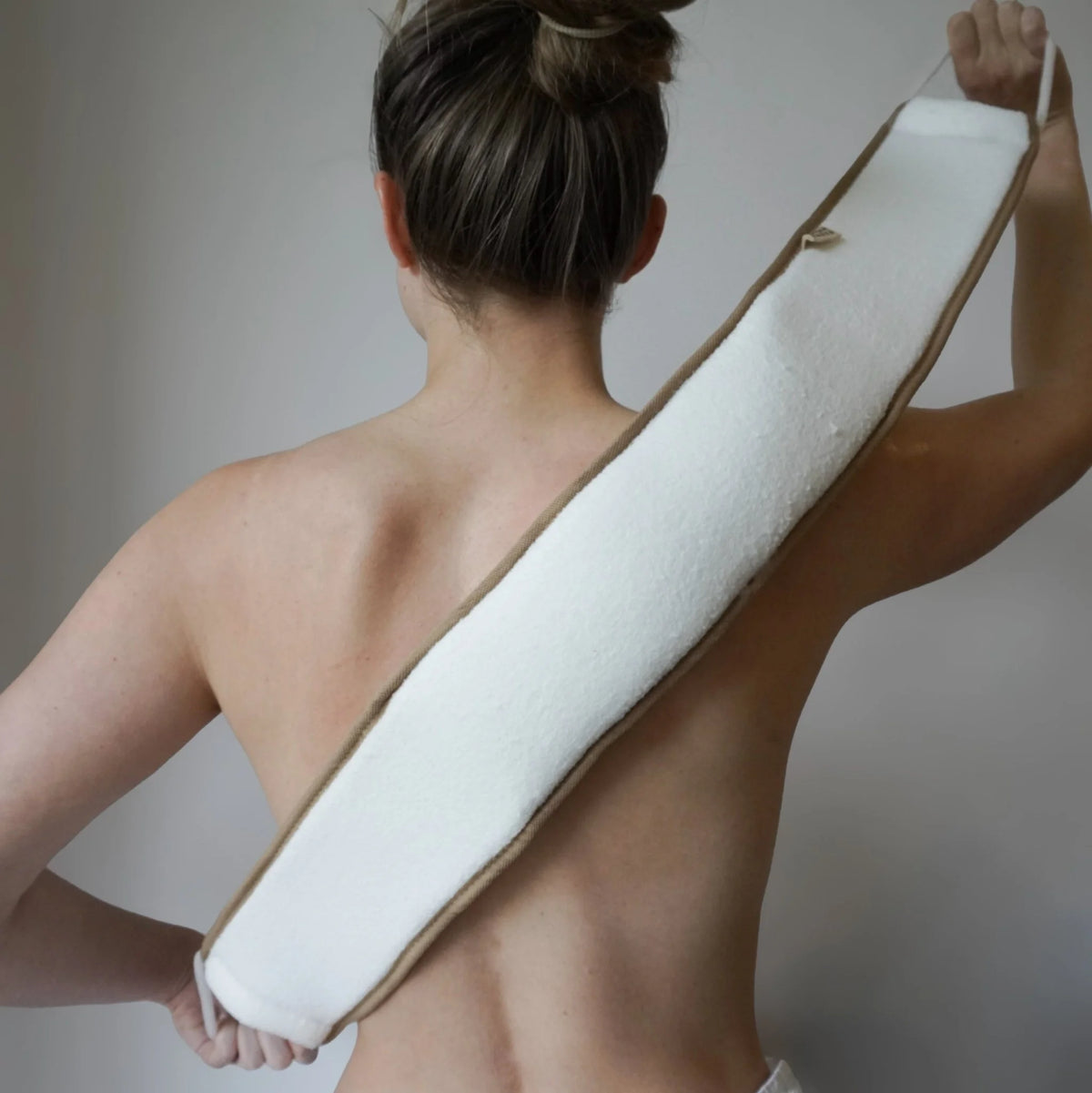
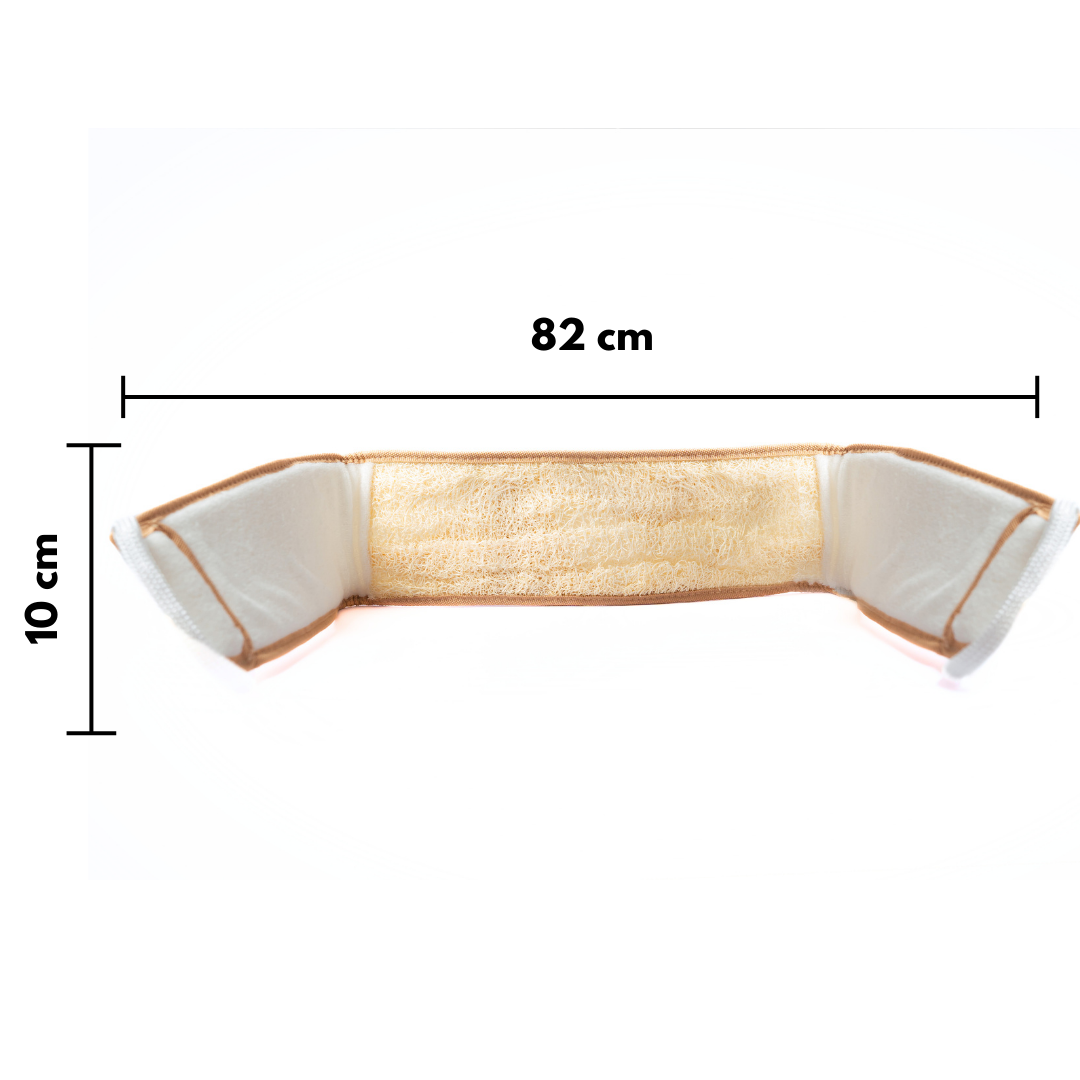
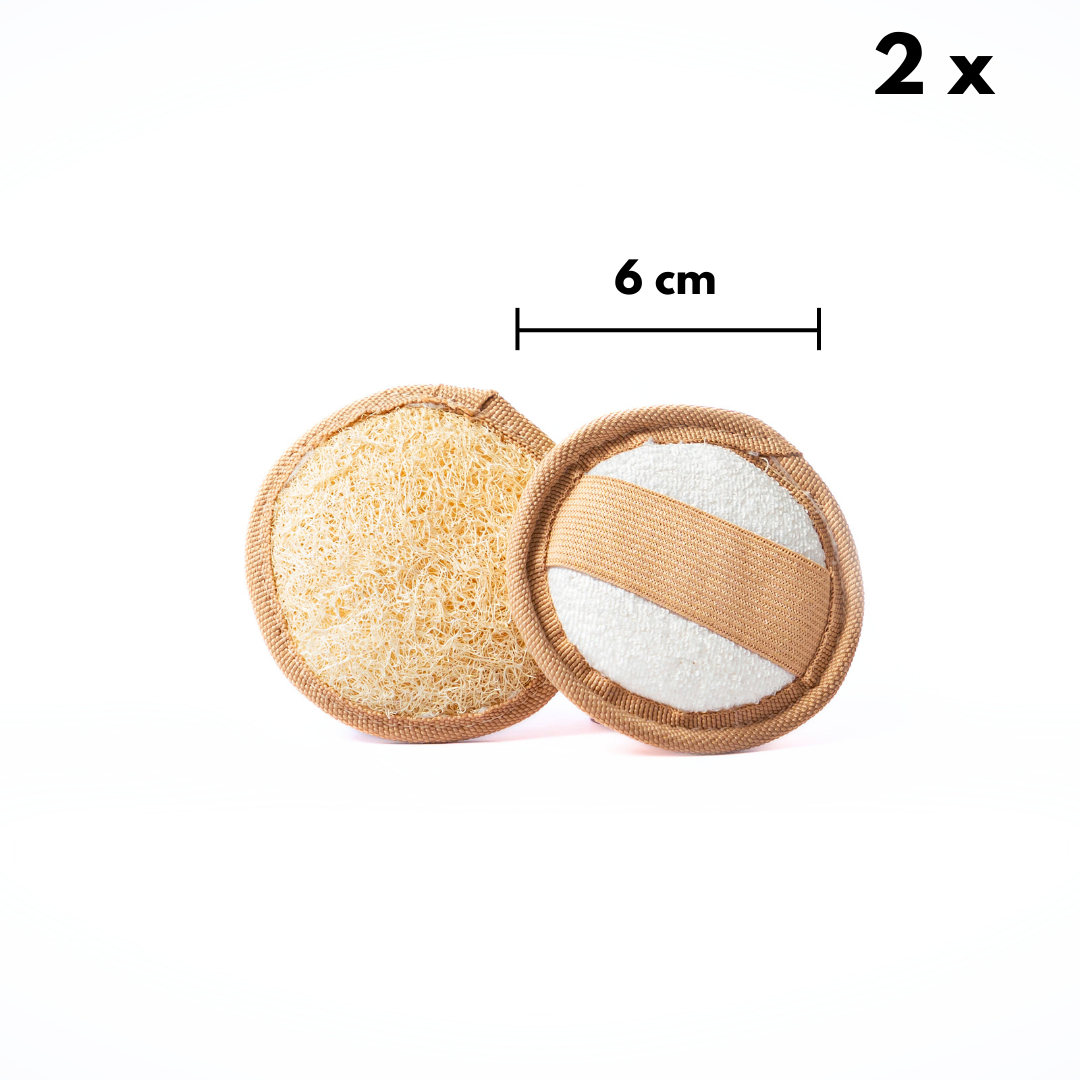
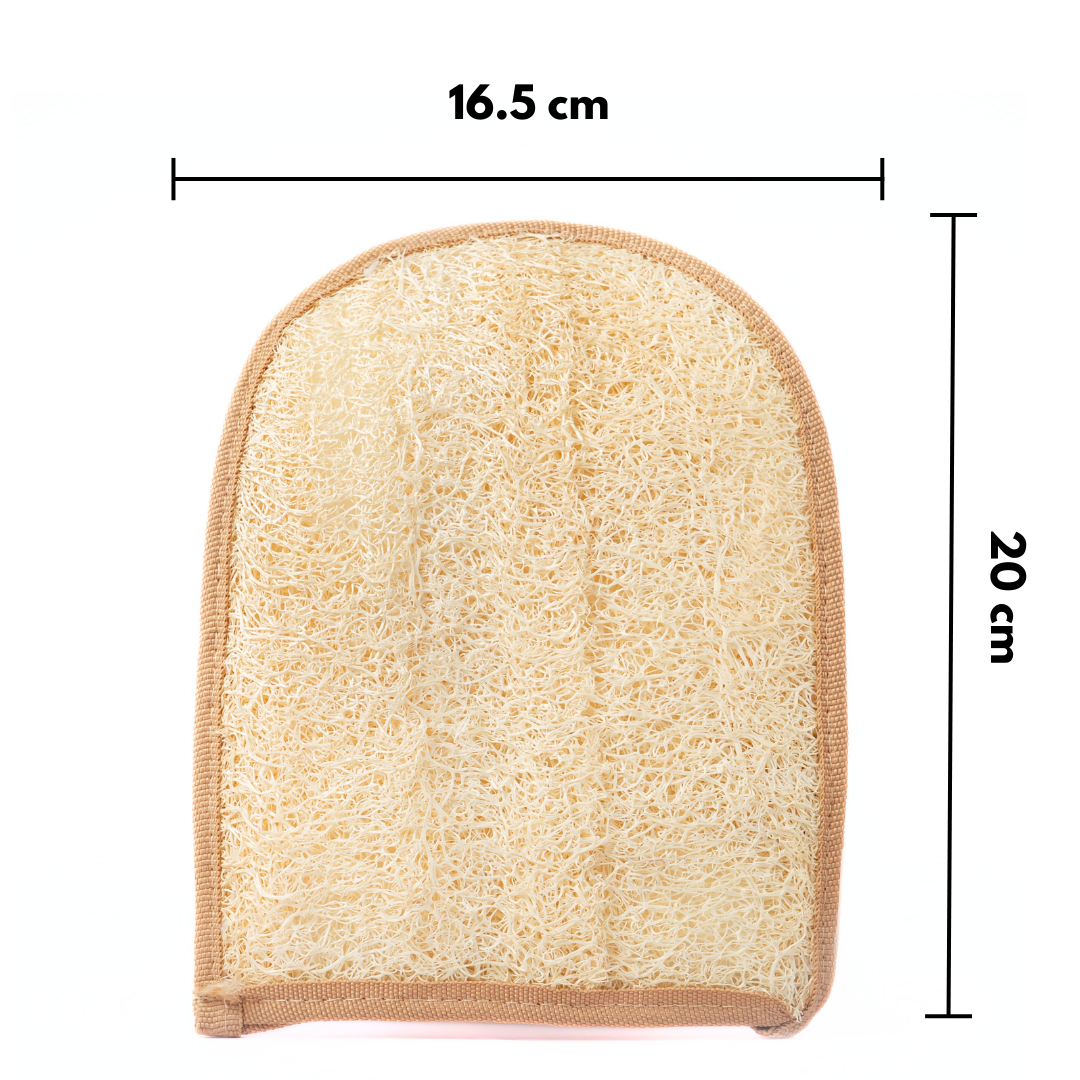
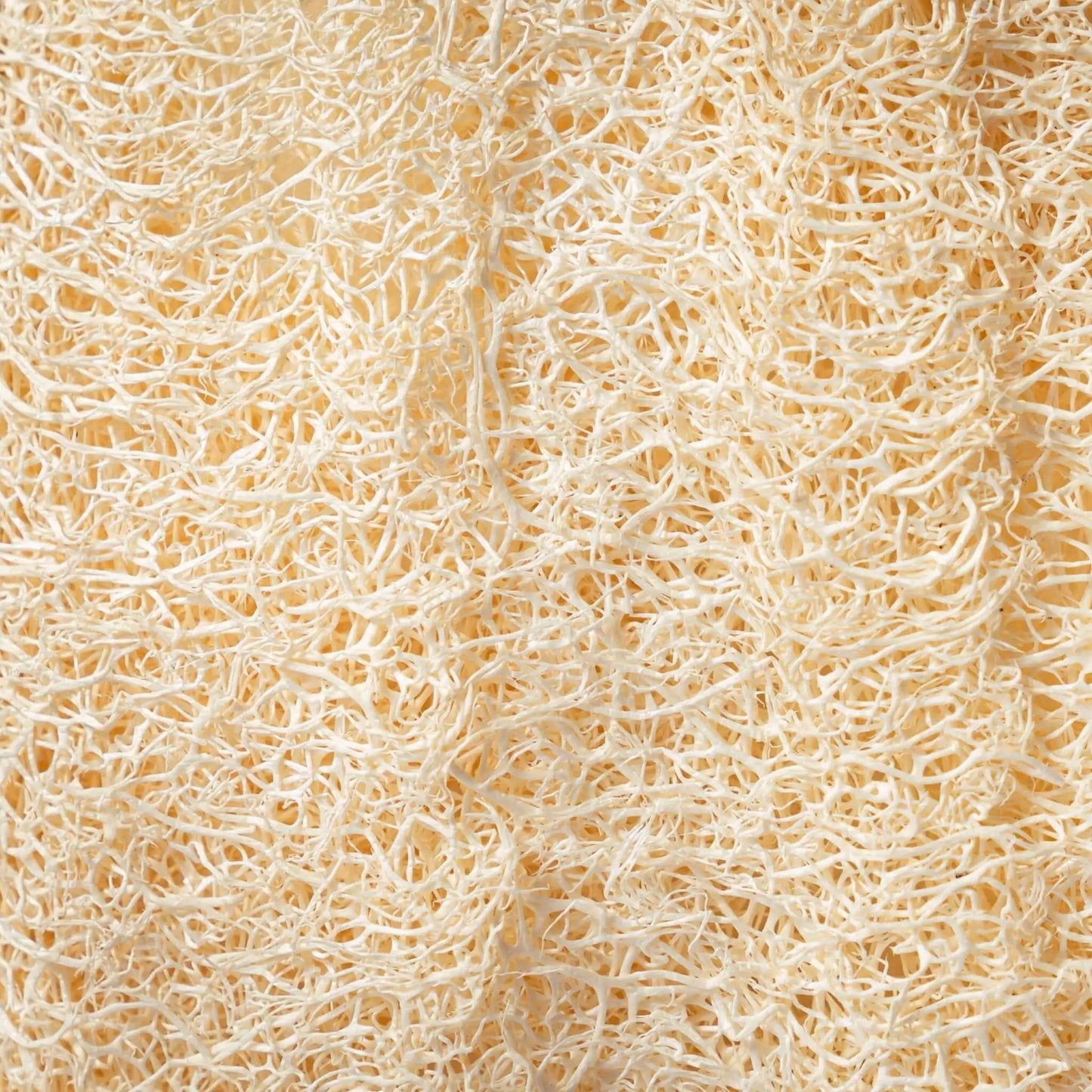
The loofah (also spelled loofa or luffa) is made from the dried fruit of the loofah plant — a member of the gourd family whose fibre network creates a unique, sponge-like texture. It's used wet: simply soak it under warm water and it becomes soft and pliable.
What the loofah can do:
- Mechanical exfoliation through its natural fibre structure — removes dead skin cells gently but effectively
- Stimulates blood circulation and supports lymph flow through massage movements
- Ideal for the body, arms, legs, back, and décolletage
- Can be combined with shower gel, bar soap, or shower oil
- 100% biodegradable and compostable
Best for which skin type: Loofah is best suited for normal to dry skin, as well as anyone looking for moderate exfoliation with a genuine massage effect. Also suitable for sensitive skin on the body — as long as you don't apply too much pressure.
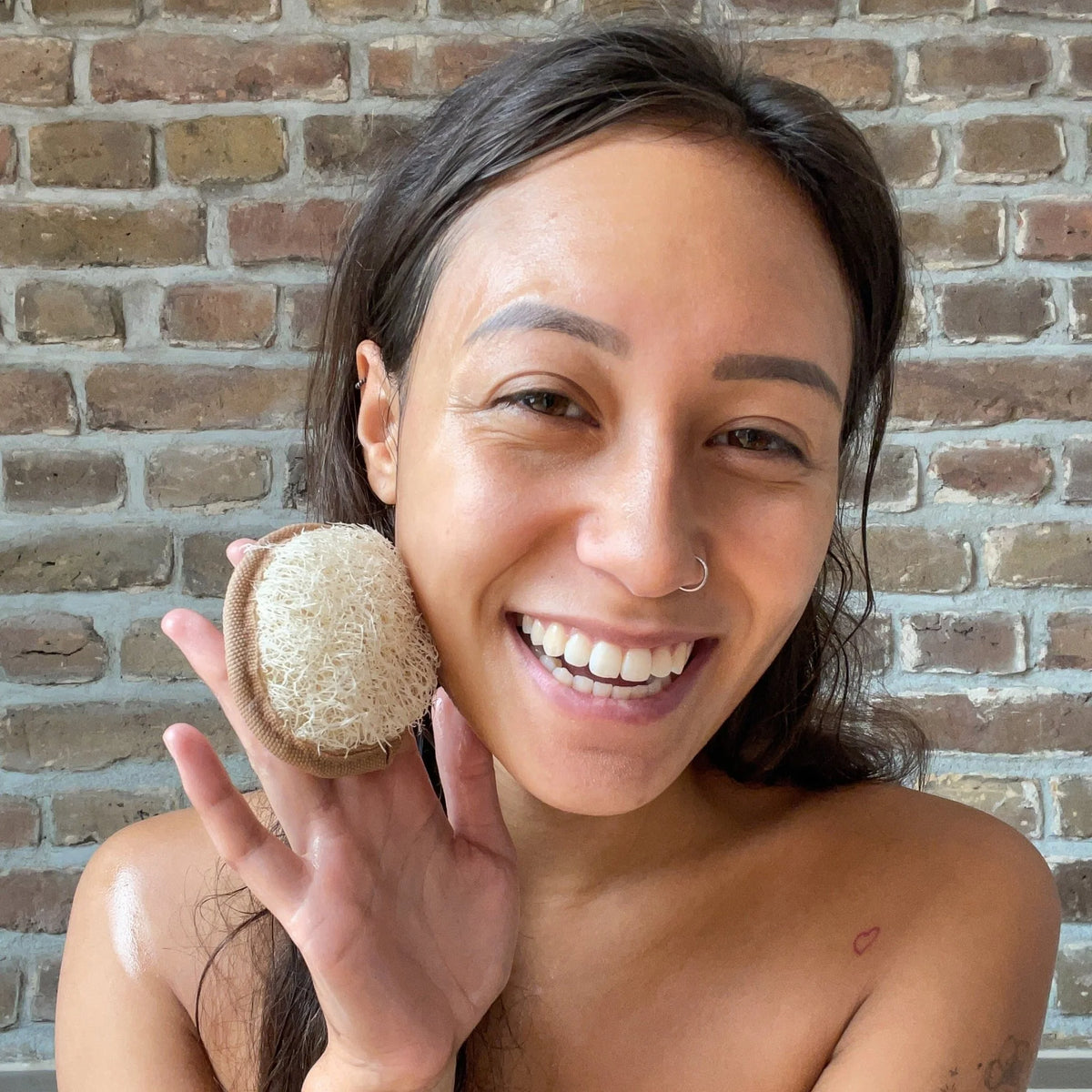
What the loofah can't do: The face is often too sensitive for a standard loofah. Special, finer loofah pads exist for facial use — but the classic body sponge belongs on the body.
Konjac sponge — ultra-gentle for sensitive and oily skin
The konjac sponge is made from the konjac root (Amorphophallus konjac) — a plant native to East Asia. It's soft like jelly, has a slight gel-like quality, and is particularly well suited for facial care.
What the konjac sponge can do:
- Ultra-gentle exfoliation — minimal mechanical action, with soft pore cleansing
- Balances skin tone thanks to its slightly alkaline nature (pH ~9–9.5), which can regulate sebum production in oily skin
- Excellent for the face, including sensitive and acne-prone skin
- Cleanses without soap — water alone is often enough
- Available in variants with activated charcoal (for oily skin) or green clay (for combination skin)
Best for which skin type: Konjac is the first choice for very sensitive, dry, or acne-prone facial skin. It's too gentle for intensive body exfoliation, but perfect for daily facial cleansing.
What the konjac sponge can't do: If you're expecting real exfoliation on the body — for example against cellulite, strawberry skin, or keratosis pilaris — a konjac sponge will disappoint. It's simply too soft for that.
Dry brush — intensive, stimulating, but not for everyone
The dry brush — as the name suggests — is used on dry skin before you get in the shower. It's typically made from natural bristles (sisal, agave, or boar bristle) and has a noticeably more intense effect than the other two methods.
What the dry brush can do:
- Intensive exfoliation through firm bristles — particularly effective against calluses, keratosis pilaris, and cellulite
- Strong lymphatic system stimulation — considered the most effective of the three methods for lymphatic drainage
- Invigorates the skin through dry massage, can help reduce swelling in the leg area
- Makes skin especially receptive to nourishing oils after showering
Best for which skin type: Dry brushing suits skin that's used to intense stimulation — that is, normal, robust skin on the thighs, buttocks, and legs. It's generally not suitable for the face.
What the dry brush can't do: For sensitive, irritated, or very dry skin, it can quickly become too much — redness and irritation are common. The learning curve is also steeper: too much pressure or the wrong direction can damage the skin. And dry brushes need thorough cleaning after each use, otherwise dead skin cells and bacteria accumulate.
Head-to-head comparison: Loofah vs. Konjac vs. Dry Brush
| Feature | Loofah | Konjac Sponge | Dry Brush | |---|---|---|---| | Application | Wet (shower) | Wet (shower/sink) | Dry (before shower) | | Exfoliation intensity | Medium | Very gentle | Intensive | | Suitable for face | Special pads only | ✅ Yes | ❌ No | | Suitable for body | ✅ Yes | ❌ Barely | ✅ Yes | | Lymphatic drainage | Good | Barely | Very good | | For cellulite | Good | Barely | Very good | | Sensitive skin | Conditionally | ✅ Ideal | ❌ Not recommended | | Oily/acne skin | Body: good | ✅ Ideal | ❌ Not recommended | | Biodegradable | ✅ Yes | ✅ Yes | Partially (wooden handle) | | Lifespan | 6–8 weeks | 4–6 weeks | 3–6 months | | Price (approx.) | £3–10 | £3–12 | £10–30 |
Which method suits you? — The decision guide
You have normal to dry body skin and want an everyday shower exfoliation? → The loofah is your first choice. It's versatile, easy to use, biodegradable, and delivers noticeably softer skin with minimal effort.
You have sensitive or acne-prone facial skin? → The konjac sponge is made for you. Gentle, cleansing, without irritation.
You want maximum results against cellulite and want to build an intensive lymphatic drainage routine? → The dry brush delivers the strongest results — but make sure you learn the proper technique first and start with soft bristles.
You want to care for both your face and body equally? → Combine: konjac for the face, loofah for the body. This is the most common and sensible combination.
Common mistakes — and how to avoid them
- Pressing the dry brush too hard: Your skin should be lightly flushed after brushing, but not irritated or sore.
- Not letting the loofah dry: A damp sponge is a breeding ground for bacteria. After showering, always shake it out well and hang it up to dry.
- Storing the konjac sponge dried out: It should never be allowed to dry out completely — it will lose its structure. Best stored damp in the fridge (which also slows bacterial growth).
- Using all three daily: Less is more. 3 to 4 times a week is enough for the loofah; the konjac can be used daily; the dry brush a maximum of 4–5 times a week.
Sustainability comparison
All three options can be nature-based and plastic-free — if you shop mindfully. The loofah and konjac sponge are fully biodegradable. With dry brushes, it's worth checking the handle (wood instead of plastic) and the bristles (natural sisal instead of synthetic).
From a purely ecological perspective, the loofah stands out: it grows without intensive processing, is compostable after use, and leaves no plastic waste.
Conclusion: No single winner — but clear recommendations
Loofah, konjac, and dry brush are not competitors, but tools for different needs. The loofah is the most straightforward everyday companion for body care and exfoliation. The konjac is the specialist for gentle facial care. The dry brush delivers the most intensive results, but demands more attention and technique.
If you're just starting out with natural exfoliation, the loofah is the best entry point — simple, affordable, sustainable, and immediately noticeable.
👉 Discover our loofah sponges at loofahcrafts.shop and find your perfect exfoliation companion.
FAQ: Loofah, Konjac & Dry Brush
Can I combine a loofah and a dry brush? Yes — but not on the same day. Both are mechanical exfoliation methods, and too much stimulation can irritate the skin. Alternate them: e.g. dry brush Monday, Wednesday, and Friday — loofah Tuesday and Thursday.
Which method works best against cellulite? The dry brush shows the strongest results on the appearance of cellulite, because it has a more intense effect on circulation and the lymphatic system. The loofah is a good, gentler alternative — especially for beginners or more sensitive skin.
Is the konjac sponge also suitable for the body? Technically yes, but it's too soft for effective body exfoliation. For the body, it's better to reach for a loofah or dry brush.
How long do the three methods last? A loofah lasts 6 to 8 weeks with good care. A konjac sponge around 4 to 6 weeks. A natural-bristle dry brush can last — with regular cleaning — 3 to 6 months.
Which is the most sustainable? All three can be sustainable. The loofah is fully plant-based and compostable — it has a slight edge in terms of pure ecological footprint.