
Loofah Peeling for Blemish-Prone Skin & Acne: What Really Works — and What You Should Avoid
Share
Why Blemish-Prone Skin and Peeling Are Such a Hot Topic
Blemish-prone skin is one of the most common skin concerns — whether you're a teenager or an adult. Blackheads, enlarged pores, the occasional spot, or persistent acne: almost everyone knows the struggle. And you'll hear the same contradictions everywhere: "Peeling helps!" — but also: "Don't peel, it makes acne worse!" So what's true?
The answer lies somewhere in between. And that's exactly where the loofah comes in: with the right technique and the right routine, a loofah peeling can noticeably improve blemish-prone skin. Used incorrectly, it can cause irritation. This article shows you how to make the right call.
What Happens Inside a Pore When Skin Is Blemish-Prone?
To understand how a loofah can help, it's worth taking a quick look inside the pore itself:
- Excess sebum (skin oil) combines with dead skin cells to block the follicle opening.
- When a plug forms near the skin surface, it's called a blackhead (comedone).
- When bacteria join the party, inflammation follows — the classic spot.
- When the skin is chronically inflamed and covered in comedones, that's acne — a condition that, in more serious cases, requires dermatological treatment.
Peeling targets the very first stage: By regularly removing dead skin cells, pores clog less quickly. Sebum can flow more freely, and the environment becomes less hospitable for bacteria.
How Loofah Can Help Blemish-Prone Skin
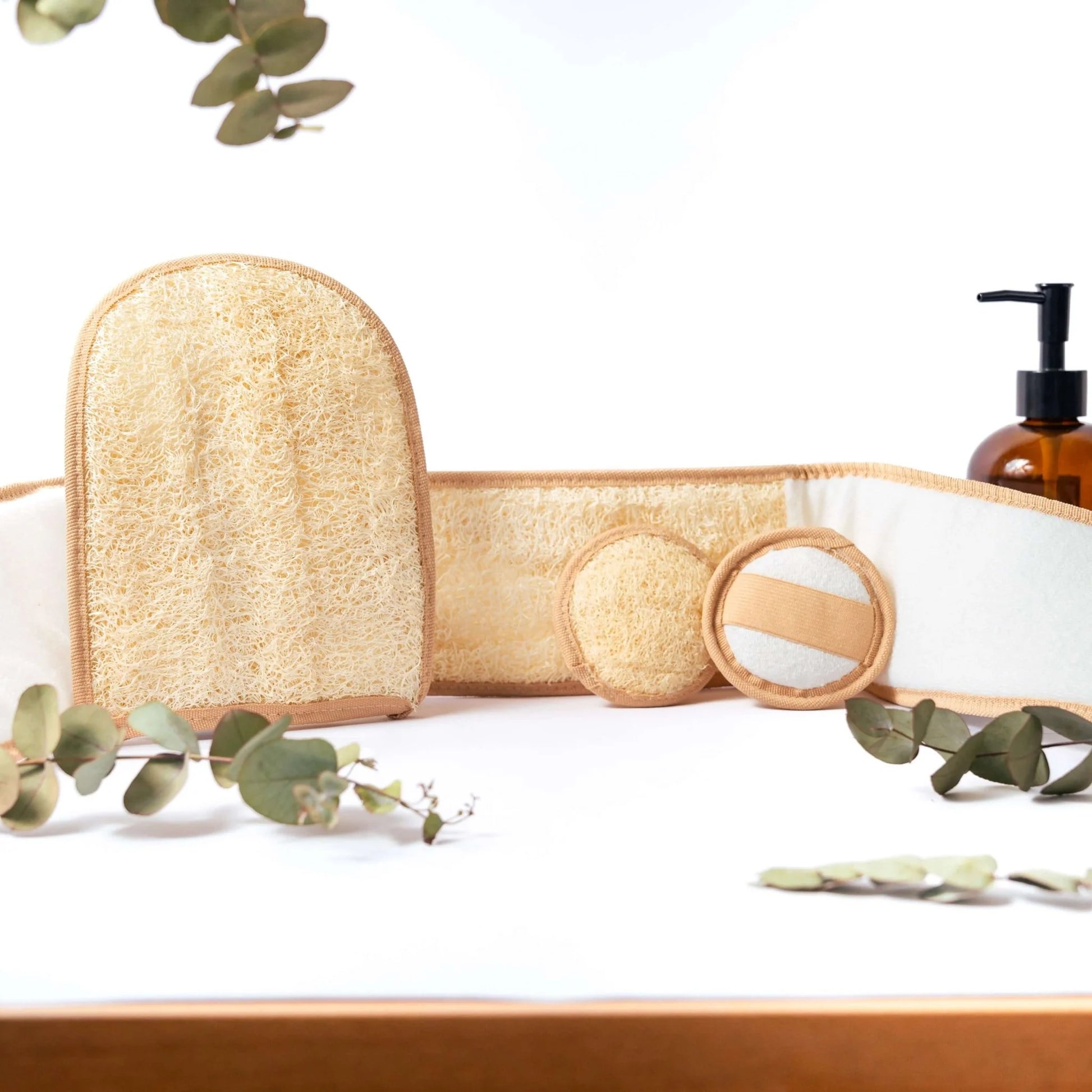
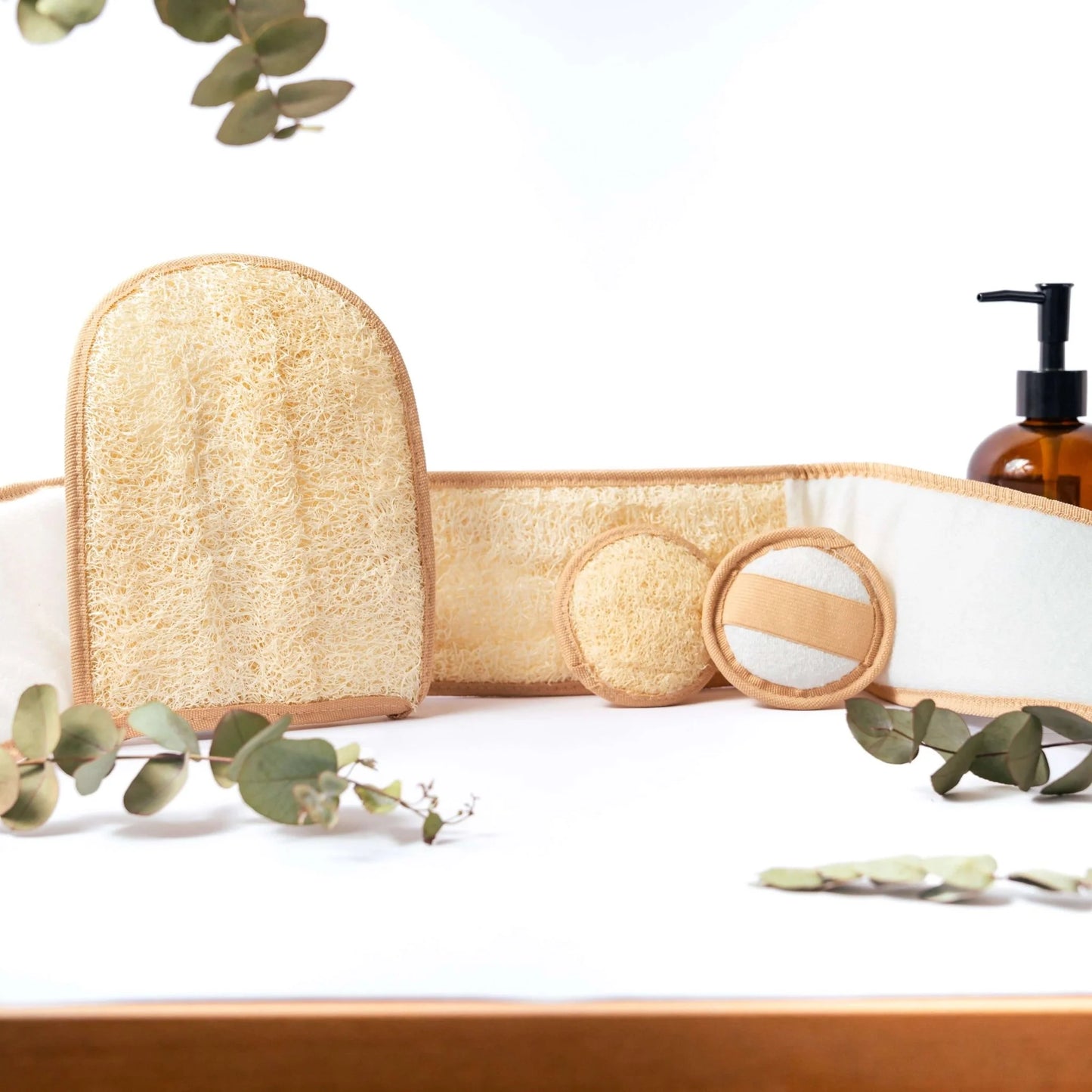
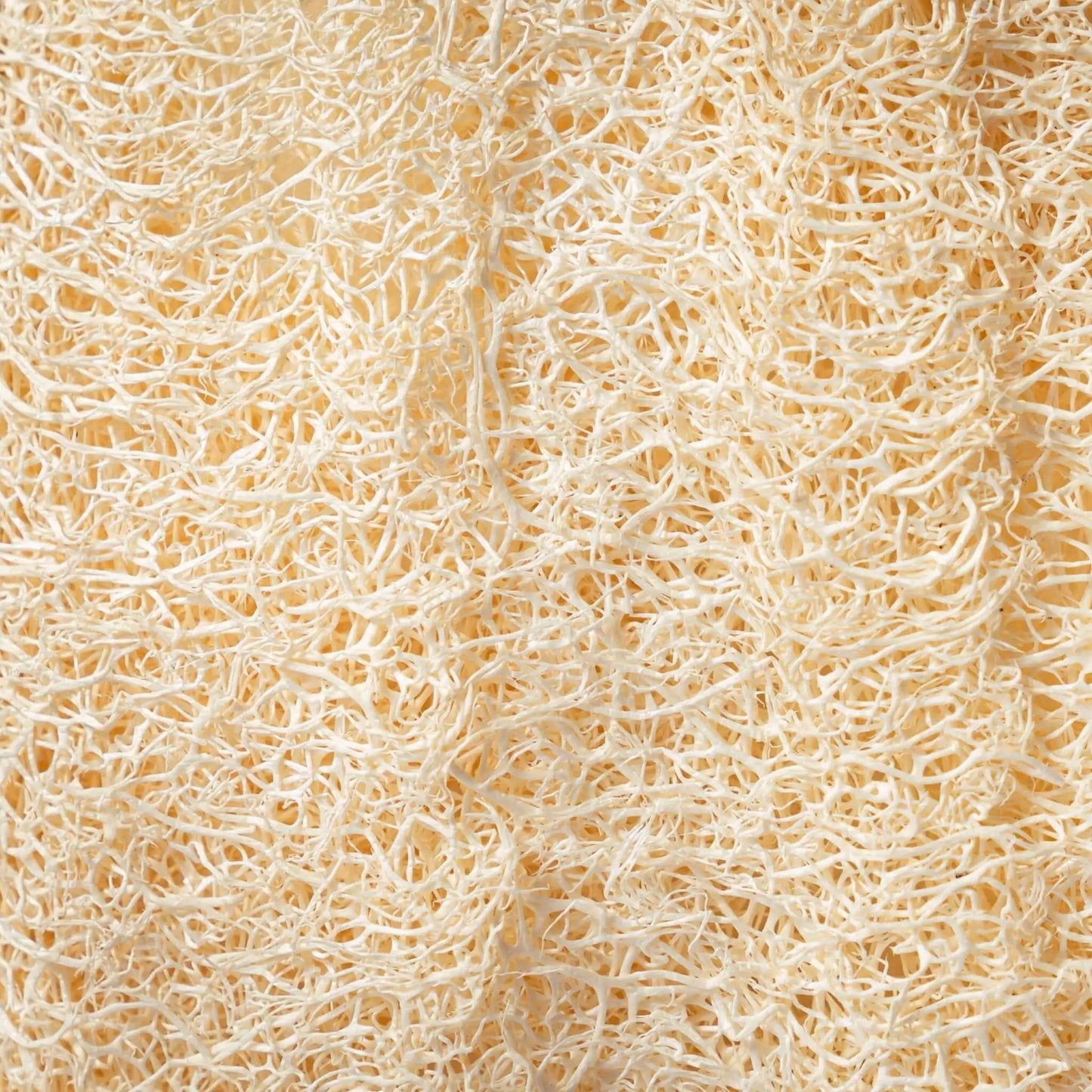
A loofah is made from the natural fibres of the luffa plant — a tropical member of the cucumber family. Its fibrous texture acts as a gentle mechanical scrub that:
- Removes dead skin cells (keratinocytes) from the skin's surface — no chemicals needed.
- Stimulates blood circulation, so the skin's regeneration processes run faster.
- Visually refines pores by regularly clearing away the layer of dead skin that makes them look larger.
- Improves the absorption of skincare products — a serum or light gel penetrates much better after a peeling session.
Another bonus: loofah is completely natural, compostable, and contains no synthetic scrubbing particles (microplastics), which are found in many conventional exfoliating creams and contribute to environmental pollution.
Which Skin Conditions Are Suited to Loofah Peeling?
Not every type of blemish-prone skin responds the same way to mechanical exfoliation. Here's a clear overview:
Well-suited:
- Skin with blackheads and mild blemishes (comedones, enlarged pores)
- Combination or slightly oily skin without active inflammation
- Skin prone to build-up and rough texture
- Body areas with occasional spots (back, décolleté, upper arms)
Use with caution / best to skip:
- Active, inflamed spots (pustules, red papules): peeling can irritate inflammation and spread bacteria across the skin
- Clinical acne (acne vulgaris, acne cystica): always consult a dermatologist first
- Recently treated skin (after retinol, acid peels, laser treatments)
- Very sensitive or irritated skin
Rule of thumb: If your skin is burning, tight, or looks inflamed right now — skip the loofah today and give your skin a rest.
Step by Step: How to Apply Loofah Peeling on Blemish-Prone Skin
Technique and rhythm are the deciding factors between success and irritation. Here's how to get it right:
What you'll need:
- A fresh, well-maintained loofah
- Warm water
- A mild, non-comedogenic cleansing gel or soap (fragrance-free if you're prone to acne)
- A light, oil-free moisturising gel to finish
The process:
- Soften the skin: Shower or wash for at least 2 minutes with warm water. The dead skin cells swell up — the loofah works more gently as a result.
- Wet the loofah: Saturate the loofah with warm water until it is soft and pliable.
- Apply product: Add a small amount of mild cleansing gel to the loofah — just a little goes a long way.
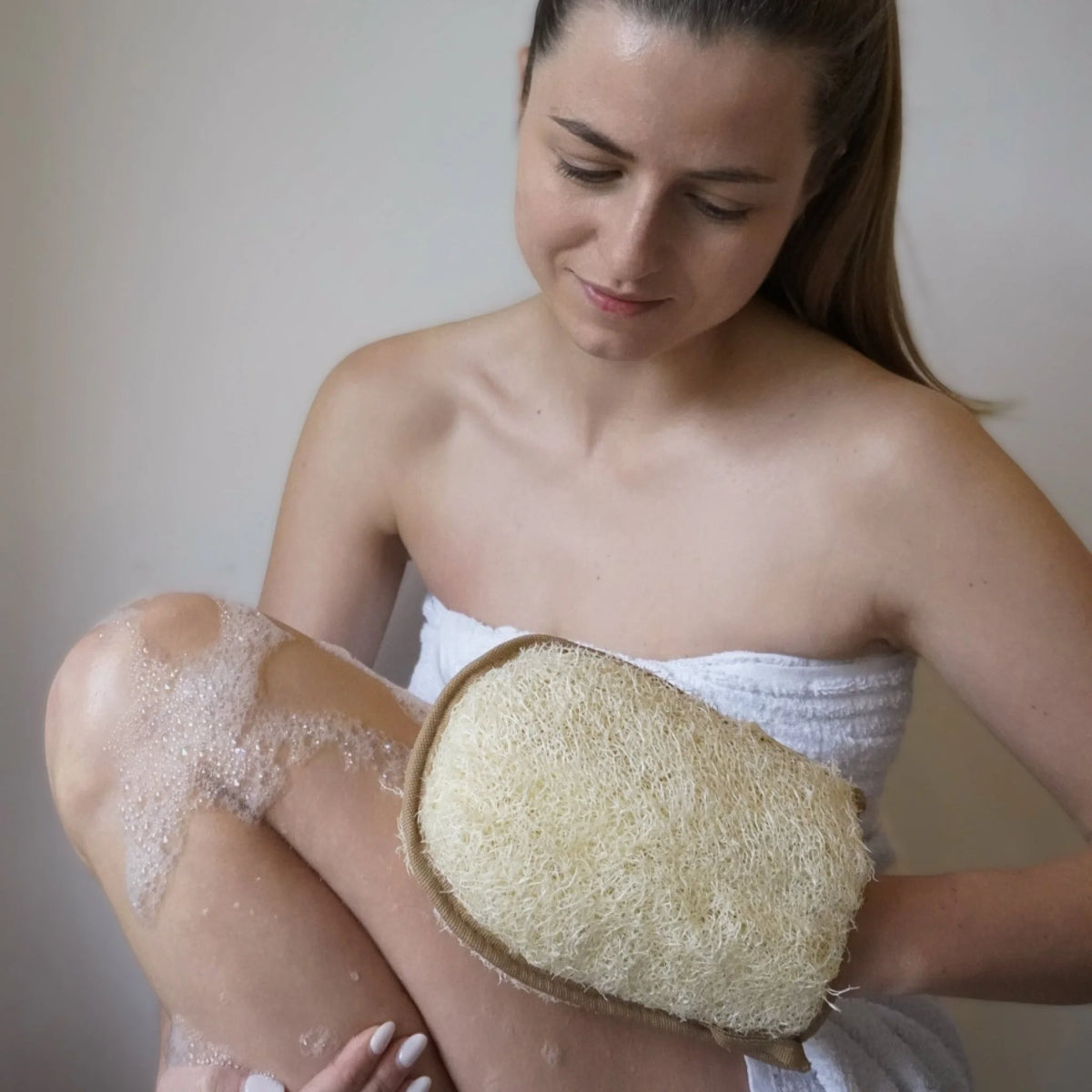
- Gentle circles: Apply light pressure and work in circular motions on the skin. Be especially gentle on the face and décolleté — the skin here is more sensitive than on the body.
- Leave inflamed areas alone: Don't work directly over active spots or redness. Massaging around them is fine.
- Rinse: Rinse thoroughly with cool water — this closes the pores after the peeling.
- Moisturise: Apply a light, non-comedogenic moisturiser. Skin needs hydration after peeling; otherwise it produces more sebum as a protective response.
Frequency for blemish-prone skin: Twice a week is ideal for most people. Daily is too much — it disrupts the skin barrier and can end up encouraging blemishes instead of reducing them.
Body vs. Face: What's the Difference?
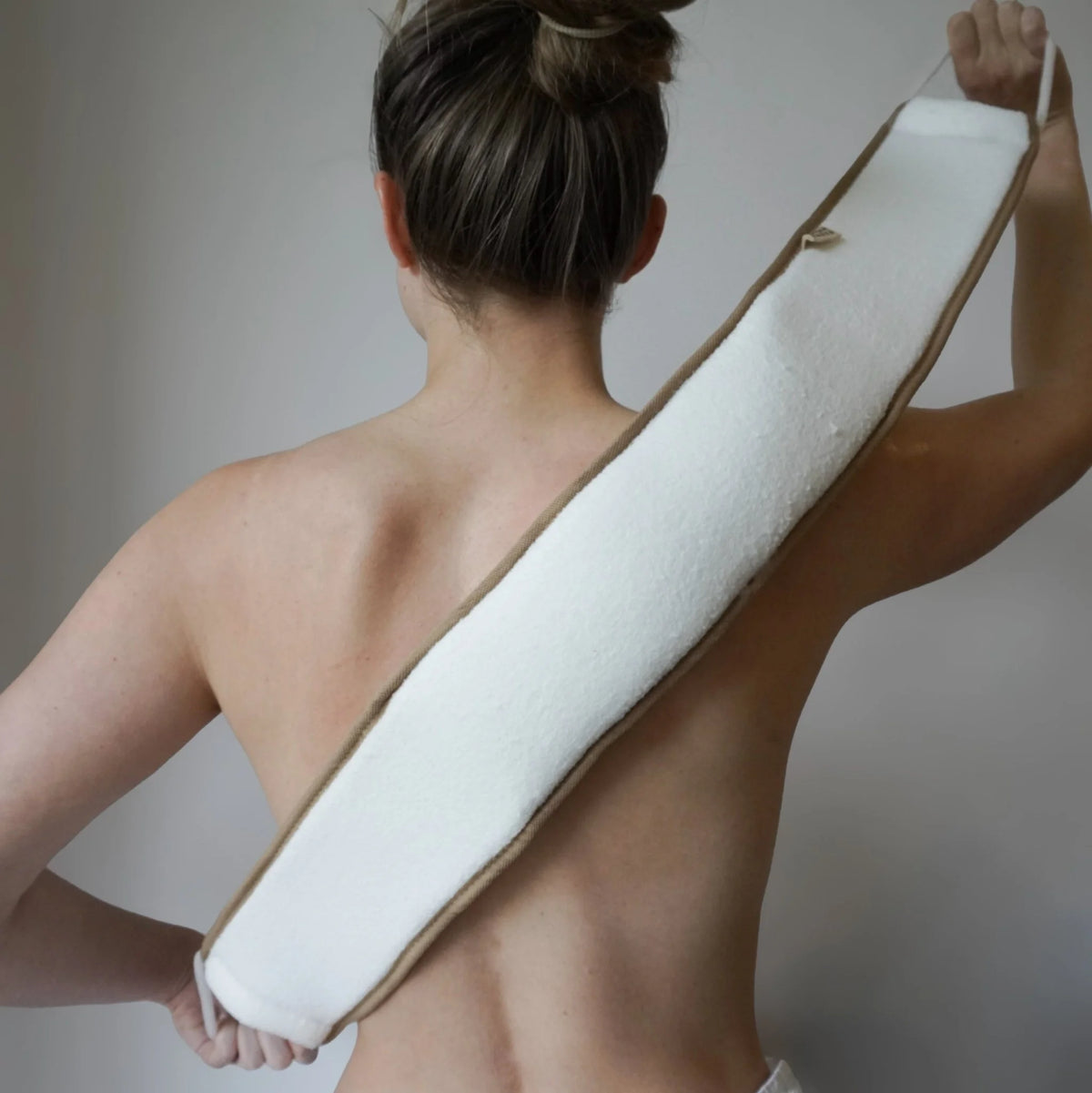
On the body (back, shoulders, décolleté), skin is thicker and tolerates a little more mechanical exfoliation. You can work more firmly with the loofah here, especially on areas prone to build-up.
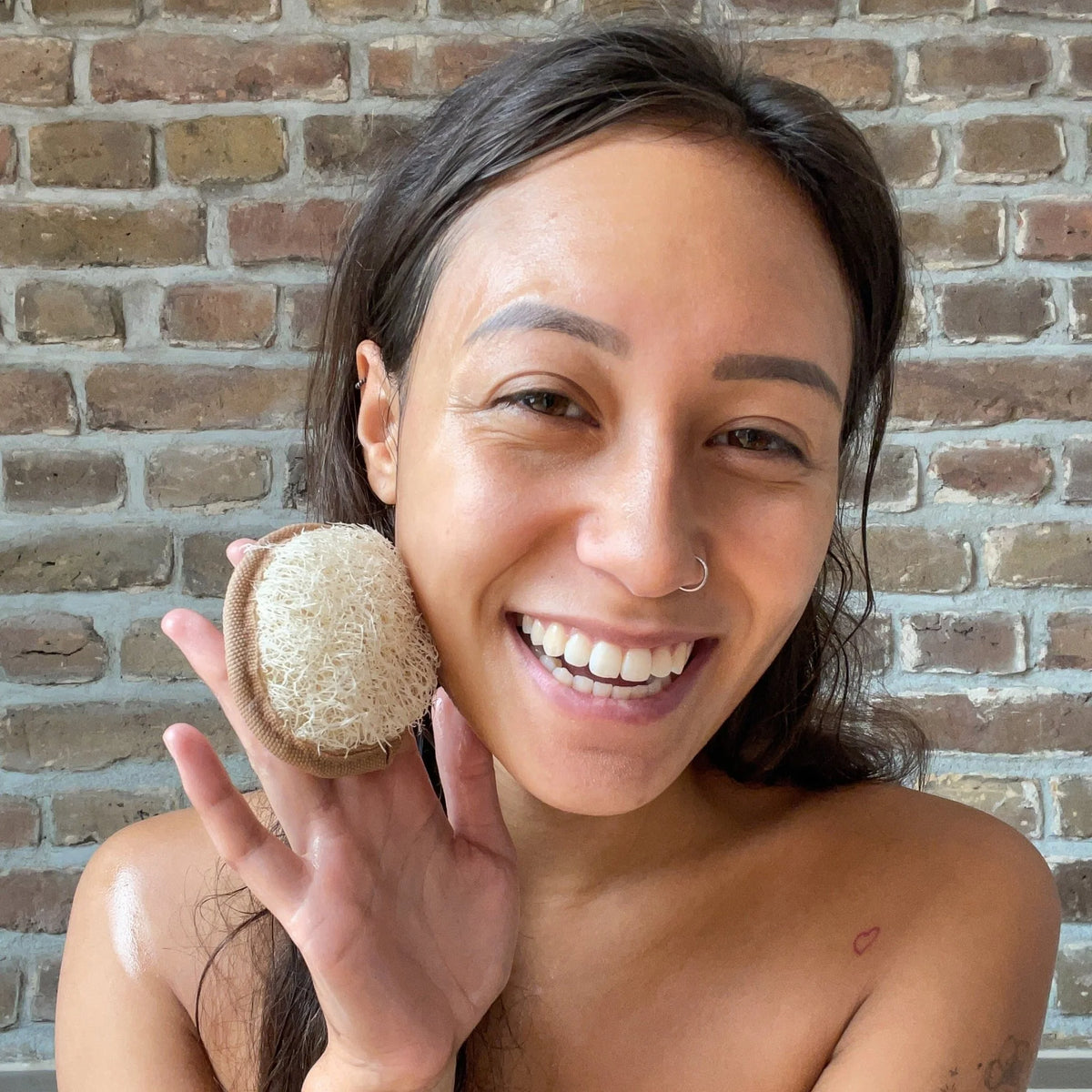
On the face, the rule is: gentle pressure, slow movements. The face has more sebaceous glands, thinner skin, and reacts more sensitively to friction. If you'd like to use mechanical exfoliation for facial acne, start with a shorter session (30 seconds per zone) and observe how your skin responds.
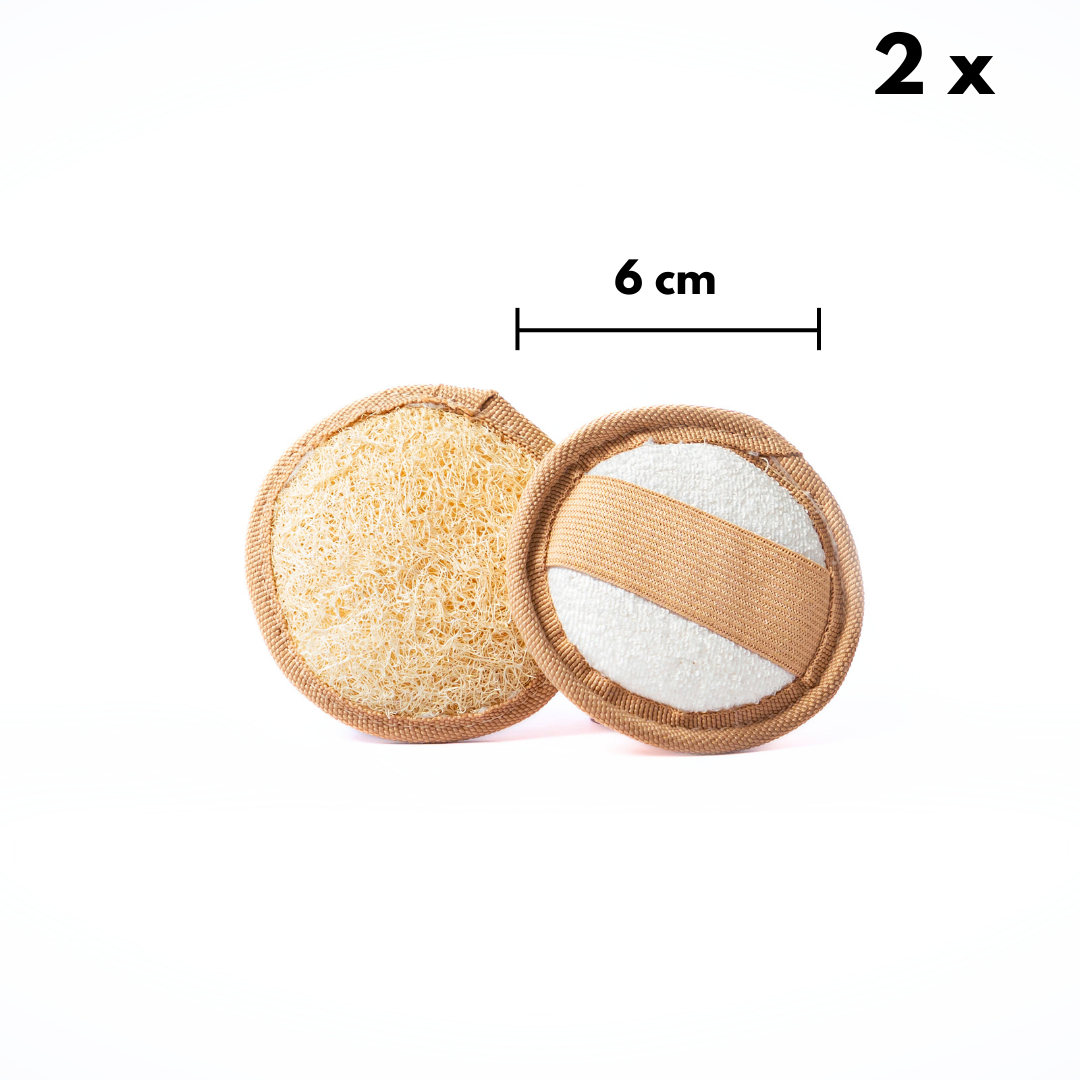
A separate, smaller loofah just for the face is a good idea hygienically — it stops body bacteria from reaching your face.
Loofah and Acne Medications: What to Keep in Mind
If you're treating acne medically (e.g. with retinol, benzoyl peroxide, adapalene, or antibiotics), please check with your dermatologist before starting any peeling routine. These active ingredients make the skin more sensitive, and mechanical exfoliation combined with them can increase irritation.
A general note: neither a loofah nor any other home remedy replaces professional dermatological treatment for clinical acne. What loofah peeling can offer is support for mild to moderate blemishes as part of a well-thought-out routine.
Hygiene Is Everything: How to Care for Your Loofah When You Have Blemish-Prone Skin
Especially when you're prone to blemishes, the hygiene of your loofah is crucial. A poorly maintained loofah can harbour bacteria — the complete opposite of what you want.
- After every use: Rinse thoroughly with warm water, squeeze well, and hang in an airy spot — don't leave it lying on the shower shelf.
- Weekly: Let it soak briefly in a solution of water and a splash of vinegar (or tea tree oil), then rinse.
- Replace every 4–6 weeks: For blemish-prone skin, replace slightly sooner than for normal skin — a fresh loofah is more hygienic.
- Store separately: Keep your face loofah separate from your body loofah.
Conclusion: With the Right Rhythm, Loofah Peeling Makes a Real Difference
Blemish-prone skin doesn't need an aggressive chemical cocktail — sometimes a simple, natural loofah with the right technique is enough. Regular, gentle exfoliation keeps pores clear, improves circulation, and ensures that skincare products work more effectively. The key word here is always: gentle and regular rather than intense and daily.
If you suffer from more serious acne, seek dermatological advice as well — loofah is a valuable addition to your routine, not a standalone cure.
👉 Discover our loofah sponges at Loofah Crafts and start your new skincare routine with a fresh loofah.
FAQ: Loofah Peeling for Blemish-Prone Skin
Can I use a loofah if I have acne? For mild blemishes and blackheads, yes — gently and no more than twice a week. For active, inflamed spots or clinical acne, please consult a dermatologist first, as mechanical exfoliation can aggravate inflammation.
Does loofah peeling help with blackheads? Yes, regular exfoliation with a loofah can help reduce blackheads. By removing dead skin cells, pores clog less quickly and sebum can flow more freely.
How often should I exfoliate if I have blemish-prone skin? Twice a week is a good rhythm for most people. Daily exfoliation is too much and can weaken the skin barrier — which ultimately makes blemishes more likely.
Can I use the same loofah for my face and body? Better not. A separate, smaller loofah is recommended for the face. This way you avoid transferring bacteria from your body to your face.
How long does it take to see results? After around 2–4 weeks of regular use, skin tends to feel smoother and pores look finer. For a lasting improvement in skin quality, 8–12 weeks of consistent use is a realistic expectation.