
Fall Skincare with Loofah: How to Prepare Your Skin for the Cold Season
Share
Why Your Skin Needs Special Attention in Fall
The transition from summer to fall is a real challenge for your skin. For months, it's been exposed to UV radiation, chlorine water, salt, sand, and dry heat—losing moisture along the way. At the same time, the heating season begins in September, indoor humidity drops, and your skin must adjust to a completely different climate.
Many people notice in fall:
- Flaky patches on elbows, shins, or hands
- Rough, uneven skin texture
- Dull complexion despite summer tan
- Itching, especially after showering
- Skincare products absorb poorly
This is exactly where a loofah exfoliation comes in: It removes keratinized summer skin, kickstarts cell renewal, and optimally prepares your skin for richer fall and winter care.
What Summer Did to Your Skin
Even if you used sunscreen—the summer months leave their mark:
- UV radiation thickens the outermost skin layer (sun thickening) as a natural protective mechanism. The result: Skin appears coarser and thicker.
- Chlorine and salt water strip moisture and attack the skin's acid mantle.
- Frequent showering washes away natural lipids from the skin.
- Sweat and heat stress the pores, sebum oxidizes faster—blemishes can increase.
In fall, this damaged outer layer becomes a barrier: Skincare products barely penetrate, regeneration slows down. A thorough exfoliation provides relief.
How a Loofah Sponge Makes Your Skin Fall-Ready
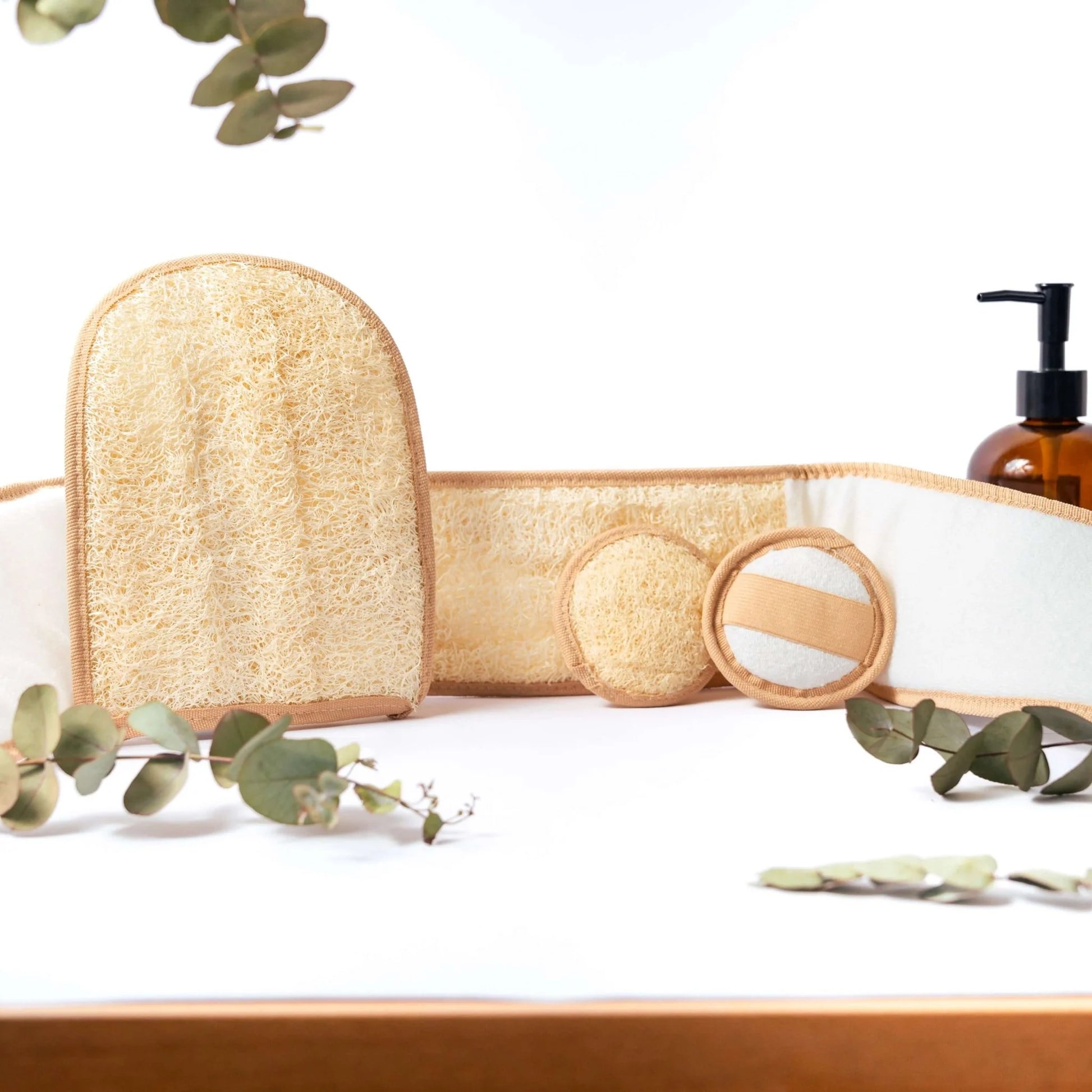
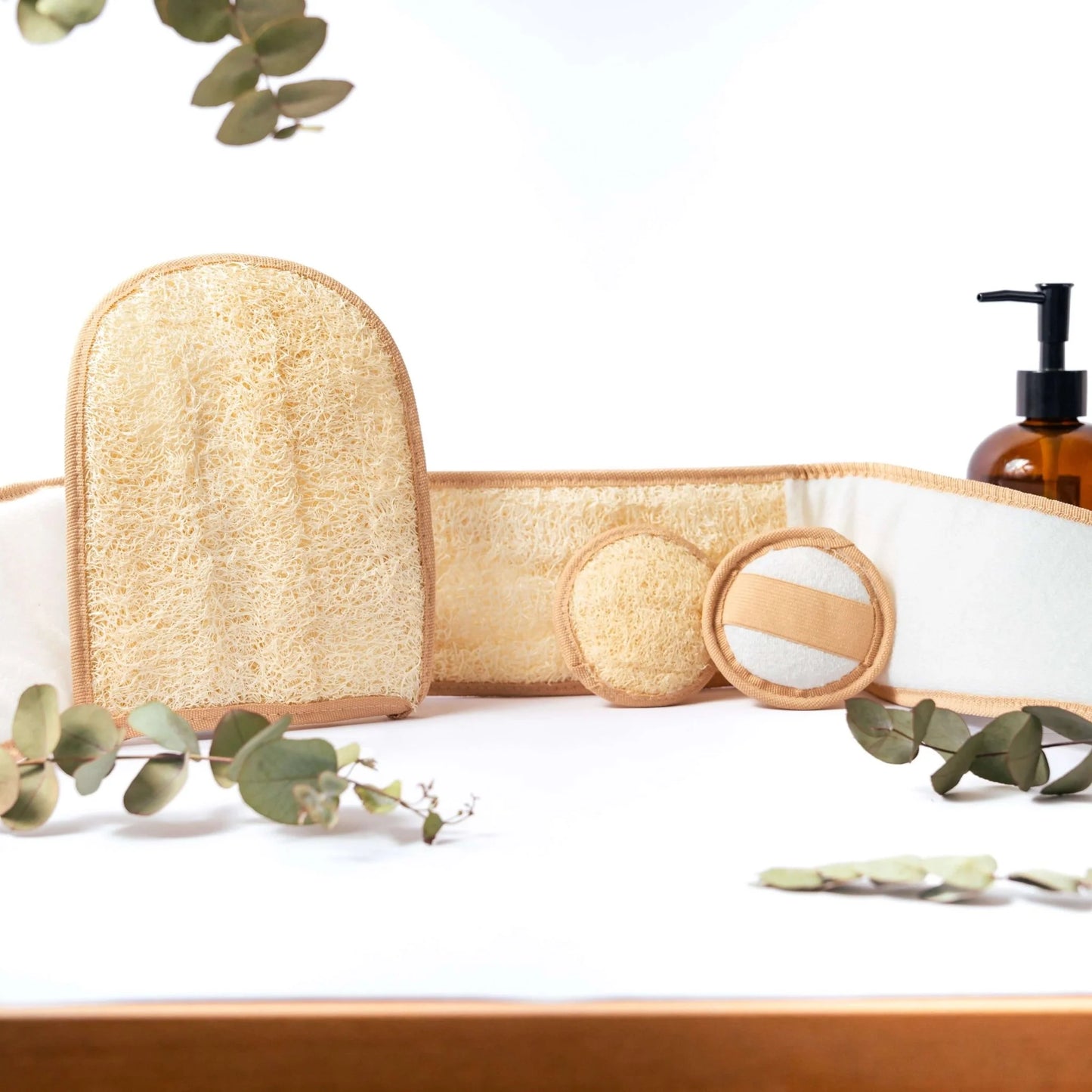
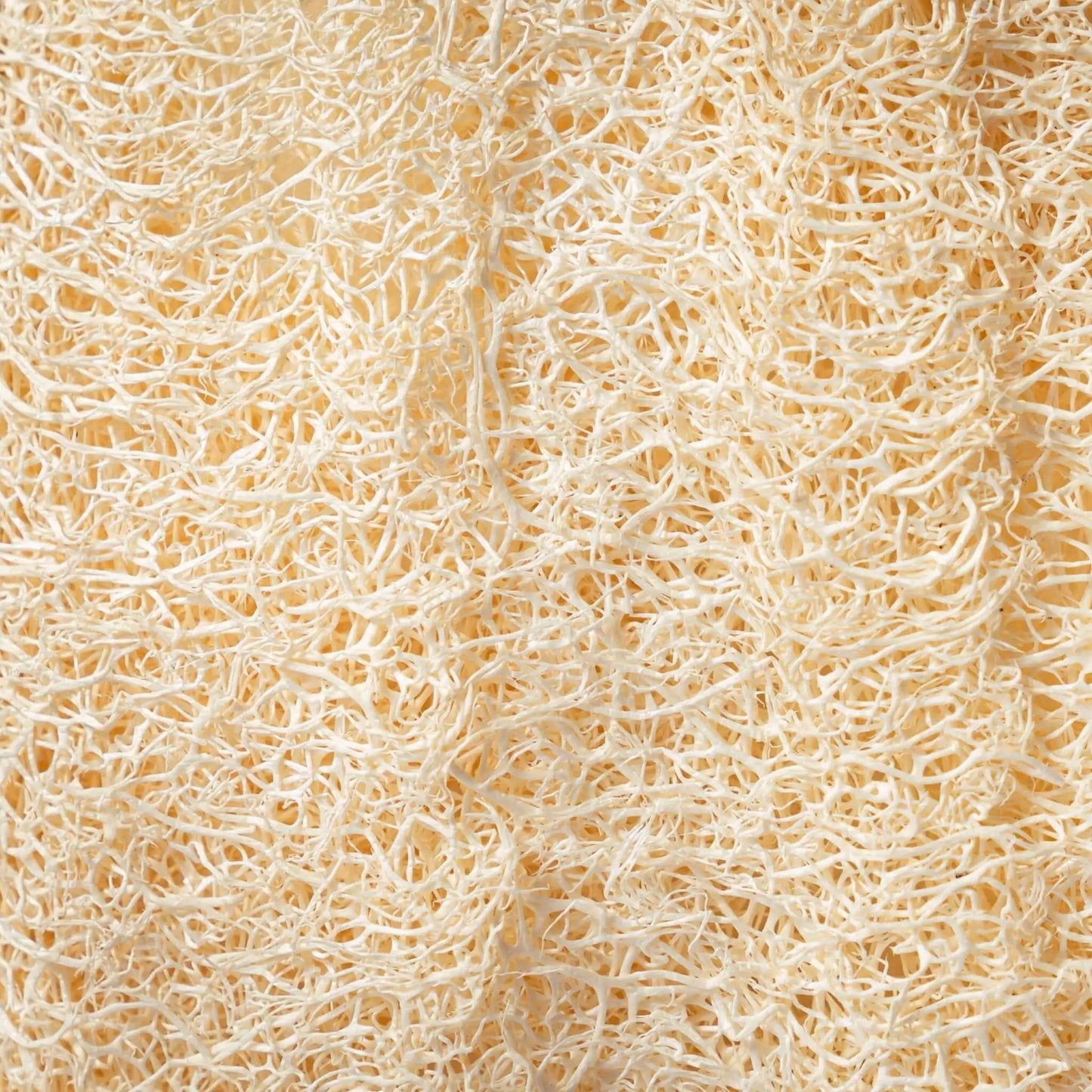
A loofah sponge consists of the dried fibers of the luffa plant—a type of gourd with a natural, fibrous structure. Unlike synthetic exfoliants with microplastics or sharp-edged salt crystals, loofah works gently yet thoroughly.
What happens during fall exfoliation with loofah:
- Removal of dead skin cells: The fibers mechanically lift thickened horny layer and summer damage. Skin becomes noticeably smoother immediately.
- Blood circulation promotion: The massage movement stimulates microcirculation—fresh oxygen and nutrients reach skin cells faster.
- Better active ingredient absorption: Freshly exfoliated skin absorbs fall care (rich body lotions, oils, vitamin E creams) up to 70 percent better.
- Stimulation of cell renewal: Regular exfoliation signals the skin to produce new, healthy cells.
- Preparation for heating air: A cared-for, well-moisturized skin barrier handles dry indoor air much better.
The Perfect Fall Exfoliation Routine with Loofah
Step 1: Preparation (1–2 minutes)
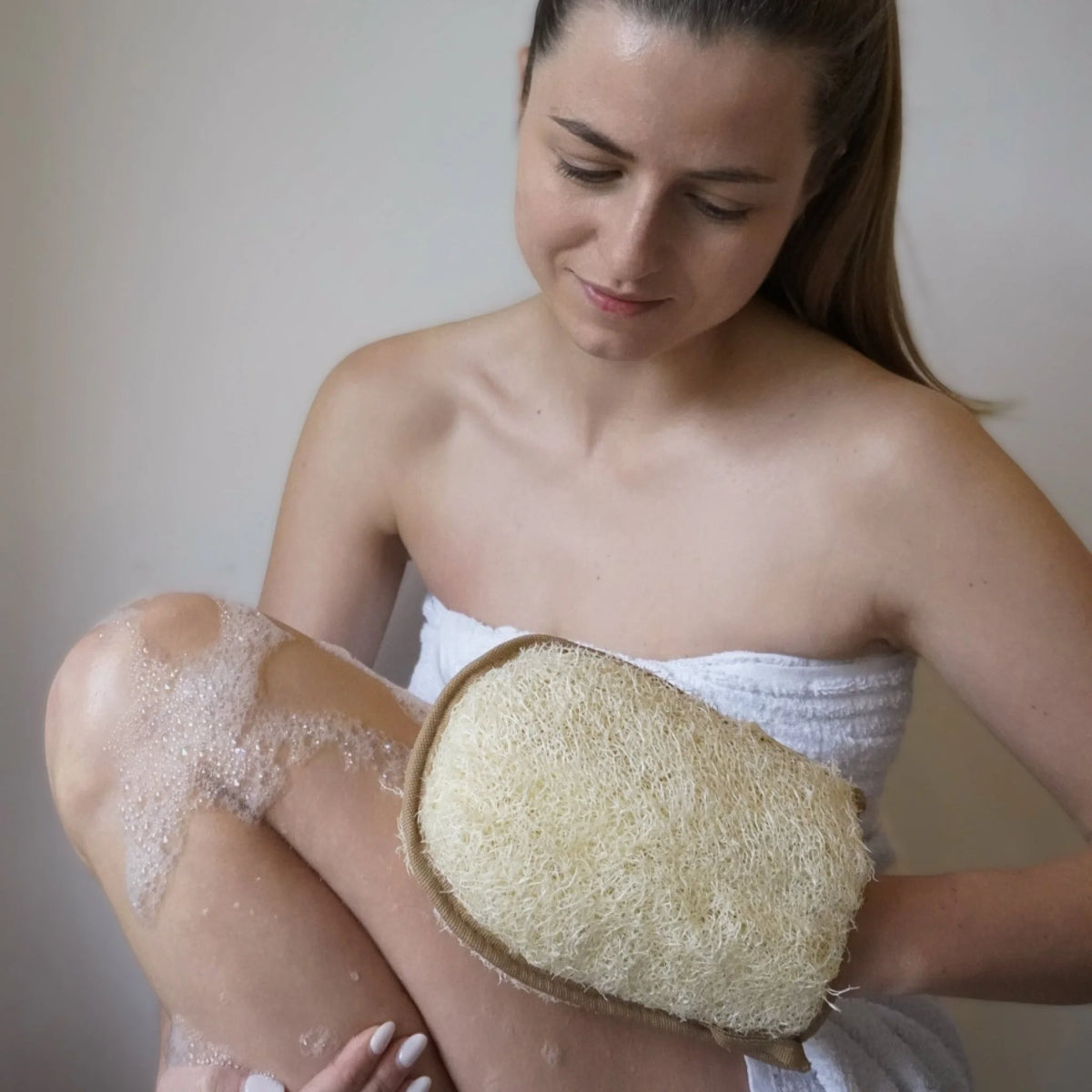
Start with a warm shower or full bath. The warmth opens pores and softens the skin—so the loofah works even more effectively. Moisten the loofah sponge under warm water until it's soft and pliable.
Step 2: Exfoliation (5–7 minutes)
Massage in circular movements from bottom to top—from feet toward heart. This direction supports lymph flow and promotes detoxification.
- Legs and arms: 2–3 times over each body area, with medium pressure.
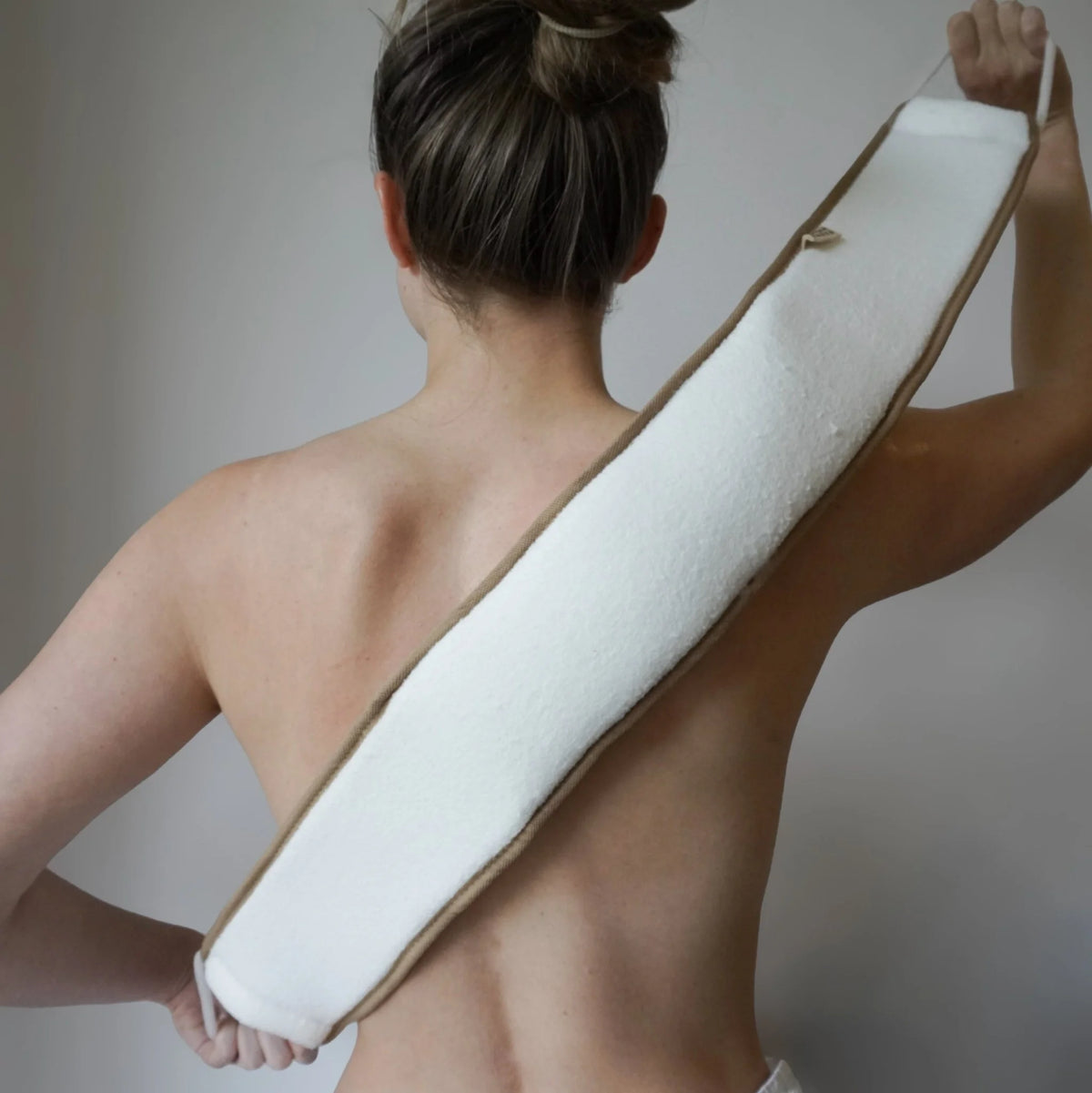
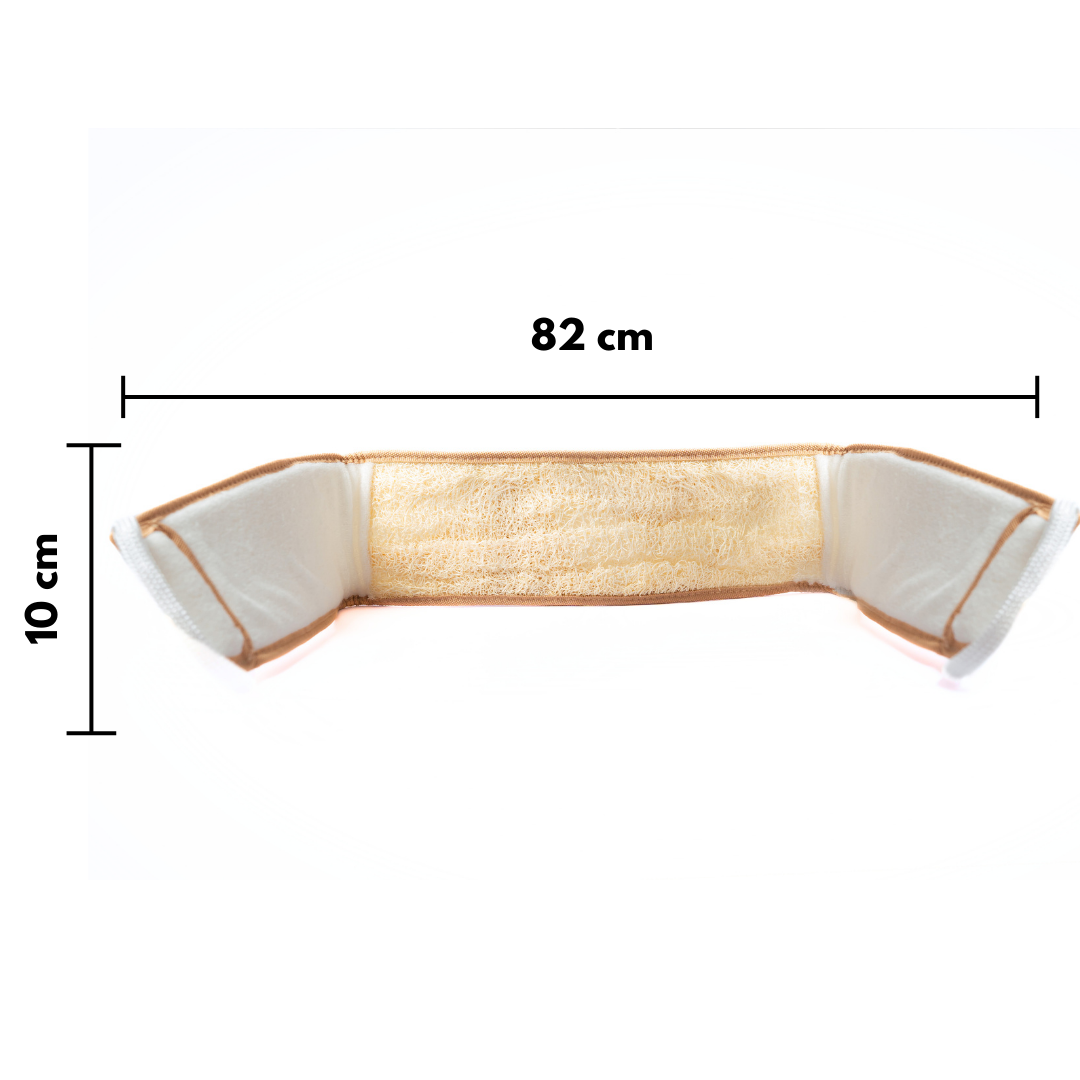
- Back: If possible, use a loofah back strap.
- Elbows, knees, heels: These areas tend to develop particularly thick calluses—you can work a bit firmer here.
- Stomach and décolleté: Skin is thinner here—gentle pressure is sufficient.
Optional: Use solid soap or a mild shower oil directly on the sponge. This enhances the exfoliation effect while nourishing.
Step 3: Care (2–3 minutes)
After exfoliation, rinse skin with lukewarm water and gently pat dry. Now is the ideal moment for rich care:
- Body oil (e.g., almond oil, jojoba oil) massaged onto still slightly damp skin—this locks in moisture.
- Body lotion with urea or shea butter for particularly dry areas.
- Vitamin E cream to support regeneration.
Recommended frequency in fall:
- Normal to dry skin: 2–3 times per week
- Robust skin: 3–4 times per week
- Sensitive skin: 1–2 times per week, with gentler pressure
Common Fall Skin Problems and How Loofah Helps
Problem 1: Flaky shins
Skin on shins naturally has fewer sebaceous glands and is particularly prone to dryness in fall. A loofah exfoliation removes the flaky layer so moisture can penetrate again.
Problem 2: Dull complexion despite summer tan
Dead, pigmented skin cells make the tan look gray and uneven. Through regular exfoliation, the top layer is removed—complexion appears fresher and rosier.
Problem 3: Rough elbows and knees
These areas develop calluses particularly quickly. A loofah sponge with slightly more pressure (but without scrubbing!) makes them velvety soft again.
Problem 4: Blemishes on the back
Sweat, sunscreen, and dead cells clog pores. A loofah back strap clears the skin and prevents breakouts.
Avoiding Common Fall Exfoliation Mistakes
Mistake 1: Too frequent exfoliation
More isn't always better. Daily exfoliation destroys the skin barrier and makes skin more vulnerable to cold and heating air. Stick to 2 to 4 applications per week.
Mistake 2: Too hot water
Hot water additionally dries out skin. Lukewarm water is sufficient—even though it's tempting to turn up the shower temperature in fall.
Mistake 3: No care after exfoliation
Freshly exfoliated skin loses moisture particularly quickly. Without care immediately afterward, you negate the positive effects of exfoliation.
Mistake 4: Dry application
A dry loofah is too hard and can irritate skin. Always moisten well before starting exfoliation.
Loofah Care in Fall: Keeping Your Sponge Hygienic
Especially in the humid fall season, proper loofah care is important:
- Rinse thoroughly after each use and wring out well.
- Hang in an airy location—don't leave it lying in a closed shower cabin.
- Disinfect every 1 to 2 weeks with hot water or vinegar water.
- Replace with a new sponge after 6 to 8 weeks at the latest.
A well-maintained loofah stays hygienic and retains its optimal fiber structure and effectiveness.
FAQ: Fall Skincare with Loofah
Can I use loofah on my face too?
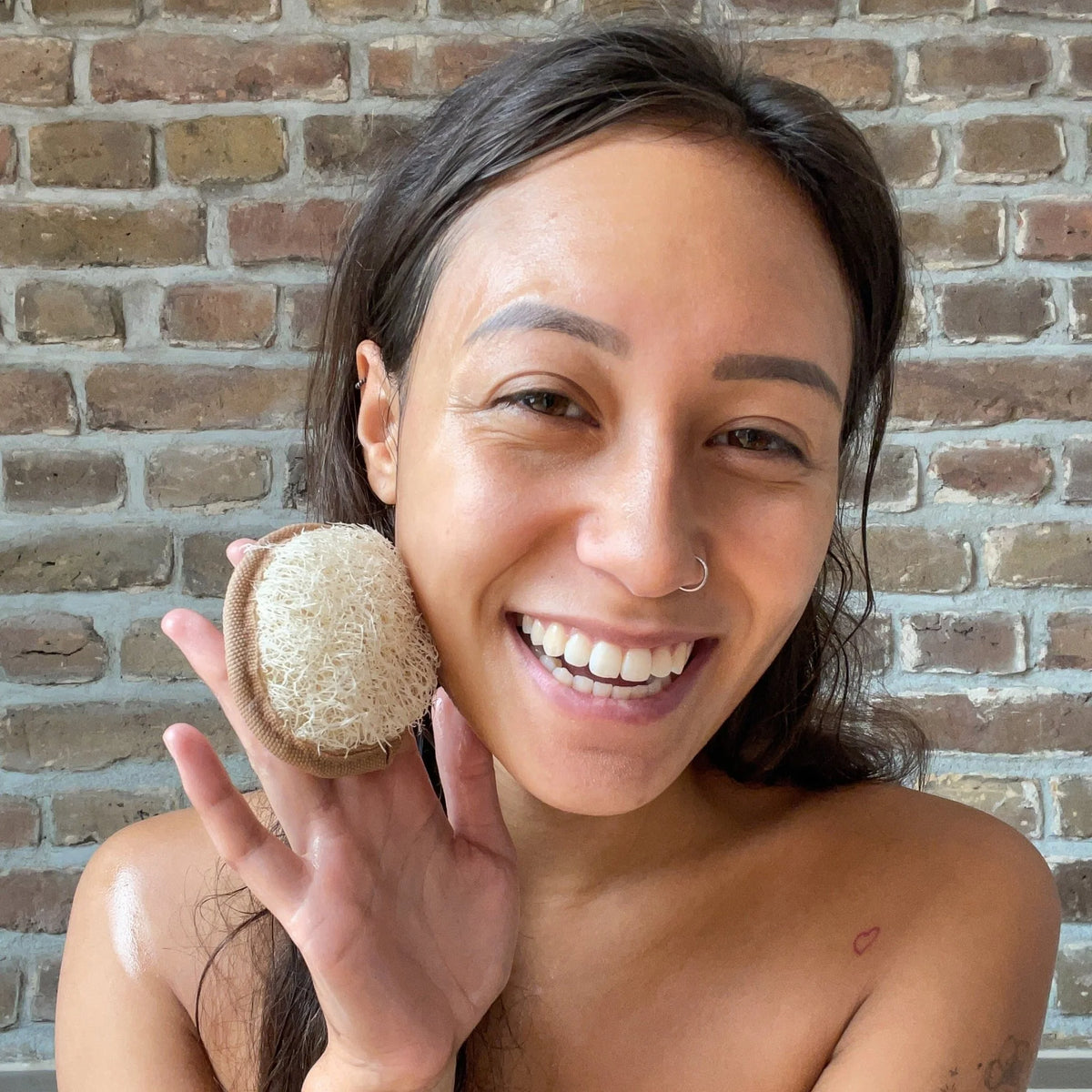
Yes, but only with a special, extra soft loofah sponge for the face. Body sponges are too coarse for delicate facial skin. Use gentle, circular movements and avoid the sensitive eye area.
What's better: loofah or dry brush?
Both have advantages. Loofah can be combined with shower oil or soap and is somewhat gentler. Dry brushing stimulates blood circulation even more but requires more practice. Many use both in fall: dry brush in the morning, loofah exfoliation in the evening.
Can I exfoliate with loofah if I have eczema or psoriasis?
Only after consulting your dermatologist. During acute flare-ups, exfoliation is usually counterproductive. In symptom-free phases, gentle loofah exfoliation can help remove scales and improve active ingredient absorption.
How long until I see a difference?
Skin feels smoother directly after the first application. After 2 to 3 weeks of regular use, you'll notice visible improvements: fewer flakes, more even complexion, softer skin.
Can I use loofah during pregnancy?
Yes, loofah exfoliation is safe during pregnancy. Many pregnant women use it specifically to prevent stretch marks and promote circulation. Just avoid very firm pressure on the belly.
Conclusion: Well-Equipped for Fall and Winter with Loofah
Fall is the perfect time to adjust your skincare routine. A loofah sponge gently yet thoroughly removes summer traces, promotes regeneration, and optimally prepares your skin for the cold season. Combined with rich care and adequate hydration, your skin stays supple, soft, and healthy even with heating air and cold.
Start your fall routine now—your skin will thank you in winter.
👉 Discover our sustainable loofah sponges and optimally prepare your skin for fall and winter.