
Full-Body Exfoliation Routine: Step by Step to Silky-Smooth Skin
Share
Why a Full-Body Exfoliation Routine Makes Such a Difference
Gently exfoliate, let skincare products absorb, enjoy fresh skin — sounds simple, but the difference between a quick scrub in the shower and a proper full-body exfoliation routine is significant. Once you've established a structured routine, you'll quickly notice: skin feels softer, body lotion absorbs better, and your overall complexion looks fresher and more even.
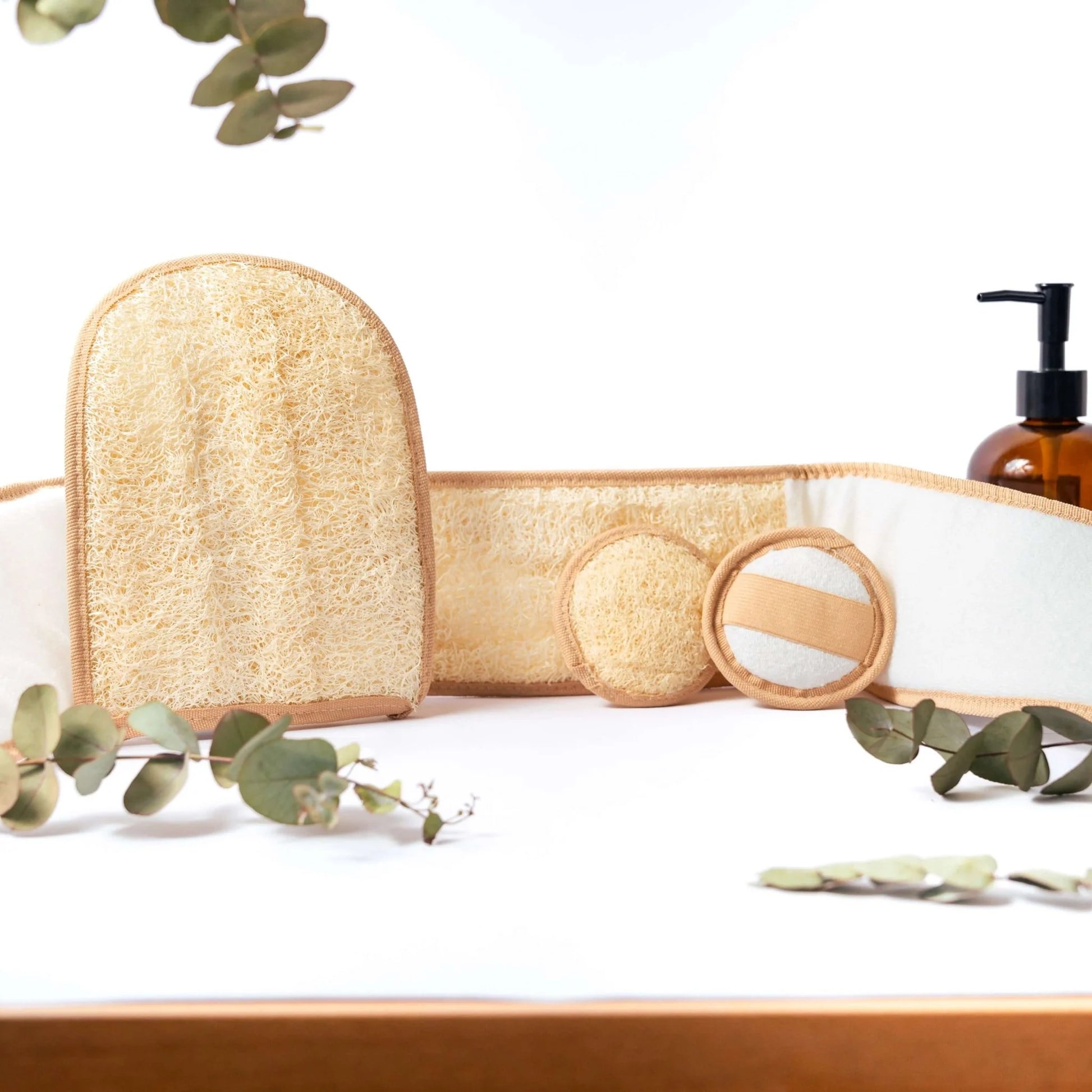
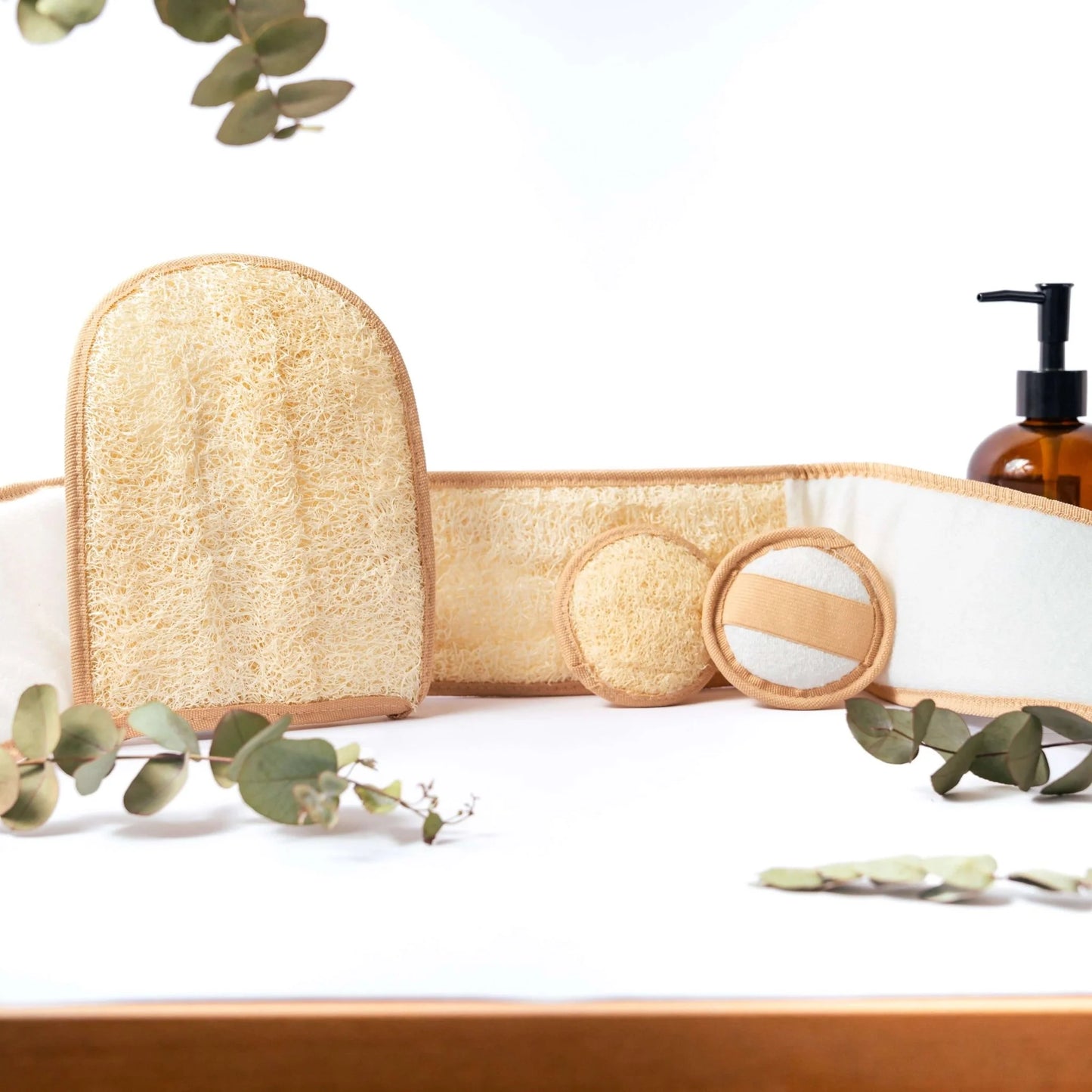
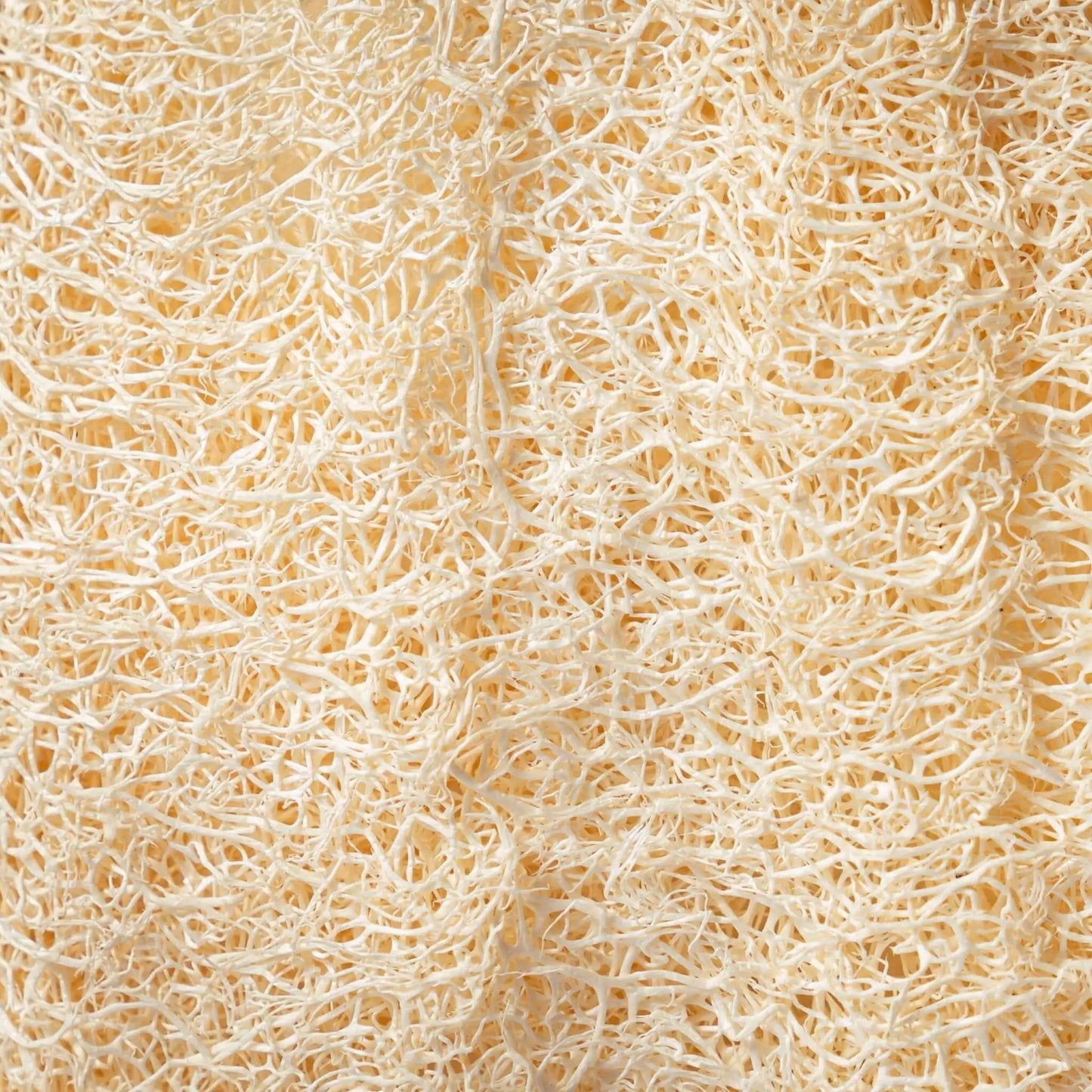
The secret lies in the combination of the right tool, the right technique, and the right order. A loofah — a sponge made from the dried fibres of the loofah plant — is the most natural and effective tool you can use. No microplastics, no chemicals, just a fibrous plant material that exfoliates gently yet thoroughly.
In this article, we'll walk you through a complete full-body exfoliation routine step by step — from proper preparation to finishing care.
The Right Preparation: How to Get Started
Before you even begin exfoliating, preparation is key. A good exfoliation doesn't start with the sponge — it starts with warming up the skin.
Warm Water Opens the Pores
Stand under a warm (not hot) shower for 3 to 5 minutes, or take a short bath. The warmth opens pores and softens the skin's outer layer — this allows dead skin cells to be removed much more gently, without having to press hard.
Soak Your Loofah
Briefly submerge your loofah in water. It absorbs moisture, becomes more flexible, and moulds better to the curves of your body. A dry loofah is too stiff and can unnecessarily irritate the skin.
Choose Your Product
For most skin types, a mild foaming shower gel or a bar of soap on the loofah is more than enough. If you want a more intensive exfoliating effect, you can apply a body scrub (e.g. sugar or salt-based) directly onto the sponge.
Step by Step: The Complete Full-Body Exfoliation Routine
Step 1 — Soles and Toes
Start at the bottom. The soles of your feet have a thick layer of skin and can handle more pressure than the rest of your body. Massage the soles in circular motions and work through each toe individually. The heels — where stubborn calluses often build up — can be worked on with a little more firmness.
Step 2 — Lower Legs and Knees
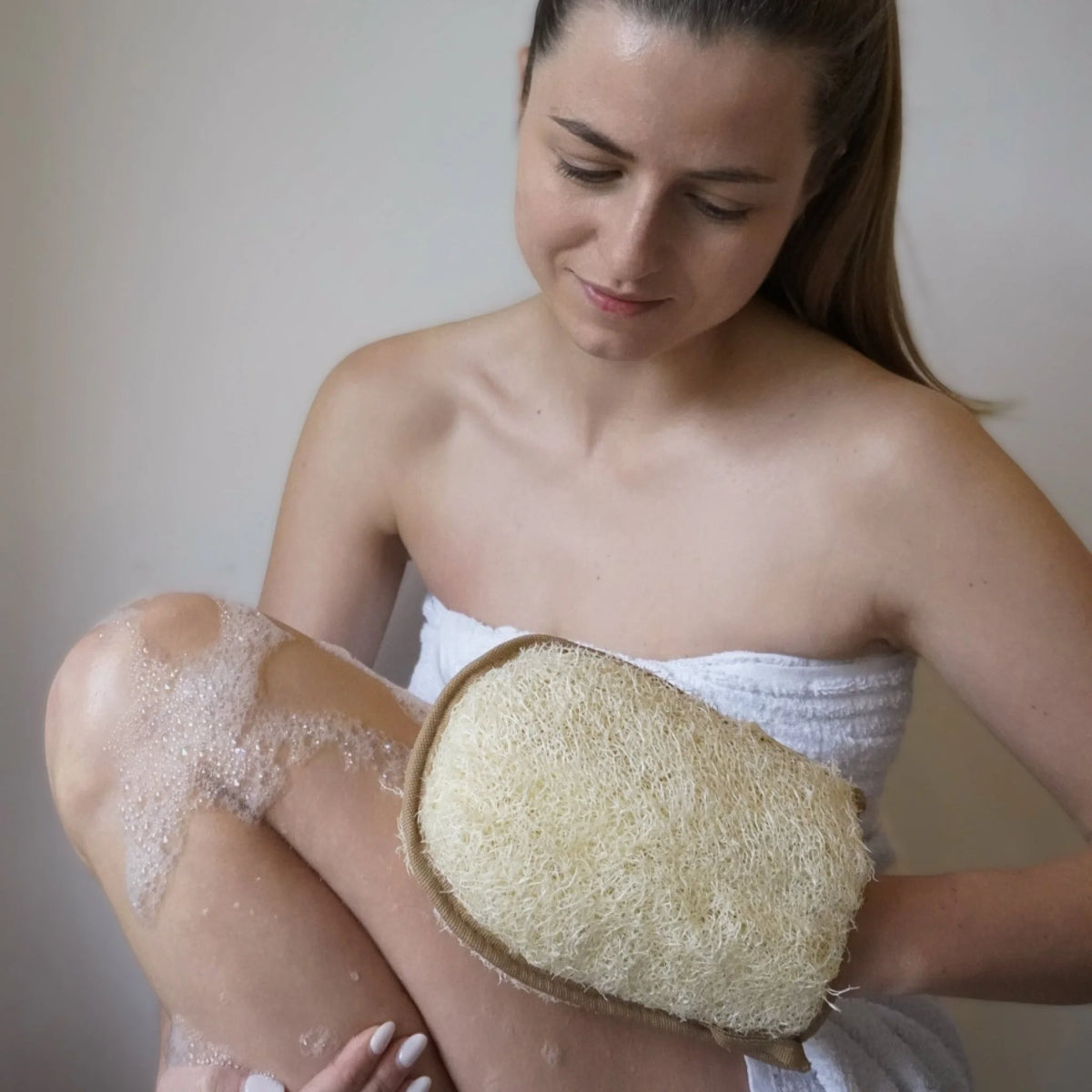
Work your way up from the ankles towards the knees. The shins have little subcutaneous fat — stay gentler here. The knees are a problem zone for calluses and discolouration: circular motions directly on the kneecap work especially well.
Step 3 — Thighs and Buttocks
This is the zone where many people have cellulite and rough skin. Take extra time here — at least 1 to 2 minutes per side. Massage in circular motions from bottom to top (towards the heart), which simultaneously promotes circulation and lymphatic flow. The outer thighs and buttocks can be treated with a little more pressure.
Step 4 — Stomach and Hips
Work more gently here than on the legs. The stomach is more sensitive and the skin is thinner. Circular motions in a clockwise direction are ideal — this corresponds to the natural direction of the digestive tract and gently supports digestion.
Step 5 — Back
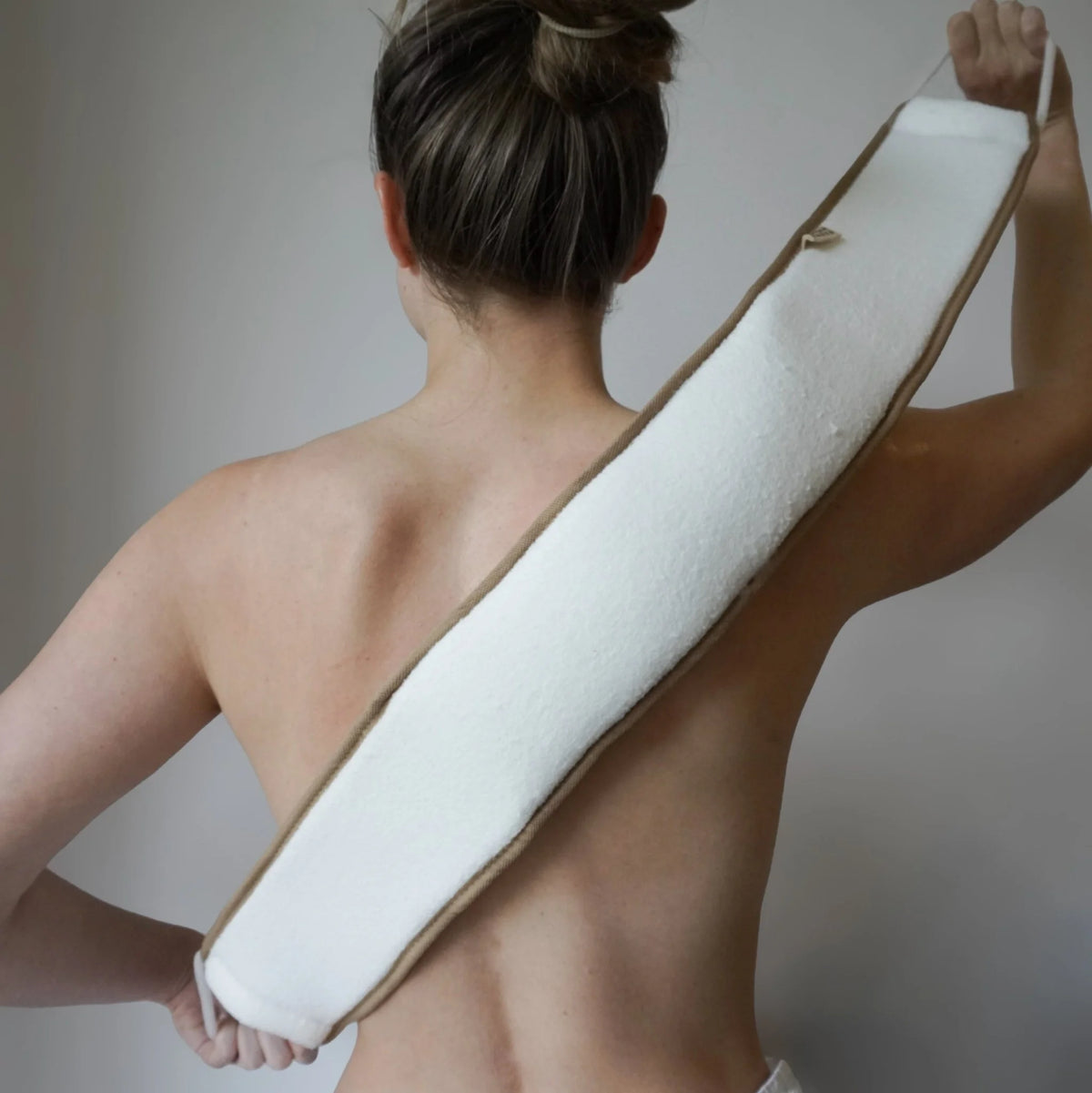
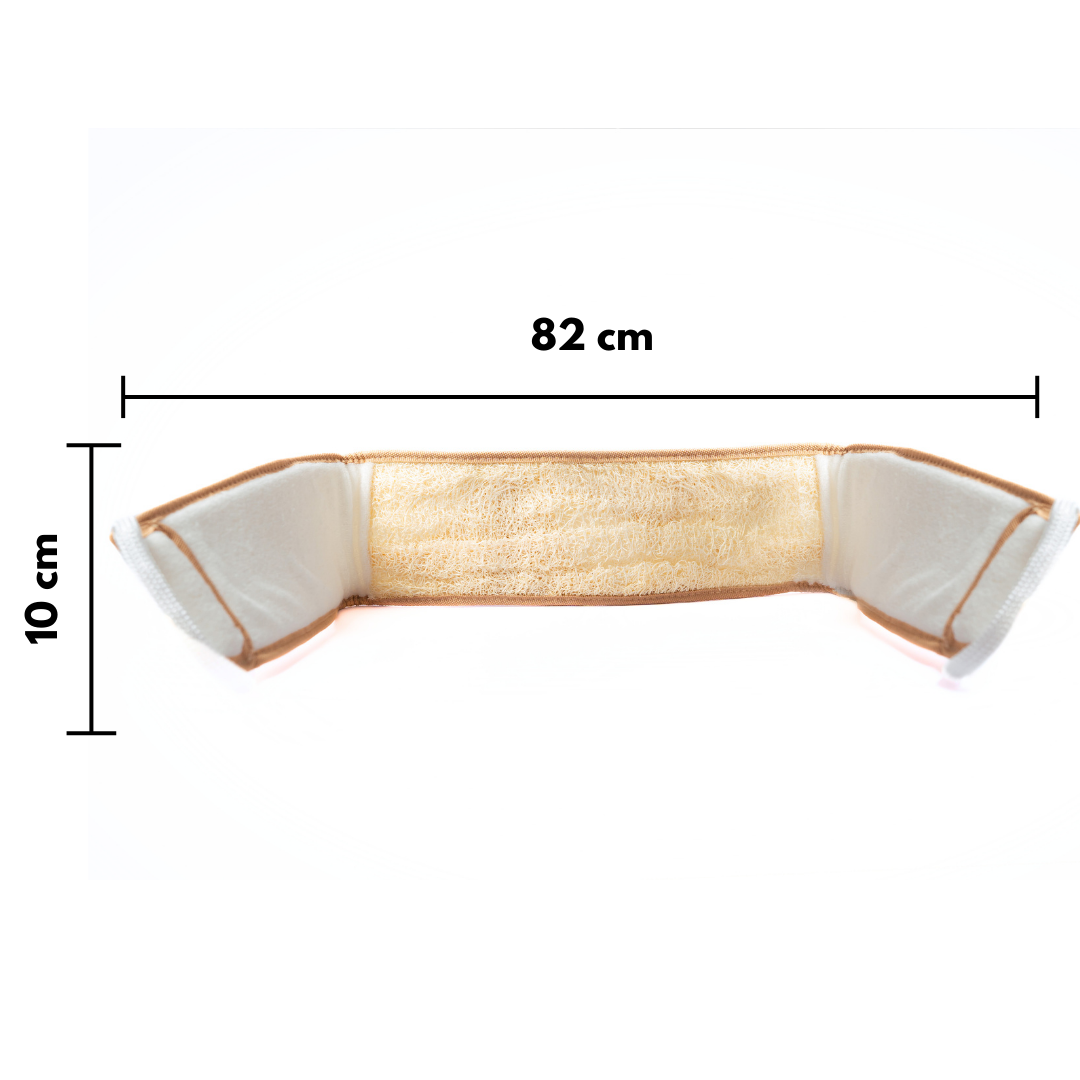
The back is hard to reach but especially important: this is where sebum, sweat, and dead skin cells tend to accumulate — the cause of back acne (bacne). A loofah with a long handle or a curved loofah back strap is ideal here. Use long, even strokes from the lower back upwards to the shoulders.
Step 6 — Chest and Décolletage
Please be very gentle: the skin on the décolletage is thin and sensitive. Light pressure with the damp loofah is perfectly sufficient. Circular motions around the chest (not directly on the nipple) help even out the complexion.
Step 7 — Arms and Elbows
From the hands upwards to the shoulder, always in the direction of the heart. The elbows are a small problem zone — similar to the knees, calluses can easily form here. A little more pressure on the elbow tips is fine.
Step 8 — Neck (optional, very gently)
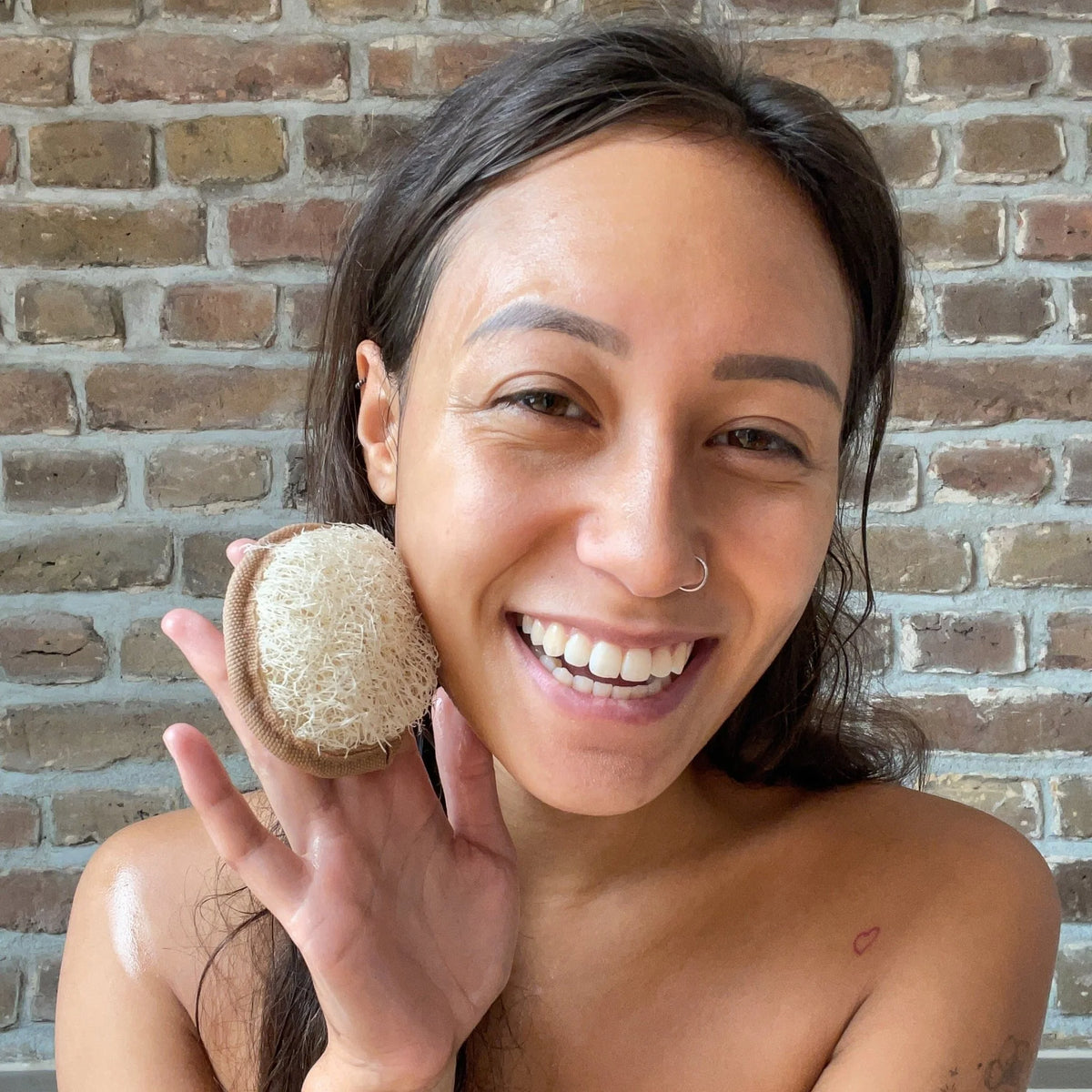
If you wish, you can include the neck — from bottom to top with the loofah — but truly only with minimal pressure. The skin on the neck is very sensitive. Please treat the face with a separate, softer product — a regular loofah is generally too rough for the face.
After Exfoliating: How to Care for Your Skin Properly
Exfoliating is only half the job — the other half is aftercare. Freshly exfoliated skin is particularly receptive, and that's exactly what you should take advantage of.
- Rinse with cold water: A brief cold rinse at the end closes the pores again and visibly tones the skin.
- Pat dry gently: Don't rub — your skin is more sensitive than usual. Lightly pat with a soft towel.
- Moisturise immediately: Apply within 3 minutes of stepping out of the shower, while your skin is still slightly damp. Body milk, body lotion, or a nourishing oil (e.g. argan or jojoba) absorbs twice as well right now.
- Drink water: Sounds basic, but it genuinely makes a difference for your complexion — especially after a more intensive exfoliation session.
How Often Should You Do a Full-Body Exfoliation Routine?
This depends on your skin type:
| Skin Type | Recommendation | |---|---| | Normal to oily | 2–3× per week | | Dry or sensitive | 1–2× per week | | Very sensitive / irritated | 1× per week or less |
Exfoliating too frequently does more harm than good: the skin's natural protective barrier needs time to regenerate. For dry or irritated skin, exfoliate less often and focus more intensively on aftercare.
Loofah or Body Scrub Product — Which Is Better?
Both have their place, but a loofah has clear advantages:
- Natural and plastic-free — no microplastic particles like many cream scrubs
- Mechanical and massaging — not just exfoliation, but simultaneously a massage and circulation boost
- Reusable — a loofah lasts 6–8 weeks with good care
- Combinable — you can still use an exfoliating product on top if you want more intensity
Combining a loofah with a good body oil gives you everything a complete full-body exfoliation routine needs.
FAQ: Full-Body Exfoliation Routine
Can I use a loofah every day? For most of the body, daily use is too much — 2–3× per week is ideal. Only if you use a very gentle loofah with minimal pressure is daily use on more resilient skin areas (soles, elbows) acceptable.
What's the best time for a body exfoliation — morning or evening? Both work well. In the morning, exfoliating activates circulation and wakes you up. In the evening, it prepares your skin optimally for overnight skincare products. Many people prefer evening exfoliation because the skin then has more time to regenerate.
Can I use the same loofah for my face and body? No. Your face needs a much gentler sponge — a regular loofah is too rough for facial skin. Always keep two separate sponges.
How long does a loofah last with regular use? With 2–3× weekly use and proper care (rinse after each use, air dry in a well-ventilated spot), a loofah lasts 6–8 weeks. After that, simply compost it — it's fully biodegradable.
Can I exfoliate with a sunburn or irritated skin? No. With sunburn, open wounds, inflammation, or severely irritated skin, please skip the exfoliation and wait until your skin has calmed down.
Conclusion: A Routine That Really Makes a Difference
A consistent full-body exfoliation routine is one of the simplest and most effective investments you can make in your skin. With a natural fibre loofah, warm water, and a little system, you can achieve noticeably smoother, more radiant skin — without expensive products, chemicals, or plastic waste.
Start with 2× per week, gradually build up your routine, and combine it with good aftercare. Your skin will thank you.
👉 Get your loofah sponge at Loofah Crafts and start your personal exfoliation routine today.